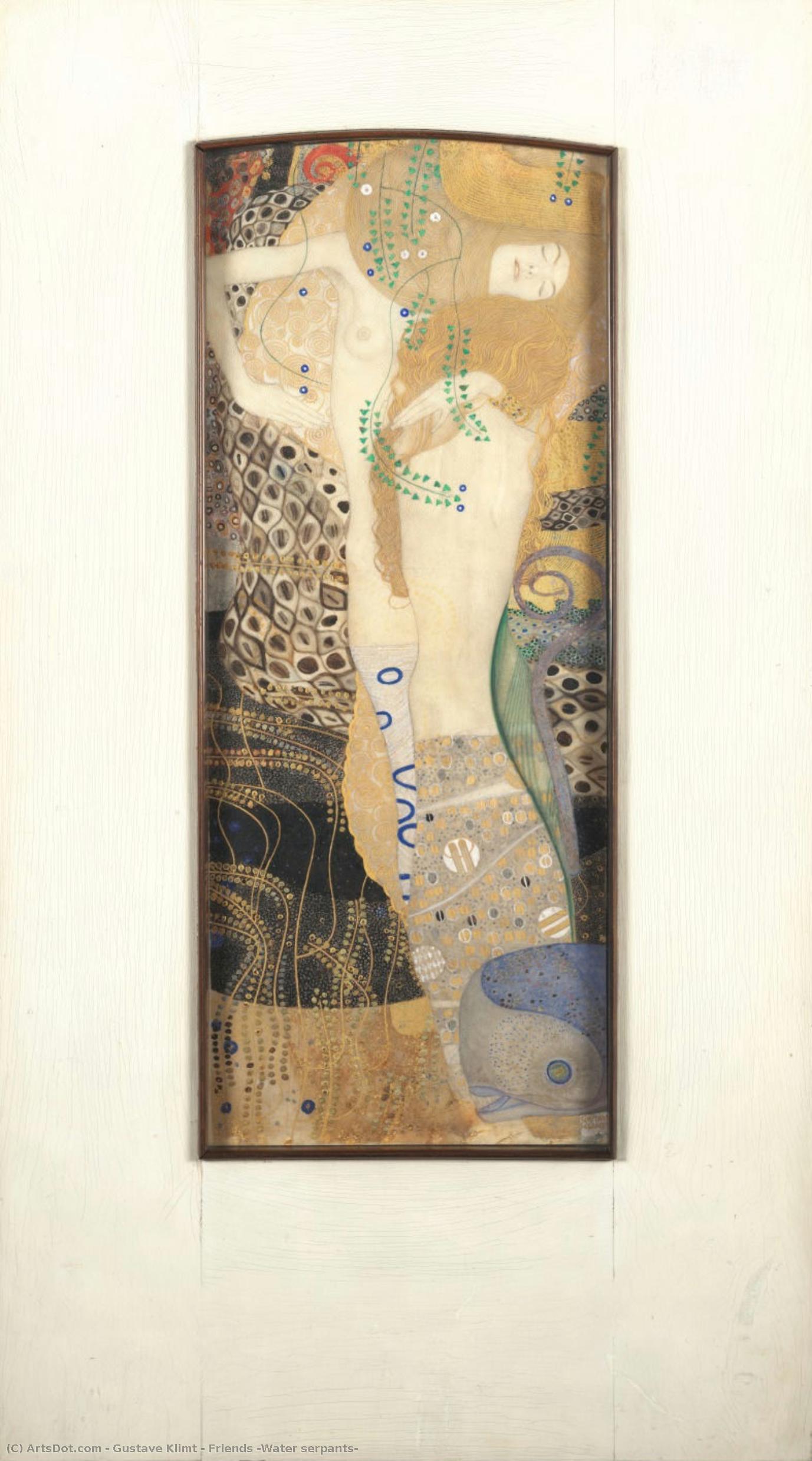
Friends (Water Serpents): A Symphony of Symbolism and Texture
Gustav Klimt’s “Friends,” painted in 1907, stands as a cornerstone of Austrian Symbolism—a movement that sought to transcend mere representation and delve into the realm of psychological and spiritual contemplation. This captivating artwork captures two figures intertwined amidst swirling aquatic motifs, embodying themes of desire, vulnerability, and the alluring power of subconscious impulses.
The painting’s genesis lies in Klimt's fascination with mythological narratives, particularly those exploring the seductive allure of sirens and the perilous encounters between Odysseus and his crew. Influenced by Nietzschean philosophy—a burgeoning interest in primal instincts and the confrontation between Eros (love) and Thanatos (death)—Klimt aimed to depict not just physical beauty but also the profound emotional complexities inherent within human relationships.
- Subject Matter: The central figures are presented as idealized female forms, positioned close together yet subtly separated by a dynamic interplay of flowing drapery. Their postures convey both intimacy and restraint, hinting at unspoken desires and hidden anxieties.
- Style & Technique: Klimt’s signature style—characterized by opulent ornamentation and the masterful application of gold leaf—is evident throughout “Friends.” The shimmering surface reflects Klimt's meticulous attention to detail and his unwavering commitment to creating a visual experience that transcends conventional realism. He employs a technique known as cloisonné enamel, layering thin sheets of metal onto a substrate to achieve remarkable textural depth and luminosity.
- Historical Context: Created during Klimt’s prolific artistic period—marked by collaborations with Emil Nolde and Oskar Kokoschka—the painting reflects the broader intellectual currents of Vienna at the turn of the century. Symbolism flourished alongside Expressionism, challenging academic conventions and prioritizing subjective emotion over objective observation.
- Symbolism: The swirling water serpents dominating the background serve as potent symbols of primal forces—representing both fertility and danger—and mirror the turbulent emotions simmering beneath the surface of the relationship depicted. The gold leaf itself symbolizes divinity, immortality, and spiritual enlightenment – concepts central to Klimt’s artistic vision.
“Friends” transcends its formal elements to evoke a palpable sense of melancholy and longing. The artist's masterful manipulation of color and texture invites contemplation on the fragility of human connection and the enduring fascination with archetypal themes—themes that continue to resonate powerfully with audiences today.
A hand-painted reproduction offers an unparalleled opportunity to experience Klimt’s artistic genius firsthand, preserving the luminous beauty and intricate detail of this iconic Symbolist masterpiece. Bring “Friends” into your home and allow its evocative imagery to inspire reflection and captivate the senses.