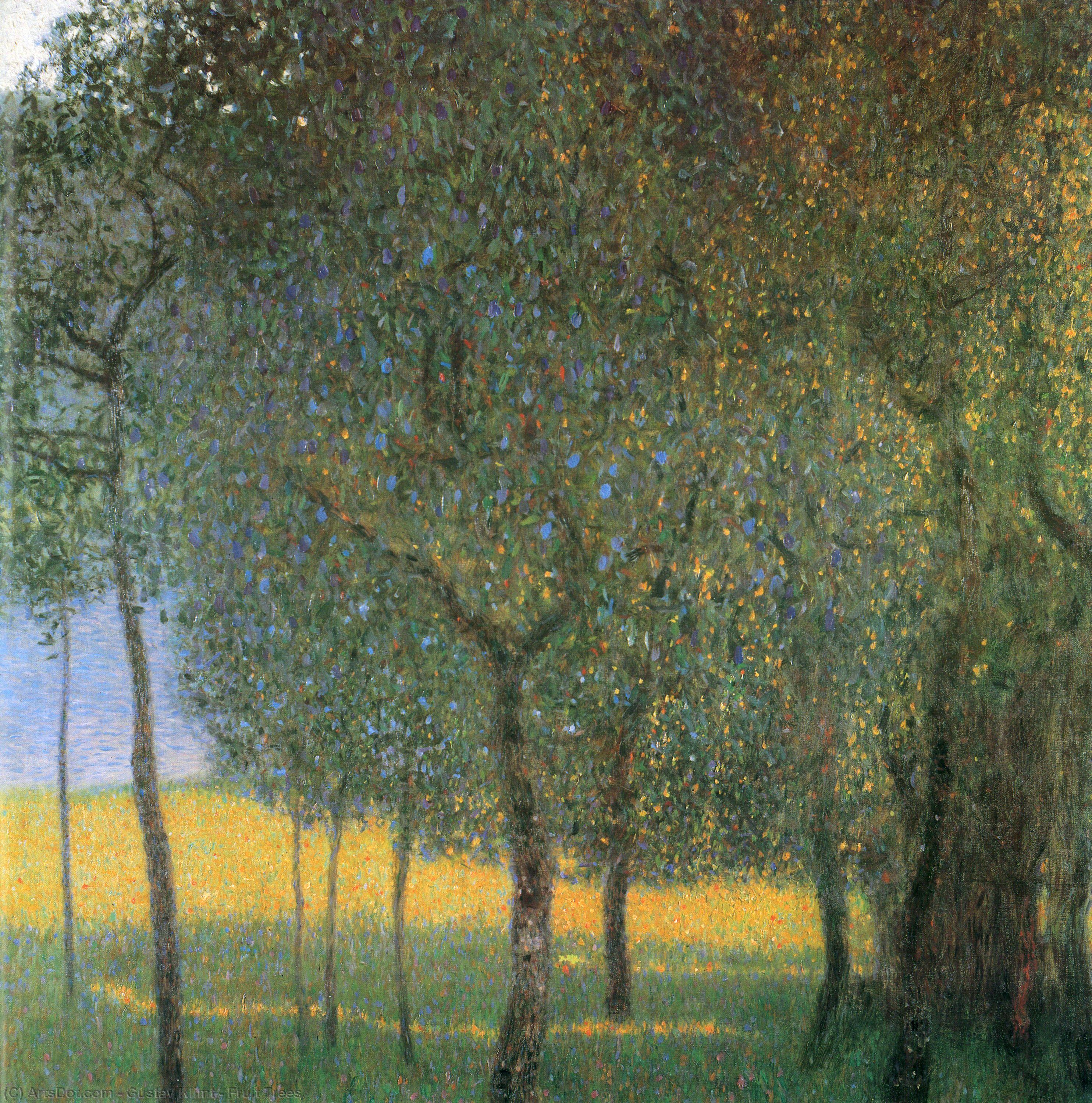
Gustav Klimt's "Fruit Trees": A Celebration of Life and Nature
- Title: Fruit Trees
- Artist: Gustav Klimt
- Date: 1901
- Medium: Oil on Canvas
- Dimensions: 90 x 90 cm
- Location: Österreichische Galerie Belvedere, Vienna, Austria
A Glimpse into Klimt's Golden Phase
"Fruit Trees," created in 1901, stands as a vibrant testament to Gustav Klimt’s “Golden Phase,” a period marked by the extensive use of gold leaf and decorative patterns. This work isn't merely a landscape; it is an allegorical representation of life, fertility, and the cyclical nature of existence. The painting depicts lush fruit trees bursting with foliage against a backdrop that shifts from vibrant yellows in the foreground to cooler blues in the distance, creating a sense of depth and ethereal beauty. Klimt’s masterful use of color and texture evokes a feeling of abundance and vitality, inviting viewers into a world brimming with natural splendor. This piece exemplifies his departure from traditional academic painting towards a more symbolic and decorative style characteristic of Art Nouveau.
Symbolism and Interpretation
The symbolism within "Fruit Trees" is rich and layered. The trees themselves represent life's generative force – growth, abundance, and the promise of renewal. The vibrant yellow leaves symbolize sunlight, warmth, and prosperity, while the blue hues in the background suggest a sense of tranquility and timelessness. Klimt often incorporated symbolic elements into his work, drawing inspiration from Byzantine mosaics and ancient Egyptian art. While specific interpretations remain open to debate, many scholars believe that the painting reflects Klimt’s fascination with themes of fertility, nature's power, and the interconnectedness of all living things. The composition, with its swirling patterns and organic forms, further emphasizes this sense of harmony and balance.
Artistic Technique and Influences
Klimt’s technique in "Fruit Trees" is a captivating blend of meticulous detail and expressive brushwork. He employed oil paints to create rich textures and luminous effects, layering colors to achieve depth and vibrancy. The application of gold leaf, though not as extensive as in some of his other works from this period, still contributes to the painting’s overall opulence and symbolic significance. Klimt was heavily influenced by Symbolism, a late 19th-century artistic movement that emphasized subjective experience and emotional expression over realistic representation. He also drew inspiration from Byzantine mosaics, evident in the flattened perspective and decorative patterns found throughout his work. The influence of Japanese woodblock prints, with their emphasis on line and pattern, is also discernible in the composition's structure.
Emotional Impact and Legacy
"Fruit Trees" evokes a profound sense of serenity and optimism. Its vibrant colors and lush imagery create an atmosphere of abundance and vitality, inviting viewers to contemplate the beauty and power of nature. The painting’s enduring appeal lies in its ability to transcend mere representation; it speaks to universal themes of life, growth, and renewal. As one of Klimt's most celebrated works, "Fruit Trees" continues to inspire artists and art lovers alike, solidifying his legacy as a pivotal figure in the Art Nouveau movement and a master of symbolic expression.