Discover Gustav Klimt (1862-1918), the Austrian Symbolist master of Art Nouveau! Explore his iconic 'Golden Phase,' sensual portraits, and masterpieces like *The Kiss*. Learn about his life, influences & legacy.
Giuditta I: A Symphony of Gold and Shadow – Klimt’s Viennese Vision
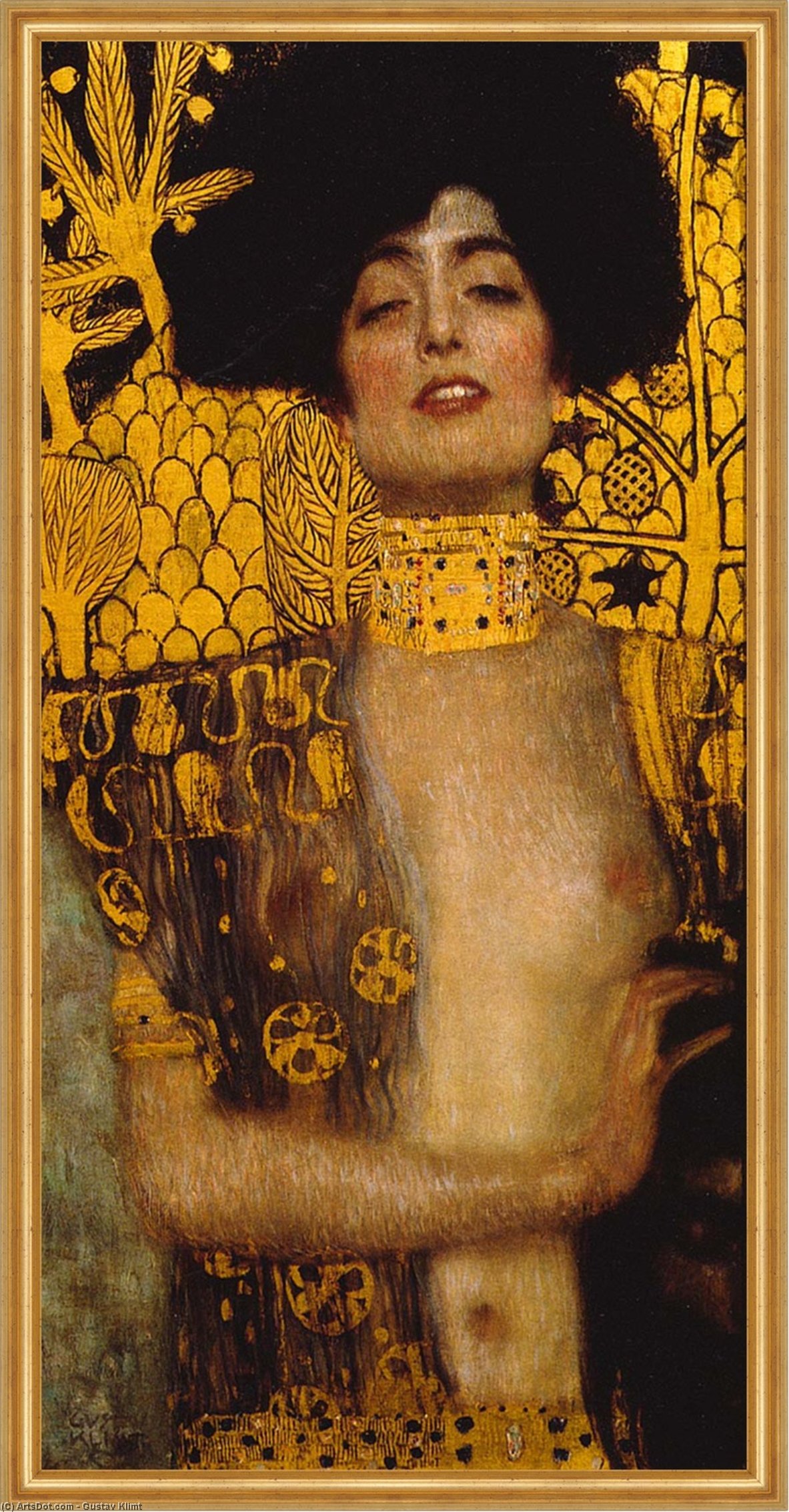
Gustav Klimt's *Giuditta I*, completed in 1901, stands as a cornerstone of the Vienna Secession movement and arguably his most celebrated work. More than just a portrait, it’s an embodiment of Art Nouveau aesthetics—a deliberate rejection of academic conventions favoring organic forms, opulent ornamentation, and evocative symbolism. The painting depicts Judith, draped in shimmering gold leaf, holding aloft Holofernes' severed head, a scene drawn from the biblical tale of Judith slaying Holofernes to save Jerusalem. This dramatic narrative is rendered with meticulous detail and infused with sensual beauty, reflecting Klimt’s fascination with mythology and psychoanalysis—influences that would shape his artistic trajectory throughout his career.
The Art Nouveau Influence: Organic Forms and Decorative Flourish
Klimt's stylistic choices are immediately recognizable as hallmarks of the Art Nouveau movement. Unlike the rigid lines and idealized figures favored by earlier styles, *Giuditta I* embraces flowing curves and undulating surfaces—a visual language inspired by nature’s rhythms. The gold leaf application is paramount, creating a radiant halo around Judith’s torso and emphasizing her regal posture. This technique wasn't merely decorative; it mirrored Klimt’s belief in the transformative power of art – elevating the mundane into something sublime. Furthermore, intricate floral motifs intertwine with geometric patterns—a characteristic juxtaposition that exemplifies Art Nouveau’s desire to synthesize disparate elements into harmonious compositions.
Symbolism and Psychological Depth: Exploring Inner Landscapes
Beyond its visual splendor, *Giuditta I* delves into profound psychological themes. Klimt employed a technique known as “psychological painting,” aiming to capture not just outward appearances but also the inner emotional state of his subjects. Judith’s gaze is averted downwards, conveying a sense of detachment and contemplation—a subtle indication of her internal struggle amidst the gruesome act she has committed. The gold leaf itself symbolizes divinity and immortality, highlighting Judith's triumph over evil and reinforcing the painting’s moral dimension. The severed head serves as a potent reminder of mortality and suffering, juxtaposed against Judith’s radiant beauty – prompting viewers to confront uncomfortable truths about human nature.
Technique: Layered Impasto and Metallurgical Mastery
Klimt achieved his breathtaking visual effect through masterful manipulation of pigment and texture. He utilized a technique called impasto—applying paint thickly onto the canvas—creating palpable ridges and valleys that capture light and shadow with remarkable accuracy. This textural richness contributes significantly to the painting’s dramatic impact, emphasizing Judith's physicality and conveying a sense of immediacy. However, Klimt’s true genius lay in his innovative use of gold leaf – a painstaking process involving applying thin sheets of hammered gold onto the canvas surface before layering subsequent coats of paint. The resulting luminosity is unparalleled, transforming *Giuditta I* into an unforgettable masterpiece—a testament to Klimt's artistic vision and technical prowess.
Historical Context: Challenging Artistic Conventions
The Vienna Secession was founded in 1907 by Klimt, Emil Nolde, Oskar Kokoschka, Josef Maria Auerbach, and Viktor Münzberger – a group of artists determined to break free from the constraints of academic art institutions. They rejected traditional artistic standards, advocating for expressive freedom and prioritizing emotional impact over formal correctness. *Giuditta I*, completed before the Secession’s official formation, nevertheless embodies its spirit—a bold assertion of individuality against societal pressures. Its audacious style and symbolic depth signaled a decisive shift in Viennese artistic culture, paving the way for avant-garde movements that would dominate the decades to follow.