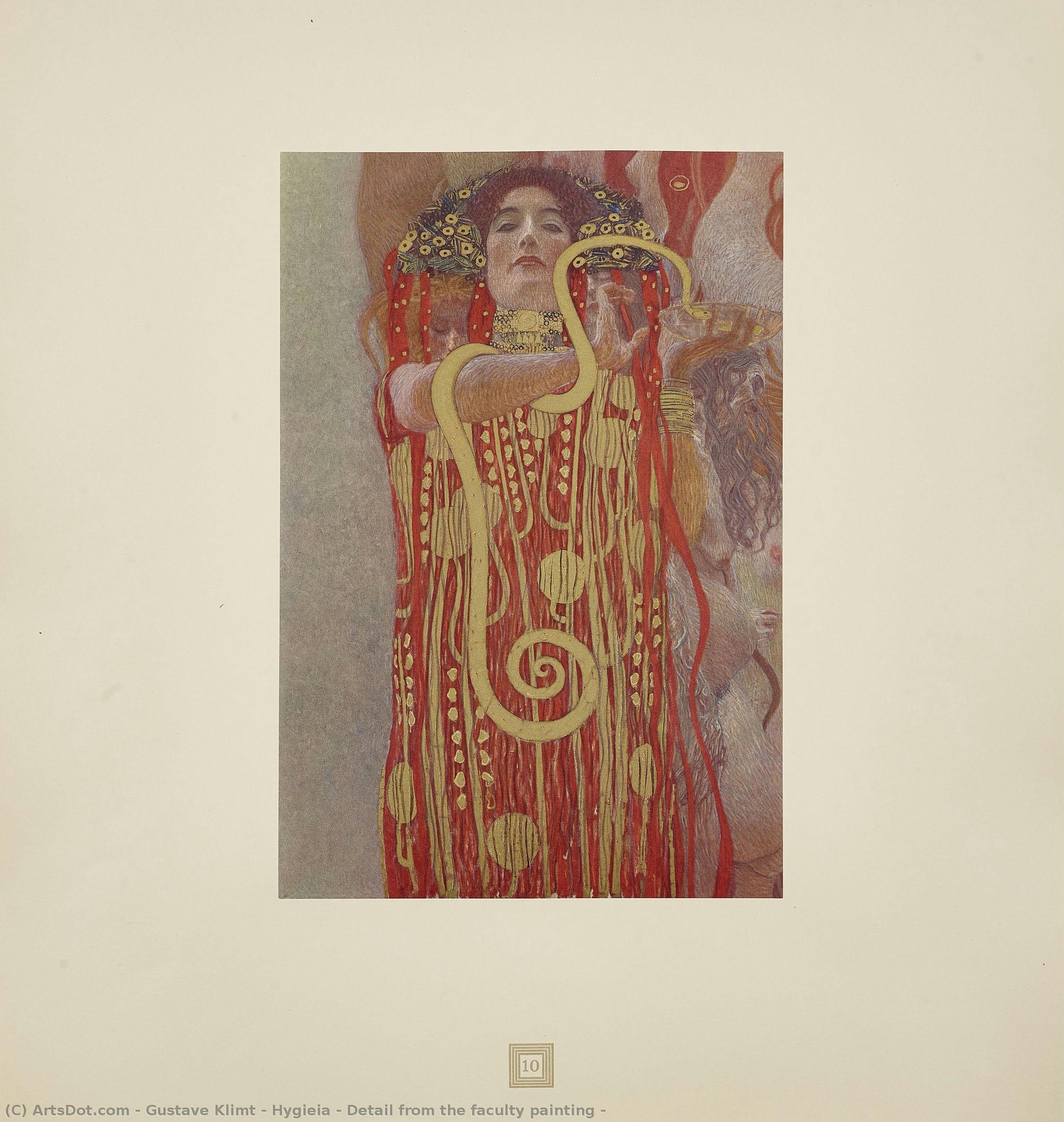
A mesmerizing glimpse into Gustav Klimt’s masterpiece, Hygieia, captures the artist's signature opulent style with shimmering gold leaf and intricate patterns depicting a woman entwined with a serpent – a symbol of healing and rebirth from Austria’s Art Nouveau era. Explore this stunning reproduction.
A Glimpse into Klimt’s Vision: Hygieia – Detail from the Faculty Painting
Gustav Klimt's "Hygieia," a captivating fragment extracted from his monumental faculty painting commissioned for the Akademie der Schönen Künste in Vienna, stands as a testament to the artist’s mastery of Symbolist aesthetics and his unparalleled command of decorative art. Completed in 1931, this intricate depiction captures not merely a figure but an embodiment of healing and feminine grace—a subject deeply rooted in ancient Greek mythology and imbued with Klimt's signature opulent style.
- Subject Matter: The painting portrays Hygieia, the Greek goddess of health, midwifery, and herbal medicine. She is depicted holding a snake or dragon – a potent symbol representing both poison and regeneration—in her outstretched hand. This duality speaks to the transformative power of healing; confronting darkness brings forth light and vitality.
- Style: Klimt’s style aligns perfectly with Symbolism, prioritizing emotional expression over realistic representation. The image eschews photographic accuracy in favor of stylized forms and flattened planes, characteristic of the movement's desire to explore inner psychological states.
The technique employed by Klimt is remarkable. He utilized gold leaf extensively—a technique he perfected during his travels to Egypt—creating a shimmering surface that elevates the artwork beyond mere visual appeal. This lavish application of gold isn’t merely decorative; it symbolizes purity, divinity, and immortality – concepts central to Klimt's artistic worldview. The meticulous layering of textures—smooth surfaces juxtaposed with embossed patterns—further enhances the painting’s tactile quality and contributes to its mesmerizing beauty. Furthermore, Klimt skillfully blended cloisonné enamel techniques with oil paint, resulting in a vibrant color palette dominated by reds, golds, and greens.
Historical Context: Vienna Secession and Artistic Rebellion
“Hygieia” emerged during the Viennese Secession movement—a radical artistic rebellion against the conservative academic tradition that prevailed in Austria at the time. Founded in 1897 by Klimt, Emil Nolde, Oskar Kokoschka, and Johann Jakob Schmiedtbacher, Secession championed individualism and challenged established norms. Artists sought to forge new paths for expression, rejecting idealized beauty and embracing darker themes—such as mortality and psychological complexity—reflecting the anxieties of the era.
- Symbolism’s Influence: Klimt's preoccupation with symbolism reflects the broader intellectual currents of his time. Philosophers like Nietzsche questioned religious dogma and championed subjective experience, influencing artists to explore inner landscapes and grapple with existential concerns.
- Decorative Art Tradition: Klimt’s work harkens back to Byzantine mosaics and medieval illuminated manuscripts—traditions that valued symbolic representation and opulent ornamentation. He consciously adopted these stylistic conventions to convey profound spiritual ideas.
Emotional Impact: Beauty Amidst Darkness
Ultimately, “Hygieia” transcends its formal elements to evoke a powerful emotional response. The serene posture of Hygieia—despite the menacing serpent—suggests resilience and inner strength. The radiant gold leaf casts an ethereal glow upon the scene, conveying hope amidst despair. Klimt’s masterful manipulation of color and texture invites contemplation on themes of healing, transformation, and the enduring beauty found within darkness. It serves as a poignant reminder that even confronting challenges can yield extraordinary rewards—a timeless message conveyed with breathtaking artistry.