Introduction to the Artist and Painting
Gustav Klimt, born in 1862, was an Austrian symbolist painter who played a crucial role in the Vienna Secession movement. His work is renowned for its focus on the female body and his distinct, often erotically charged style. One of his most famous paintings is 'Judith I' (1901), which exemplifies Klimt's unique approach to art.
Media and Style
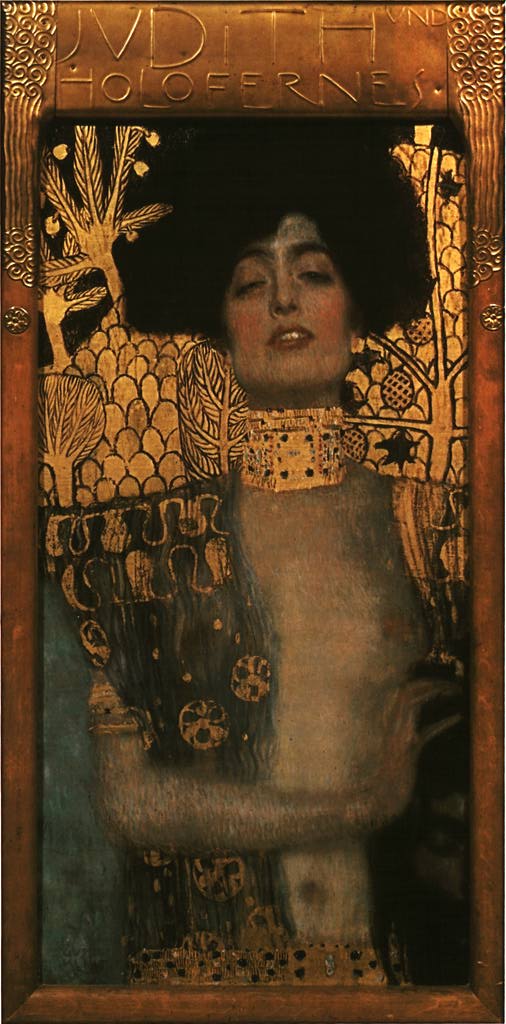
'Judith I' is an oil painting on canvas, measuring 84 x 42 cm. The artwork showcases Klimt's signature style, characterized by its decorative patterns, gold leaf application, and a flattened perspective that merges the figures with their ornamental backgrounds.
Detailed Analysis of 'Judith I'
In this painting, Klimt depicts the biblical character Judith, who is known for seducing and beheading the Assyrian general Holofernes to save her people. The artist portrays Judith as a powerful and sensual figure, with her direct gaze and provocative posture. Klimt's use of gold leaf in 'Judith I' highlights the painting's symbolic nature. Gold is often associated with divinity, power, and wealth, which emphasizes Judith's triumph over Holofernes. The ornamental patterns surrounding Judith further integrate her into the composition while also referencing Art Nouveau aesthetics.
Conclusion
Gustav Klimt's 'Judith I' is a remarkable example of the artist's unique style and his exploration of female sexuality and power. The painting's media, style, and detailed analysis reveal Klimt's mastery of decorative patterns, gold leaf application, and symbolic representation.
Note: This article is intended for informational purposes only and should not be considered an exhaustive analysis of 'Judith I'. For a more comprehensive understanding, consider consulting academic resources or visiting
The Museum Menard Art Museum in Japan, which houses one of Klimt's original paintings.