Discover Gustav Klimt (1862-1918), the Austrian Symbolist master of Art Nouveau! Explore his iconic 'Golden Phase,' sensual portraits, and masterpieces like *The Kiss*. Learn about his life, influences & legacy.
Gustav Klimt: A Vision of Golden Splendor
Gustav Klimt (14 July 1862 – 6 February 1918) was an Austrian symbolist painter and a founding member of the Vienna Secession movement. His work helped define the Art Nouveau style in Europe. Klimt is known for his paintings, murals, sketches, and other objets d'art. Klimt’s primary subject was the female body, and his works are marked by a frank eroticism. Amongst his figurative works, which include allegories and portraits, he painted landscapes. He is best known for *The Kiss* and *Portrait of Adele Bloch-Bauer I*. Among the artists of the Vienna Secession, Klimt was the most influenced by Japanese art and its methods.
Early in his career, he was a successful painter of architectural decorations in a conventional manner. As he began to develop a more personal style, his work was the subject of controversy that culminated when the paintings he completed around 1900 for the ceiling of the Great Hall of the University of Vienna were criticised as “pornographic.” He subsequently accepted no more public commissions, but achieved a new success with the paintings of his “golden phase,” many of which include gold leaf. Klimt’s technique was revolutionary—he embraced the use of gold leaf to create shimmering surfaces that captivated audiences and critics alike. This bold decision distinguished him from his contemporaries and cemented his place as one of the most influential artists of the era.
The Vienna Secession and Artistic Rebellion
Klimt’s artistic journey began in 1876 when he enrolled at the Vienna Kunstgewerbeschule (School of Applied Arts) under Ferdinand Laufberger. However, Klimt quickly recognized that academic training stifled his creative impulses. Dissatisfied with the prevailing artistic conventions, he joined forces with Ernst Klimt and Franz von Matsch to establish the Künstlercompagnie—the “Company of Artists”—in 1877. This collective challenged the established order by rejecting the stylistic dogma of copying historic styles and advocating for a new aesthetic that prioritized originality and emotional expression. Their refusal to conform to tradition fueled the formation of the Vienna Secession in 1897, marking a pivotal moment in Viennese art history.
Judith: Symbolism Embodied
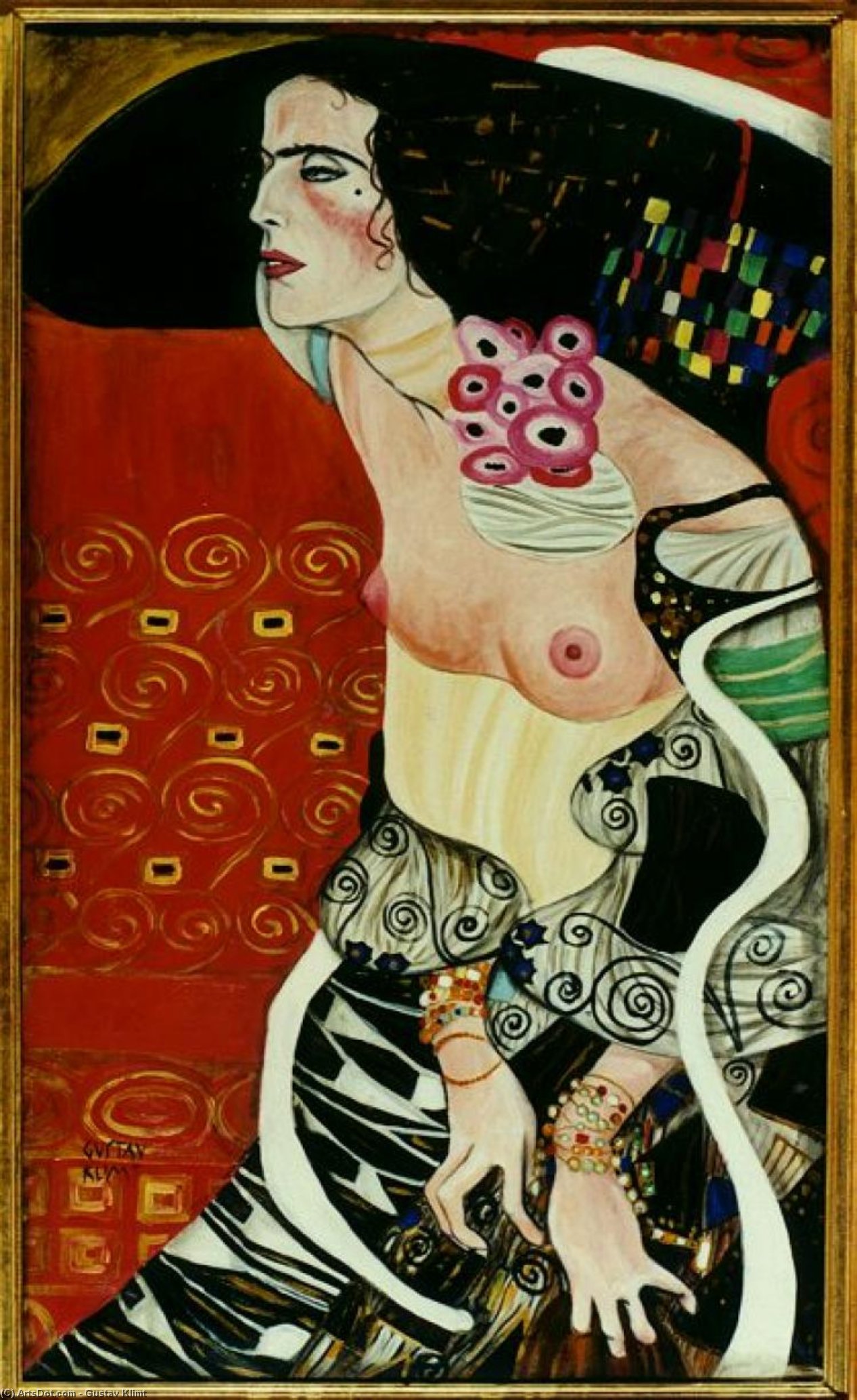
The painting *Judith* exemplifies Klimt’s signature style—a masterful blend of realism and symbolism rooted in Art Nouveau principles. Created in 1909, this oil on canvas depicts Judith, a biblical heroine who decapitated Holofernes, the Assyrian general besieging Jerusalem. Klimt's meticulous attention to detail—the intricate patterns adorning Judith’s dress and the opulent background—reflects the Secession’s fascination with decorative arts and its desire to elevate painting beyond mere representation. The golden accents permeate the composition, symbolizing divine grace and highlighting the transformative power of art. Furthermore, the inclusion of a clock and two vases serves as visual metaphors for time and contemplation, deepening the artwork's intellectual resonance.
Influence Beyond Vienna
Klimt’s artistic vision extended far beyond the confines of Vienna. His association with the Secession profoundly impacted the broader European art landscape, inspiring artists across borders to embrace bold experimentation and explore new expressive languages. Klimt’s fascination with Japanese aesthetics—particularly Rimpa style—influenced his compositional choices and color palettes, demonstrating the interconnectedness of artistic traditions. The enduring legacy of *Judith* continues to inspire artists and collectors alike, solidifying Gustav Klimt's position as a towering figure in 20th-century art history.
Exploring Judith II (Salome)
The Secession’s rejection of academic conventions paved the way for Klimt’s groundbreaking approach to portraying female figures—a departure from idealized representations that prioritized beauty and harmony. Unlike his sister *Judith I*, Klimt's *Judith II* Salome is less overtly sensual, presenting a woman consumed by inner turmoil and haunted by memories of her deed. The artist’s masterful use of gold leaf creates an unsettling juxtaposition between the luminous surface and the dark psychological depths of his subject—a technique that anticipates Surrealist explorations of the subconscious mind. Klimt's exploration of eroticism was controversial at the time, but it remains a cornerstone of his artistic oeuvre.
A Legacy Illuminated
Gustav Klimt’s influence extends beyond stylistic innovation; he championed a humanist perspective that prioritized emotional truth and psychological complexity—values that continue to resonate with audiences today. His unwavering commitment to artistic integrity—coupled with his daring embrace of unconventional techniques—established him as an icon of Viennese Modernism and cemented his place among the most celebrated artists of all time. Klimt’s enduring fascination with gold—a symbol of divinity, wealth, and transformation—mirrors the Secession's aspiration to elevate art into a transcendent experience.