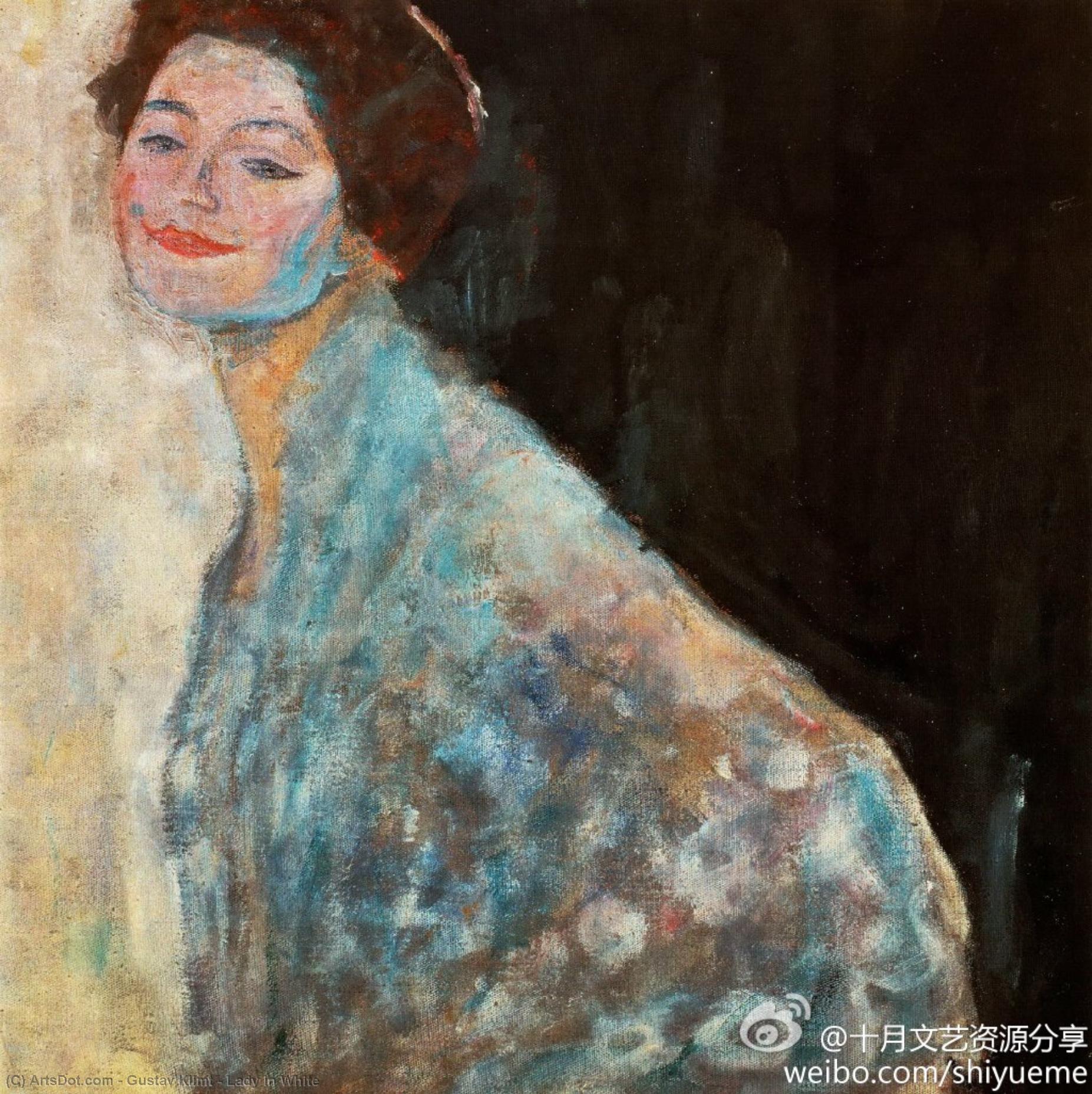
Discover Gustav Klimt’s "Lady in White," a mesmerizing Impressionist portrait of quiet contemplation. Explore its muted tones, fluid lines & symbolic beauty – a timeless masterpiece.
Discover Gustav Klimt (1862-1918), the Austrian Symbolist master of Art Nouveau! Explore his iconic 'Golden Phase,' sensual portraits, and masterpieces like *The Kiss*. Learn about his life, influences & legacy.
A Glimpse into Klimt’s Intimate World: “Lady in White”
This captivating portrait, tentatively titled “Lady in White,” offers a compelling example of Gustav Klimt's early mastery within the Impressionistic and burgeoning Symbolist movements. While its exact date remains unknown, the work demonstrably reflects Klimt’s artistic development during a pivotal period – before his iconic ‘Golden Phase,’ yet already hinting at the stylistic innovations that would define it.
Subject & Composition
The painting presents a half-length portrait of an unidentified woman, elegantly attired in white garments. The composition is deliberately focused on her face and upper body, drawing the viewer’s attention to her expression and the delicate interplay of light and shadow. Klimt eschews elaborate backgrounds or distracting details, instead opting for a shallow depth of field that emphasizes the subject's introspective presence. This simplicity allows for an intimate connection between the viewer and the woman depicted.
Style & Technique
“Lady in White” is characterized by Klimt’s signature Impressionistic brushwork – loose, visible strokes applied with a sensitivity to color and texture. The artist masterfully employs a muted palette dominated by blues, browns, and ochre tones, creating a harmonious yet subtly melancholic atmosphere. Unlike the highly decorative style he would later become famous for, this work showcases a more restrained approach, prioritizing atmospheric effect over opulent ornamentation. The layering of paint builds up color and texture, giving the surface a rich, tactile quality. The fluidity of the lines contributes to the painting’s overall softness and dreamlike aesthetic.
Historical Context & Artistic Influences
Born into an artistic family in Austria, Klimt (1862-1918) was deeply influenced by both traditional academic training and the progressive art movements of his time. His early work, including “Lady in White,” reflects a transition from conventional portraiture towards a more subjective and expressive style. The Vienna Secession – an artistic movement challenging established norms – played a crucial role in shaping Klimt’s aesthetic vision. He was part of the "Company of Artists" which secured commissions for decorative murals, honing his skills in composition and detail. This painting predates his full embrace of gold leaf and intricate patterns, but it already demonstrates his ability to capture psychological depth and emotional nuance.
Symbolism & Emotional Resonance
While lacking overt symbolic elements, “Lady in White” evokes a powerful sense of quiet contemplation and perhaps even melancholy. The woman’s expression is enigmatic, inviting viewers to project their own interpretations onto her inner world. The soft lighting and muted colors contribute to this introspective mood. The choice of white clothing could symbolize purity or innocence, but also serves as a canvas for the subtle variations in light and shadow that define the painting’s overall aesthetic.
Impact & Appeal
“Lady in White” is an exceptional example of Klimt's early artistic development. It appeals to collectors who appreciate his evolving style and those seeking artwork with emotional depth and atmospheric beauty. Its muted color palette and intimate scale make it a versatile piece suitable for a variety of interior design schemes – from classic to contemporary. The painting’s subtle elegance and timeless quality ensure its enduring appeal. It offers a glimpse into the artistic journey of one of history's most celebrated painters, providing a unique opportunity to own or reproduce a work that embodies both technical skill and emotional resonance.