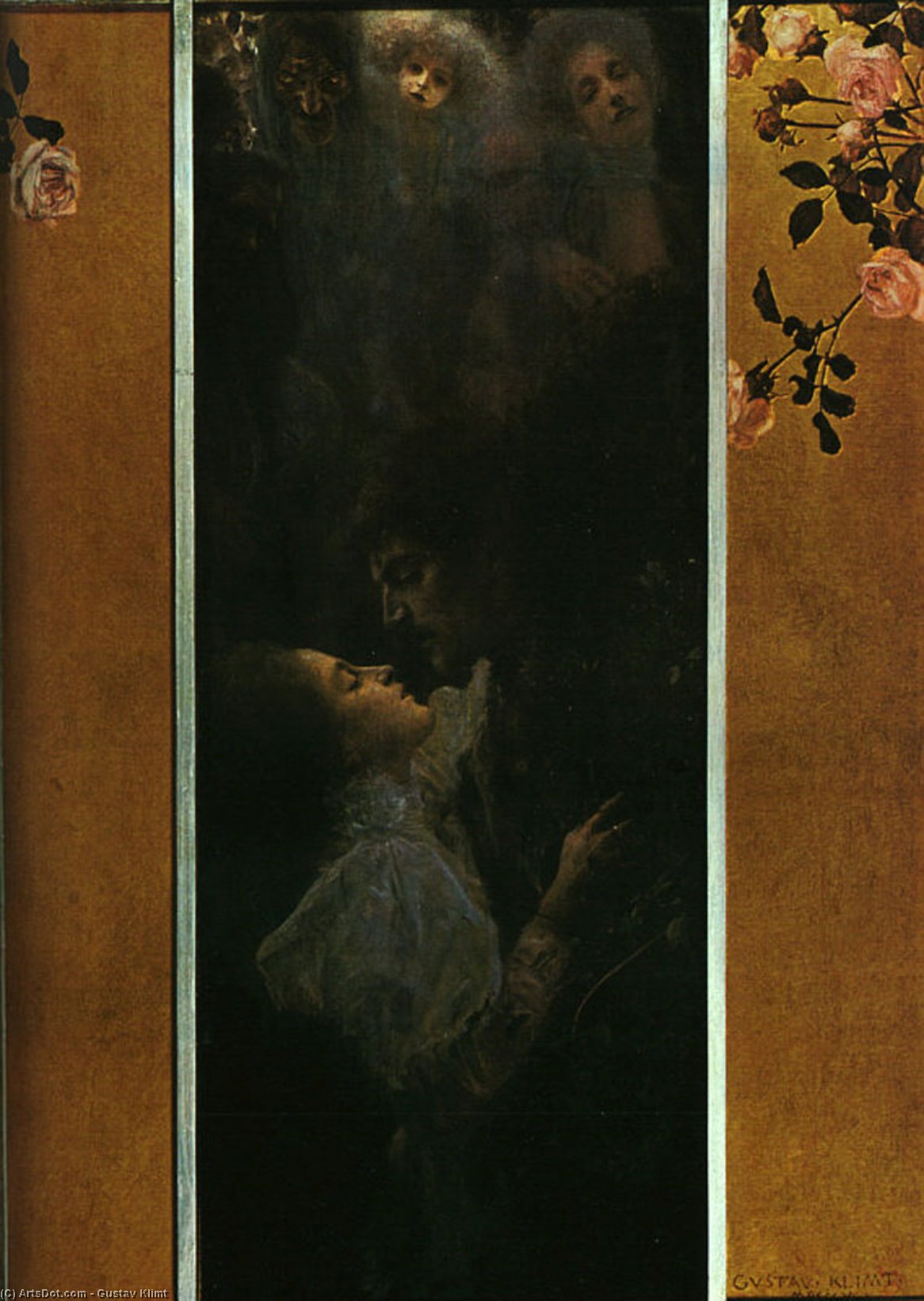
Love, Oil on Canvas – Historisches Muse
Gustav Klimt’s “Love,” completed in 1895, stands as a cornerstone of Viennese Secession and Art Nouveau aesthetics—a testament to the artist's masterful manipulation of gold leaf and intricate patterns. More than just a beautiful image, it embodies profound symbolism reflecting the anxieties and aspirations of its time.
- Subject Matter: The painting depicts a tender embrace between a man and woman, capturing a moment of intimacy and connection. Their faces are pressed together in an expression of deep affection, symbolizing idealized love and harmony.
- Style & Technique: Klimt’s signature style is instantly recognizable through the extensive use of gold leaf—a technique borrowed from Byzantine mosaics—which dominates the backdrop and subtly illuminates the figures. The artist employs meticulous detail and decorative ornamentation characteristic of Art Nouveau, prioritizing flowing lines and organic forms over rigid geometric shapes.
- Historical Context: Created during Klimt’s “golden phase,” “Love” emerged from a milieu grappling with societal shifts—the burgeoning feminist movement alongside traditional gender roles—and reflects the artistic desire to transcend mere realism toward emotionally resonant representations of human relationships. The painting was conceived as part of a larger decorative project intended for the Galleria Civica d'Arte Moderna e Contemporanea in Turin, Italy – a space dedicated to showcasing groundbreaking modern art.
Symbolism: Beyond its visual splendor, “Love” is laden with symbolic significance. The angels surrounding the couple represent divine guardianship and spiritual contemplation, suggesting that love possesses an elevated moral dimension. The flowers adorning the scene symbolize fertility and rebirth—a hopeful affirmation of life’s cyclical nature. Klimt's deliberate positioning of the figures – centered amidst swirling patterns – reinforces the idea of unity and completeness.
Emotional Impact: “Love” transcends mere depiction; it evokes a palpable sense of warmth, tenderness, and longing. The shimmering gold leaf contributes to an ethereal atmosphere, transporting viewers into a realm of idealized beauty and emotional depth. It remains a powerful emblem of romantic devotion—a timeless masterpiece that continues to inspire admiration for its artistic innovation and expressive power.
- Other Notable Works: Klimt’s oeuvre includes “Music,” showcasing his exploration of musical themes through symbolic imagery; “Josef Lewinsky as Carlos in Clavigo,” a portrait reflecting Klimt's fascination with theatrical performance; and “Josef Lewinsky,” another striking depiction utilizing Art Nouveau techniques.