Discover Gustav Klimt (1862-1918), the Austrian Symbolist master of Art Nouveau! Explore his iconic 'Golden Phase,' sensual portraits, and masterpieces like *The Kiss*. Learn about his life, influences & legacy.
Explore art history's treasures at the Albertina Museum in Vienna! Discover stunning prints, drawings & masterpieces spanning centuries within its unique architectural spaces.
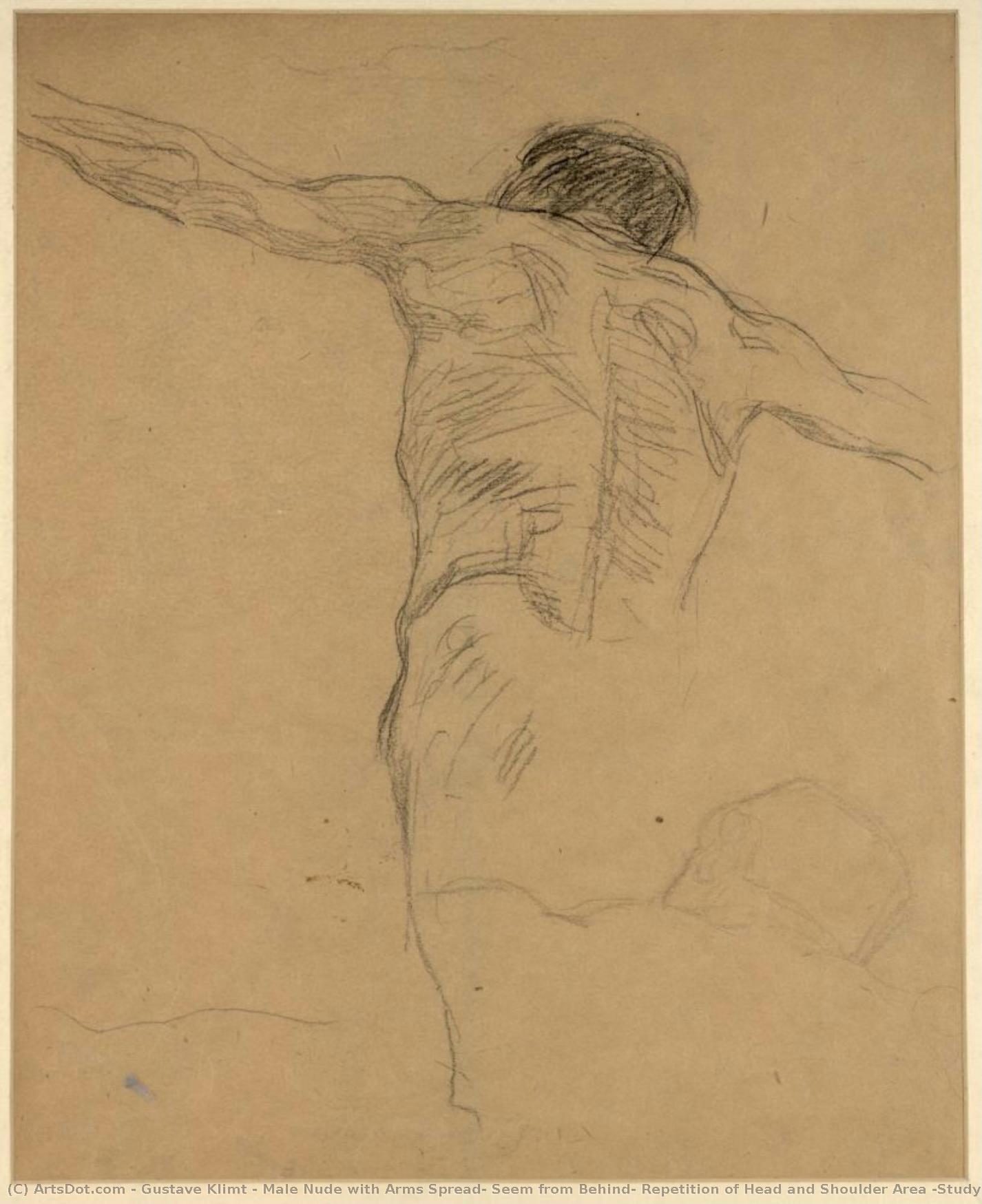
Gustav Klimt’s Male Nude with Arms Spread, Seem From Behind – A Study in Quiet Contemplation
Gustav Klimt's “Male Nude With Arms Spread, Seem From Behind,” created in 1902 during his prolific artistic period, stands as a cornerstone of Art Nouveau and embodies the movement’s fascination with organic forms and decorative embellishment. More than just a depiction of human anatomy—though meticulously rendered—the painting operates on a deeper level, inviting viewers into a realm of introspection and symbolic resonance.
- Subject Matter: The artwork portrays a solitary male nude figure seated beside the sea, positioned in an enigmatic posture that defies easy interpretation. Klimt eschews explicit narrative; instead, he presents a moment of serene stillness, prioritizing form and texture over storytelling.
- Style & Technique: Characteristic of Klimt’s signature style, “Male Nude With Arms Spread” utilizes bold geometric shapes interwoven with flowing curvilinear lines—a hallmark of Art Nouveau—to create an arresting visual harmony. The artist employs graphite pencils combined with erasing and stumping techniques to achieve remarkable tonal gradation, capturing the subtle nuances of light and shadow on the nude’s torso.
- Historical Context: Produced in Rome during Klimt's bursary period, the painting reflects the influence of German aesthetic theory—particularly Winckelmann’s concept of “noble beauty”—which championed idealized forms and restrained emotion. Klimt sought to emulate classical sculpture’s elegance and serenity, translating these principles into a distinctly modern canvas.
- Symbolism: The pose itself is laden with symbolic significance. The arms spread outwards suggest openness and vulnerability, while the head resting on knees conveys repose and contemplation. The sea backdrop evokes themes of solitude, renewal, and the subconscious—elements frequently explored by Klimt’s contemporaries.
Detailed Examination: Texture and Decorative Ornamentation
Klimt's masterful manipulation of texture is paramount to the painting's impact. He meticulously applies stumping techniques – using a rubber mallet – to create areas of dense tonal variation, emphasizing the contours of the torso and conveying a palpable sense of physicality. The surface is adorned with intricate patterns—primarily geometric shapes—that echo Klimt’s broader artistic vision. These patterns aren’t merely decorative; they serve as visual anchors, grounding the figure within an environment that simultaneously isolates him and invites contemplation.
Influence on Artistic Discourse
“Male Nude With Arms Spread” garnered considerable critical acclaim upon its debut, prompting discussions about beauty and artistic inspiration. Critics like Elizabeth Prettejohn noted Klimt’s adherence to Winckelmann's ideals of noble beauty—a pursuit of perfection that prioritized form over narrative—comparing the figure’s pose to Leonardo da Vinci’s Vitruvian Man. Furthermore, the painting’s visual vocabulary resonated with Surrealist artists who sought to tap into the realm of dreams and subconscious imagery.
A Legacy Enduring Through Reproduction
Today, reproductions of “Male Nude With Arms Spread” continue to captivate audiences worldwide. Its timeless elegance—coupled with Klimt’s innovative technique—makes it an ideal centerpiece for interior design projects seeking sophistication and artistic statement. ArtsDot offers exceptional quality prints that faithfully capture the painting's luminous palette and textural richness, allowing collectors and enthusiasts alike to experience the profound beauty of this iconic masterpiece.