Discover Gustav Klimt (1862-1918), the Austrian Symbolist master of Art Nouveau! Explore his iconic 'Golden Phase,' sensual portraits, and masterpieces like *The Kiss*. Learn about his life, influences & legacy.
Explore art history's treasures at the Albertina Museum in Vienna! Discover stunning prints, drawings & masterpieces spanning centuries within its unique architectural spaces.
A Study in Quiet Dignity: Gustav Klimt’s Man in Three-Quarter View
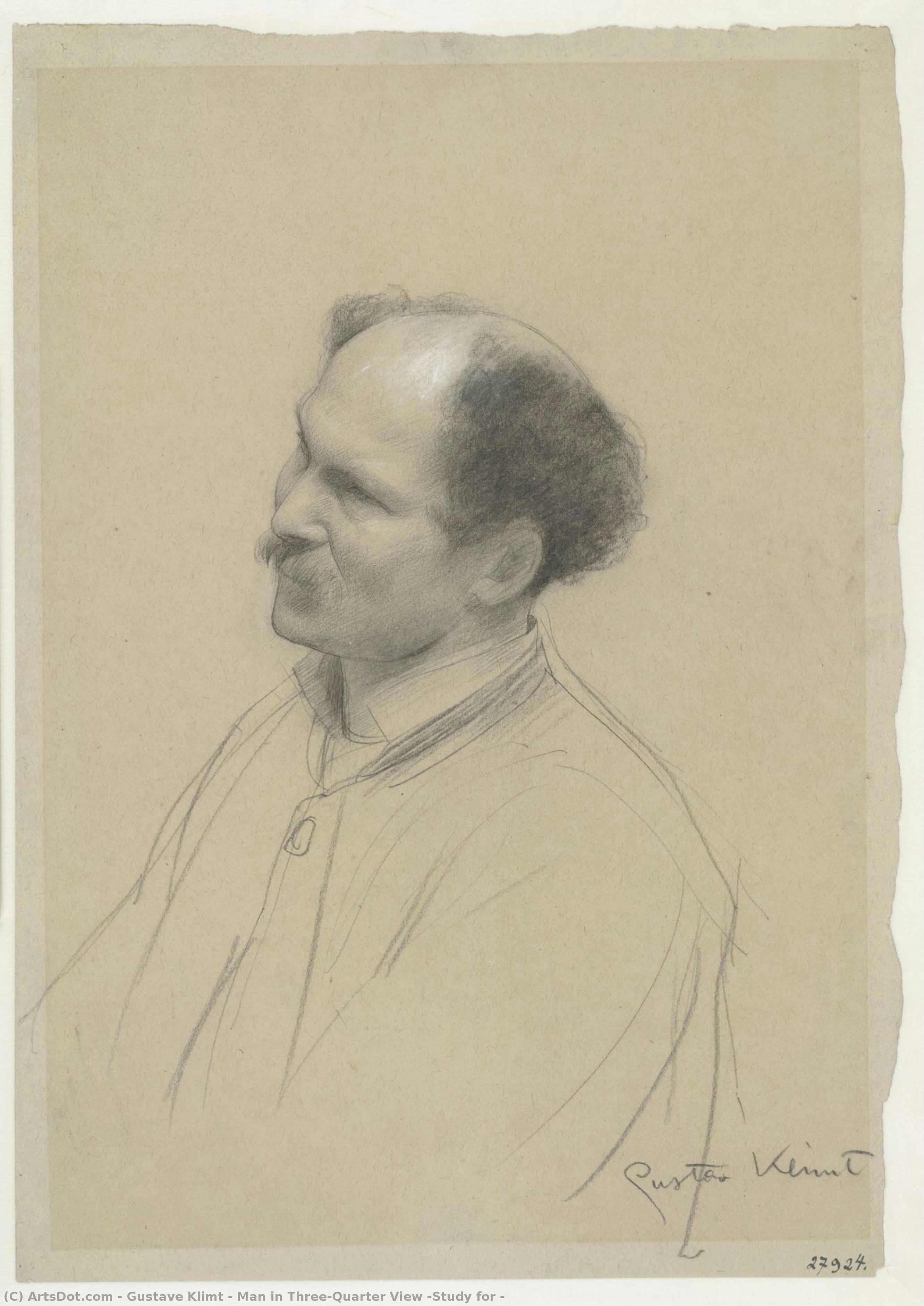
The artwork, “Man in Three-Quarter View,” stands as a poignant testament to Gustav Klimt's formative artistic explorations. Executed in 1887, this pencil drawing isn’t merely a depiction of a man; it’s a glimpse into the mind of an artist grappling with stylistic evolution—a crucial precursor to Klimt’s groundbreaking Art Nouveau masterpieces adorned with shimmering gold leaf. Its unassuming grayscale palette belies the profound depth of observation and technical mastery evident in every delicate line.
Composition and Technique: Embracing Academic Realism
The drawing's central focus is undeniably the man’s face, positioned slightly off-center to lend a subtle dynamism to the composition. Klimt skillfully employs hatching and crosshatching techniques—methods favored during the academic realism of his time—to sculpt tonal values and convey form with remarkable precision. Varying line weights contribute to textural nuances, mirroring the roughness of graphite on paper and hinting at the folds of clothing and the contours of hair. The artist’s meticulous attention to detail speaks volumes about his dedication to mastering traditional drawing methods before venturing into the opulent decorative style that would define his later career.
Historical Context: Vienna's Artistic Landscape
Vienna in 1887 was a crucible of artistic innovation, fueled by intellectual currents and burgeoning avant-garde movements. Klimt’s early works reflect this atmosphere, absorbing influences from Impressionism and Japonisme while simultaneously grounding themselves in classical draughtsmanship. The drawing serves as an anchor to the broader context of Viennese Art Nouveau—a movement characterized by flowing lines, floral motifs, and a fascination with symbolism—demonstrating Klimt's foundational understanding of artistic principles before he embraced its flamboyant aesthetic.
Symbolism and Emotional Resonance: Introspection and Quiet Strength
The man’s downward gaze and solemn expression are imbued with an unmistakable sense of introspection. This posture conveys not outward grandeur but inward contemplation, reflecting a quiet dignity that transcends mere portraiture. Klimt's masterful use of line—particularly the expressive hatching—captures this emotional nuance, inviting viewers to contemplate themes of solitude and inner reflection. The drawing’s muted tones amplify its contemplative mood, mirroring the subtle beauty found in understated observation.
A Legacy of Precision: Why This Study Matters
“Man in Three-Quarter View” isn't just a beautiful drawing; it represents Klimt’s unwavering commitment to foundational artistic skills—a cornerstone upon which his iconic Art Nouveau style was built. It exemplifies the artist’s ability to distill complex ideas into elegant visual representations, securing its place as an invaluable piece of art history and offering collectors and interior designers alike a captivating glimpse into the genesis of one of Vienna's most celebrated artistic voices.