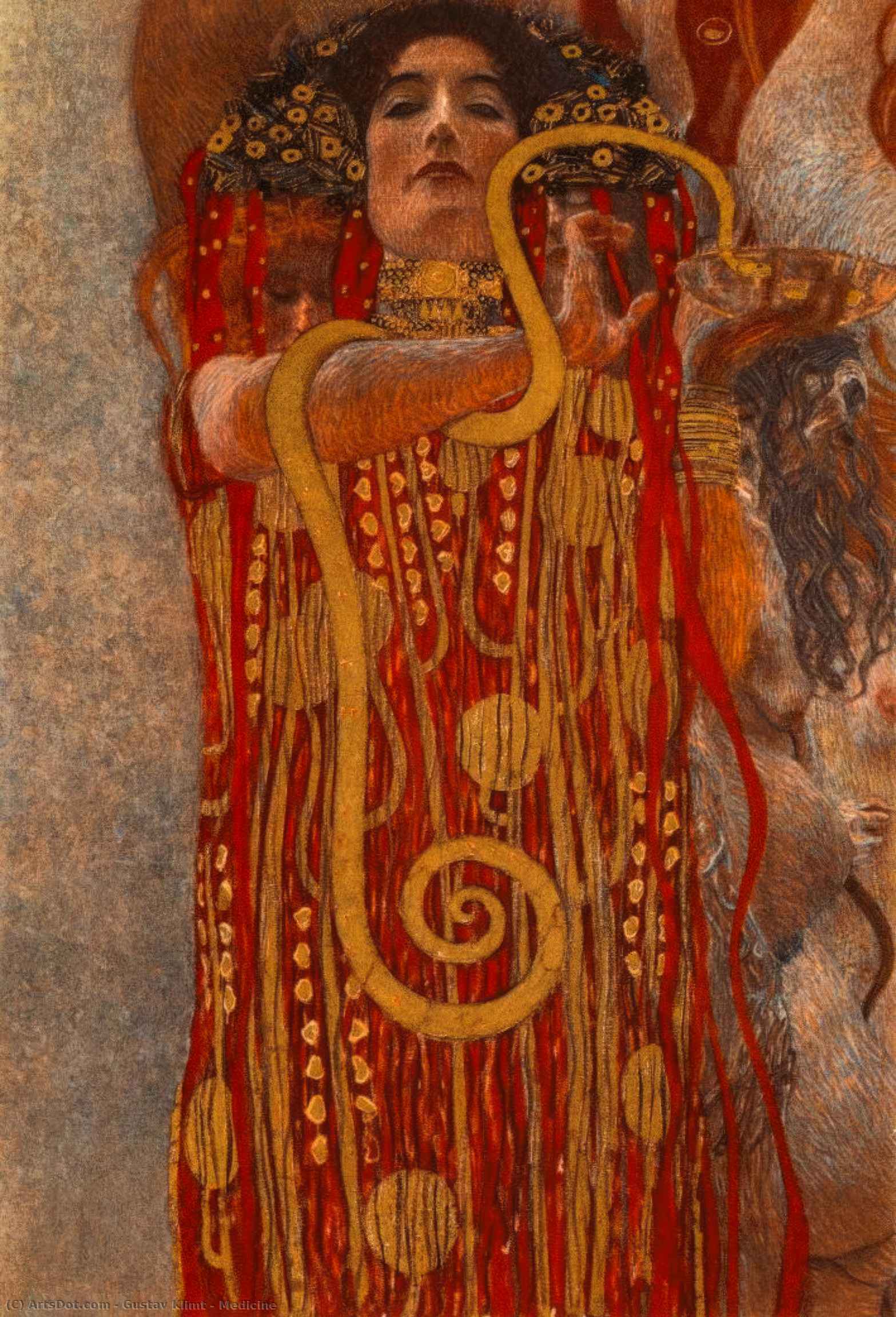
Delve into Gustav Klimt’s ‘Medicine,’ a mesmerizing Secessionist painting symbolizing healing & universal suffering through intricate patterns and vibrant gold hues.
Discover Gustav Klimt (1862-1918), the Austrian Symbolist master of Art Nouveau! Explore his iconic 'Golden Phase,' sensual portraits, and masterpieces like *The Kiss*. Learn about his life, influences & legacy.
Medicine: A Symphony of Symbolism by Gustav Klimt
Gustav Klimt’s “Medicine,” completed in 1900, stands as a cornerstone of Viennese Secessionist art and a profound meditation on the complexities of healing—both physical and spiritual. Presented at the tenth Secession Exhibition that March, this monumental ceiling painting immediately captivated audiences with its audacious blend of mythological allusion and meticulous artistic execution. Klimt’s vision wasn't merely decorative; it was an ambitious statement about humanity’s relationship to nature, knowledge, and the transformative power of art itself.
The Artistic Vision: Mythological Resonance
Born in Baumgarten near Vienna in 1862, Gustav Klimt possessed a lineage steeped in artistic tradition—his father practiced gold engraving—a craft that instilled within him an unwavering appreciation for texture, luminosity, and the captivating allure of precious metals. This formative influence is palpable throughout “Medicine,” where Klimt employs lavish gold leaf to create shimmering surfaces that envelop the viewer in a dreamlike atmosphere. The painting depicts a woman draped in scarlet robes, encircled by a serpent—a potent symbol representing rebirth, healing, and the duality inherent in existence. Her flowing hair cascades down her back, crowned with floral ornamentation signifying wisdom and regal dignity. Two additional figures flank her, one positioned at the upper left corner and another on the right, adding to the painting’s intricate compositional balance.
Technique and Style: Klimt's Innovative Approach
Klimt’s mastery of technique is undeniable. He painstakingly studied anatomical models and posed nude figures—a practice considered controversial at the time—to achieve unparalleled realism while simultaneously elevating his subjects beyond mere representation. The linear stylization of the nude bodies contributes to a harmonious interplay between form and expression, mirroring Klimt's broader artistic philosophy. Unlike academic painting’s emphasis on idealized beauty, Klimt embraced an expressive style rooted in Symbolism, prioritizing emotional impact over literal accuracy. He skillfully blended geometric patterns with organic forms—particularly floral motifs—creating a visual language that transcends the mundane and invites contemplation.
Symbolism Unveiled: Decoding the Layers of Meaning
“Medicine” is rife with symbolic references that demand careful interpretation. The serpent around the woman’s neck symbolizes not only healing but also death – acknowledging the inescapable cycle of life and decay—a recurring motif in Klimt's oeuvre. The golden hues permeate the entire canvas, representing divine grace and spiritual enlightenment. Furthermore, the bowl filled with flowers at the bottom right corner embodies fertility and renewal, reinforcing the painting’s overarching theme of regeneration. Klimt deliberately avoids portraying explicit suffering; instead, he presents figures as embodiments of primal states—a deliberate choice designed to evoke universal emotions rather than specific narratives.
Legacy and Relevance Today
“Medicine” resides within The Museum Menard Art Museum (Japan)’s collection, securing its place among the most significant artworks of the early 20th century. Its influence extends far beyond the Secession movement, inspiring artists across disciplines and continuing to resonate with audiences today. A high-quality reproduction captures not only Klimt’s breathtaking visual artistry but also the profound intellectual depth embedded within this unforgettable masterpiece—a testament to his enduring legacy as one of Austria's greatest artistic innovators.