A Portrait of Intimacy: Exploring Gustav Klimt’s “Mother with Two Children”
Gustav Klimt's "Mother with Two Children," painted in 1910, represents a fascinating departure from the artist’s more overtly opulent Symbolist portraits that characterized his recent output. Initial observations reveal a surprising quietude—a stark contrast to Klimt’s usual flamboyant style—that belies profound artistic consideration. The painting's genesis remains shrouded in mystery regarding the identities of its subjects; scholars speculate Klimt may have captured impressions derived from his own personal life, specifically his relationships with models and the children he sired during this intensely private period. Upon its debut, the two sons Klimt had with Maria Ucicka and Marie Zimmermann were just ten years old, adding another layer of biographical significance to the artwork.
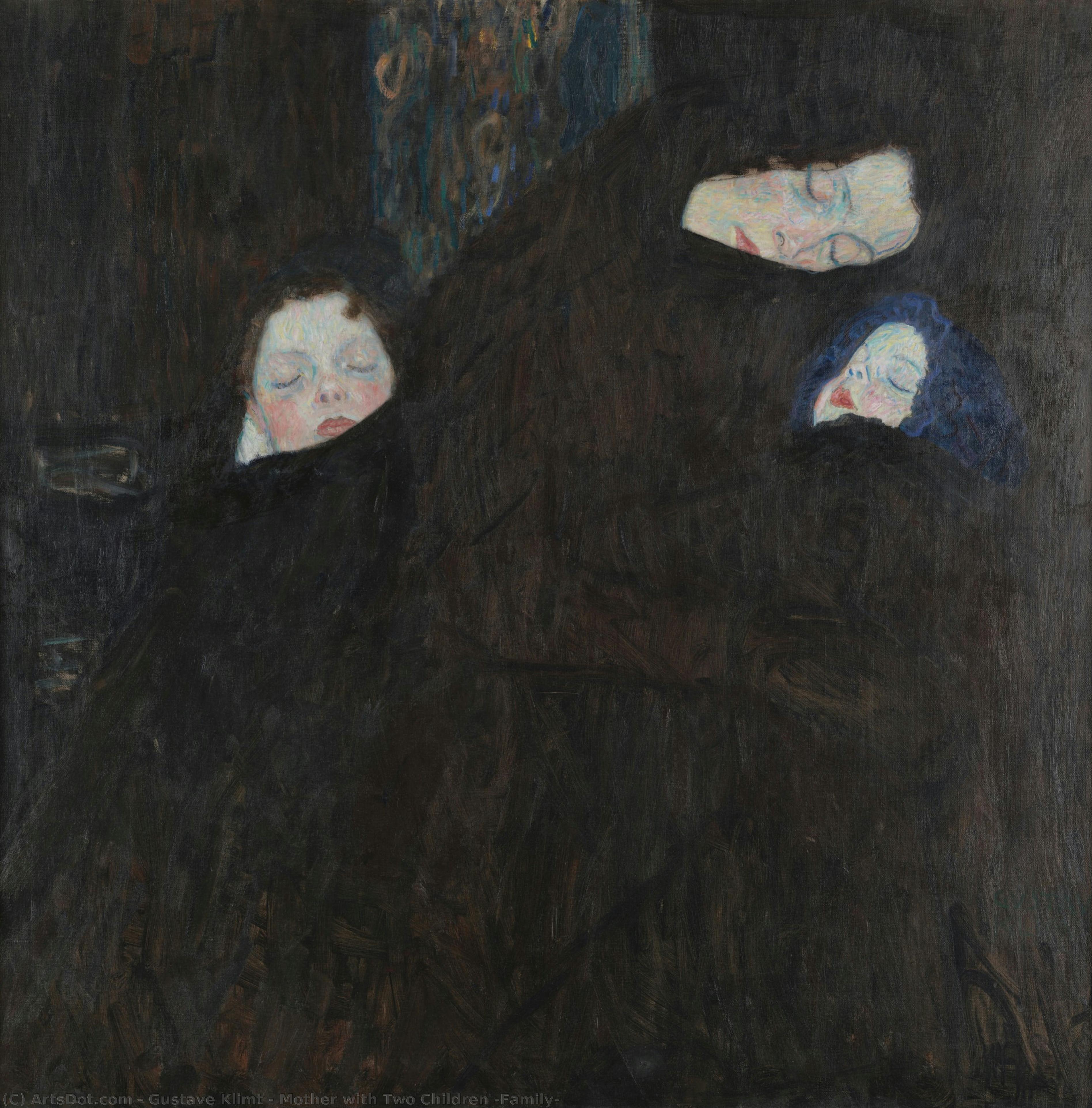
- Subject Matter: The scene depicts a sleeping mother nestled beside her two children in bed—a tender tableau capturing the essence of familial devotion.
- Style: Klimt’s work firmly establishes itself within the Symbolist movement, prioritizing emotional resonance and suggestive imagery over literal representation. However, unlike many of his contemporaries, “Mother with Two Children” eschews grand narratives in favor of a concentrated focus on domestic tranquility.
Chromatic Restraint: The Power of Limited Palette
What immediately distinguishes this painting is its remarkably restrained color palette. Klimt employs predominantly dark brownish-black hues that dominate the canvas, creating an atmosphere of solemn contemplation. Yet, amidst these muted tones emerge three faces—the mother’s visage and those of her sons—illuminated by splashes of vibrant color. This deliberate juxtaposition generates a striking visual dichotomy: the luminous skin tones stand in sharp opposition to the enveloping darkness of the surrounding environment. The artist skillfully utilizes this contrast to emphasize dimensionality, sculpting the figures as islands of sculpted form against the backdrop of amorphous, two-dimensional hues.
Technique and Material Innovation
Klimt’s masterful technique showcases his pioneering use of gold leaf—a hallmark of his oeuvre. The extensive application of gold leaf contributes not only to the painting's visual splendor but also imbues it with symbolic weight, referencing ancient myths and representing divine grace. Furthermore, Klimt expertly blends oil paint with gold leaf, achieving a textural richness that elevates the artwork beyond mere surface decoration. This meticulous layering process underscores his dedication to capturing subtle nuances of light and shadow—essential elements in conveying emotion and enhancing the painting’s overall impact.
Symbolism and Emotional Resonance
The imagery within “Mother with Two Children” resonates deeply with Symbolist ideals, reflecting Klimt's preoccupation with themes of fertility, motherhood, and spiritual contemplation. The sleeping figures embody vulnerability and serenity—a poignant depiction of the sacred bond between mother and child. The inclusion of a clock serves as a subtle reminder of time’s passage, juxtaposed against the timeless stillness of the familial embrace. Ultimately, Klimt's artwork transcends mere visual representation; it invites viewers to contemplate profound questions about life, love, and the enduring power of human connection.
A Legacy of Elegance
“Mother with Two Children” exemplifies Klimt’s artistic vision—a testament to his ability to distill complex emotions into deceptively simple forms. Its understated beauty continues to captivate audiences today, securing its place as a cornerstone of Symbolist art and an enduring symbol of familial tenderness. A reproduction of this masterpiece offers collectors and interior designers alike the opportunity to experience Klimt’s genius firsthand—bringing a touch of timeless elegance into any space.