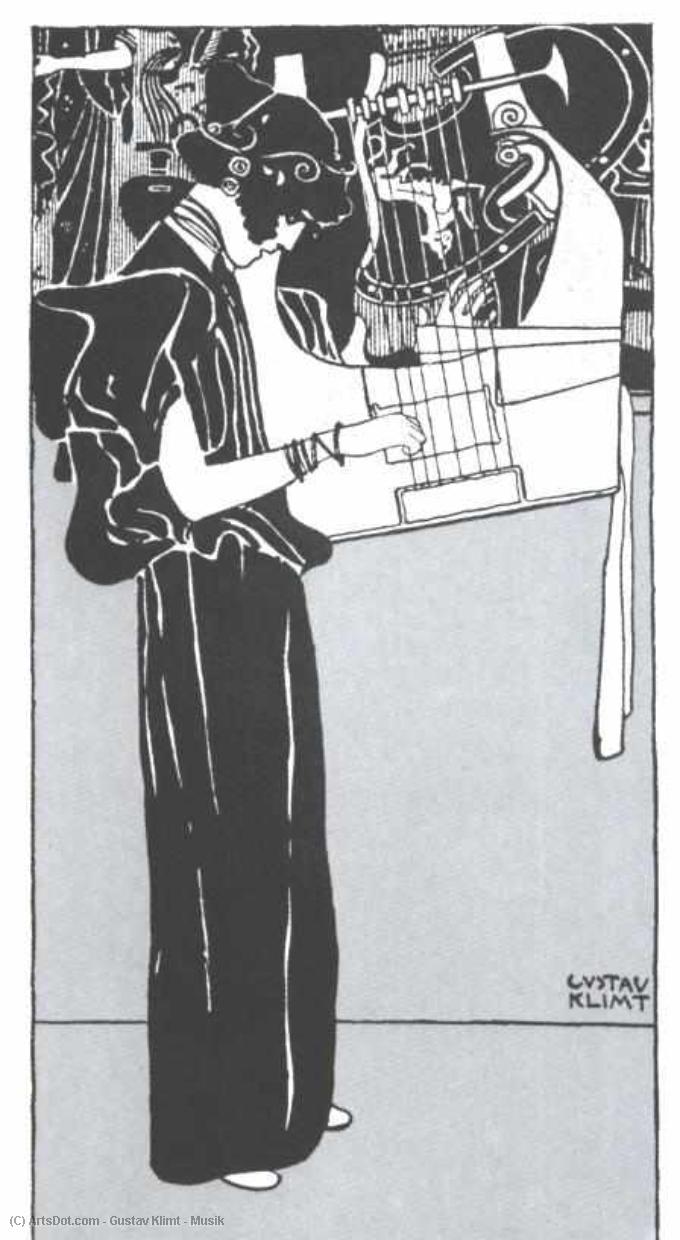
Discover Gustav Klimt’s ‘Musik,’ a stunning Art Nouveau illustration of a lyre-playing woman. Explore its intricate lines, decorative patterns & serene beauty – a captivating piece by a master.
Discover Gustav Klimt (1862-1918), the Austrian Symbolist master of Art Nouveau! Explore his iconic 'Golden Phase,' sensual portraits, and masterpieces like *The Kiss*. Learn about his life, influences & legacy.
A Melancholy Muse: Exploring Klimt’s “Musik”
“Musik,” by Gustav Klimt, is a captivating work that embodies the ethereal beauty and symbolic depth characteristic of the Art Nouveau movement. This black and white illustration presents a solitary female figure immersed in musical expression, evoking a sense of serene contemplation tinged with melancholy. The artwork’s vertical composition emphasizes the elongated form of the woman and her flowing robes, creating a dynamic sense of upward movement and grace.
Subject & Classical Allusions
The central subject is a woman depicted playing a lyre – an instrument deeply rooted in classical mythology, most notably associated with Orpheus. This immediately suggests themes of artistic inspiration, lamentation, and the power of music to transcend earthly boundaries. Her elaborate headdress and flowing garments further contribute to this sense of timelessness, hinting at a mythological or allegorical narrative rather than a specific portrait. The figure’s introspective pose and downcast gaze reinforce the feeling of profound emotional depth.
Art Nouveau Style & Technique
Klimt masterfully employs the stylistic hallmarks of Art Nouveau in “Musik.” Swirling lines, organic shapes, and a decorative emphasis define the composition. The artist’s technique relies heavily on intricate line work – varying in weight and density to create texture, volume, and depth despite the monochromatic palette. This meticulous approach showcases Klimt's skill as a draftsman and his dedication to detail. The flattened perspective prioritizes the figure’s form and decorative elements over realistic spatial representation, enhancing the artwork’s dreamlike quality.
Historical Context & Klimt’s Oeuvre
Created during a pivotal period in Klimt's career – between 1883-1900 – “Musik” reflects his early explorations within the Vienna Secession movement. This artistic collective sought to break away from traditional academic styles and embrace new forms of expression, emphasizing decorative arts and symbolism. While Klimt would later become renowned for his opulent “Golden Phase,” works like “Musik” demonstrate his foundational skills in draftsmanship and his early development of the stylistic elements that would define his mature work. The piece shares aesthetic similarities with Klimt’s "Allegory of Sculpture" (1889), showcasing a blend of classical influence and symbolic representation.
Symbolism & Emotional Resonance
The lyre itself is rich in symbolism, representing harmony, poetry, and the divine power of music. The woman's solitary state suggests themes of artistic isolation or the deeply personal nature of creative expression. The diffused lighting and soft shadows contribute to a mood of quiet introspection and perhaps even longing. “Musik” evokes feelings of serenity, contemplation, and a subtle sense of melancholy – inviting viewers to connect with the emotional depth of the artwork on a personal level.
Collecting & Interior Design Considerations
A reproduction of “Musik” would be a stunning addition to any art collection or interior space. Its monochromatic palette and elegant composition lend themselves well to a variety of décor styles, from classic to contemporary. The artwork’s vertical orientation makes it particularly suitable for hallways, stairwells, or as a focal point in a living room or study. Its timeless beauty and evocative imagery will undoubtedly inspire conversation and add a touch of sophistication to any environment.