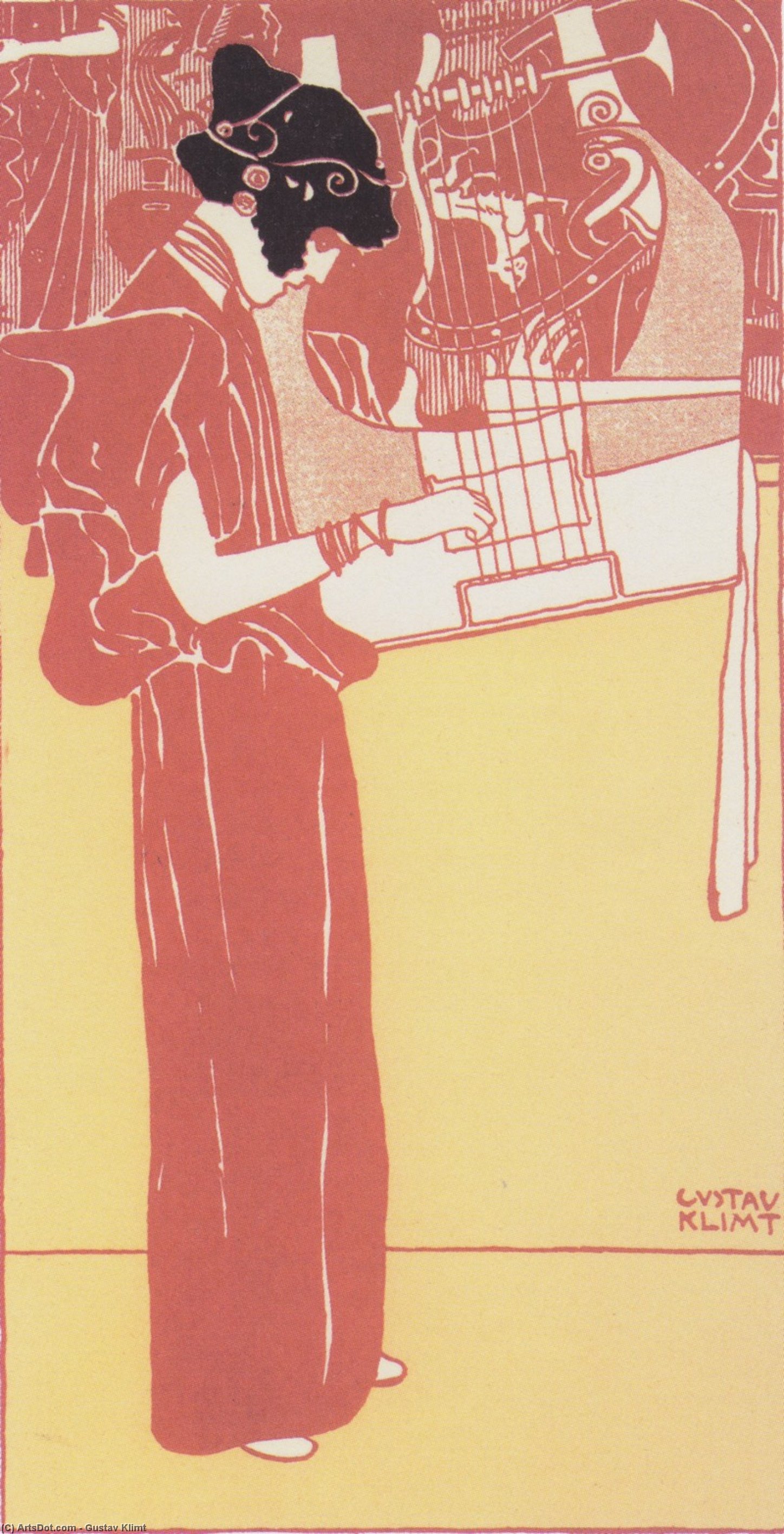
Musik (Lithograph) 1901 - Gustav Klimt
Gustav Klimt, a titan of the Art Nouveau movement, stands as one of Austria’s most celebrated artists. His legacy resides not merely in his prolific output but in his ability to distill complex emotions and philosophical ideas into breathtaking visual compositions—a feat exemplified by
Musik (lithograph), created in 1901. This remarkable lithograph transcends mere representation; it’s a profound meditation on the human condition and a testament to Klimt's unparalleled mastery of artistic technique.
Artistic Style and Technique
“Cite>Musik (lithograph)” is born from the meticulous process of lithography—a method that leverages the transformative power of stone etching. Unlike painting, where pigment adheres directly to canvas, lithography employs a reversed image drawn onto a limestone slab. This ingenious technique allows Klimt to achieve astonishing detail and tonal nuance, capturing subtle gradations of color and texture with remarkable precision. The Art Nouveau style permeates every aspect of the artwork—flowing lines mimic organic forms, mirroring the undulating rhythms of nature. These graceful curves intertwine to create an atmosphere of serenity and elegance, reflecting Klimt’s fascination with beauty and his desire to elevate artistic expression beyond conventional boundaries.
Composition and Symbolism
The painting depicts a woman seated at a piano before an audience—a scene brimming with symbolic significance. Her posture exudes poise and grace, embodying the ideal of feminine virtue. The flowing dress accentuates her form, drawing attention to the female nude as a recurring motif in Klimt’s oeuvre. Surrounding her are figures representing the spectators, their faces illuminated by the glow of performance—expressions of admiration and delight conveying the universal allure of music. This carefully constructed composition symbolizes the transformative power of art, uniting individuals through shared experience and fostering contemplation on profound themes. The woman herself is positioned centrally, symbolizing intellect and creativity, while the piano represents harmony and balance.
Historical Context
Gustav Klimt’s artistic vision was deeply rooted in the Vienna Secession movement—a rebellious faction that challenged the conservative aesthetic conventions of its time. Rejecting academic traditions, Secession artists sought inspiration from diverse sources, including Japanese art and Celtic mythology. Klimt's work frequently explored themes of sexuality and spirituality, reflecting a broader cultural shift toward embracing unconventional ideas.
Musik (lithograph) embodies this spirit by confronting societal norms and inviting viewers to engage in introspection—a daring undertaking for its era. The Secession’s rejection of established artistic hierarchies paved the way for Klimt's groundbreaking innovations and solidified his position as a pioneer of modern art.
Relevance in Modern Art
Even today, “Musik (lithograph)” continues to inspire artists and captivate audiences worldwide. Klimt’s masterful use of color—particularly gold leaf—established a precedent for opulent decorative arts that persists to this day. The Österreichische Galerie Belvedere houses numerous masterpieces by Klimt, including
The Österreichische Galerie Belvedere—a pilgrimage for anyone interested in experiencing the grandeur of Art Nouveau firsthand. Klimt’s influence extends far beyond painting, shaping visual culture and influencing designers across generations.
At ArtsDot, we offer handmade oil painting reproductions of Gustav Klimt's works, including
Musik (lithograph). These high-quality reproductions allow art lovers to bring a piece of history into their homes—preserving Klimt’s artistic legacy for future generations.