A Vision of Truth Unveiled: Exploring Gustav Klimt’s *Nuda Veritas*
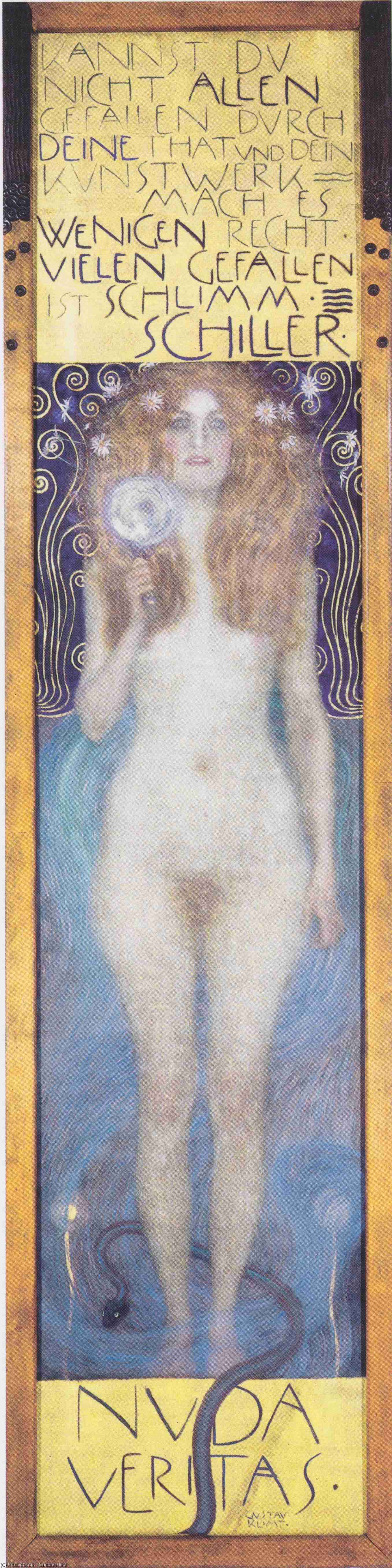
Gustav Klimt's *Nuda Veritas* (1899) is more than just a painting; it’s a provocative statement, a philosophical inquiry rendered in shimmering color and intricate detail. This captivating work embodies the spirit of Vienna Secession and stands as a testament to Klimt’s mastery of Symbolism and his daring exploration of the human condition. Measuring 240 x 64 cm, this oil on canvas piece invites viewers into a world where beauty and truth intertwine with vulnerability and introspection.
Historical Context & Artistic Rebellion
Painted at the turn of the century, *Nuda Veritas* emerged from a period of significant artistic upheaval. Klimt was a leading figure in the Vienna Secession, a movement that rejected the conservative academic traditions of the time. Artists within the Secession sought to create a “total work of art” (*Gesamtkunstwerk*) – integrating painting, sculpture, and decorative arts. This ambition is evident in the elaborate ornamentation surrounding the central figure in *Nuda Veritas*, reflecting Klimt’s belief in the power of aesthetic unity. The late 19th century also saw a growing interest in psychology and the subconscious, themes that subtly permeate Klimt's work.
Composition & Technique: A Symphony of Form and Ornament
The composition is strikingly bold. A nude female figure – often interpreted as a representation of Venus or Truth itself – dominates the canvas. Her pose, with legs slightly parted, isn’t intended to be overtly sexual but rather conveys openness, honesty, and a deliberate lack of concealment. This vulnerability is heightened by her direct gaze, which seems to challenge the viewer. Klimt's technique is characterized by his masterful use of oil paint, applied in layers to create rich textures and luminous surfaces. The background isn’t merely decorative; it’s an intricate tapestry of swirling patterns, symbolic motifs, and fragmented figures that seem to both embrace and obscure the central subject.
Decoding the Symbolism: Truth Laid Bare
The title *Nuda Veritas* – Latin for “naked truth” – is key to understanding the painting’s meaning. The figure's nudity symbolizes honesty, unadorned reality, and a rejection of societal pretenses. The surrounding ornamentation can be interpreted as the complexities and illusions that often shroud truth. Some scholars suggest the figures within the background represent those who seek or attempt to conceal the truth. The overall effect is one of tension – between revelation and concealment, beauty and discomfort.
It’s a visual representation of the idea that true understanding requires confronting uncomfortable realities.
Emotional Impact & Lasting Legacy
*Nuda Veritas* evokes a complex range of emotions: fascination, unease, vulnerability, and perhaps even a sense of liberation. Klimt doesn't offer easy answers; instead, he presents us with a powerful image that prompts contemplation about the nature of truth, beauty, and human existence.
The painting’s enduring appeal lies in its ability to resonate with viewers on a deeply personal level. Today, *Nuda Veritas* resides in the prestigious Leopold Museum in Vienna, Austria, continuing to inspire artists, collectors, and art enthusiasts worldwide. It remains a pivotal work within Klimt's oeuvre and a defining example of Art Nouveau’s expressive power.
ArtsDot.com offers meticulously crafted, handmade oil painting reproductions of *Nuda Veritas*, allowing you to bring Klimt’s visionary art into your own space.