Nuda Veritas: An Exploration of Truth and Desire
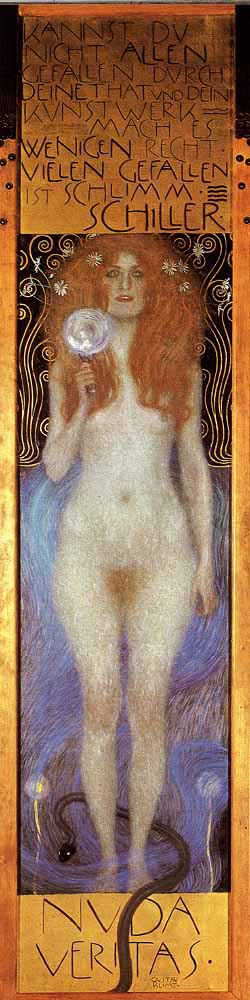
Gustav Klimt’s *Nuda Veritas* (Naked Truth), created in 1899, is a captivating masterpiece emblematic of the Symbolist movement. This oil painting transcends mere representation; it's a profound meditation on truth, beauty, and the complexities of human perception. The work presents a powerfully rendered nude female figure, not as an object of simple sensuality, but as an embodiment of a challenging philosophical concept.
Subject & Composition
The central focus is undeniably the woman – *Veritas* herself. She stands in a dynamic contrapposto pose, her body subtly twisting, creating a sense of both vulnerability and strength. Her gaze is direct and unwavering, meeting the viewer’s eye with an almost unsettling honesty. Above her head floats a celestial sphere filled with swirling patterns and stars, suggesting the vastness of knowledge and the cosmos. The composition isn't traditionally balanced; it feels deliberately off-kilter, mirroring the often uncomfortable nature of confronting truth.
Style & Technique
*Nuda Veritas* is quintessentially Klimt. His signature style – a fusion of realism and decorative ornamentation – is on full display. The figure’s form is delineated with delicate lines and subtle shading, while intricate patterns adorn the surrounding space. Klimt masterfully employs gold leaf, lending an ethereal quality to the painting and elevating it beyond the purely material realm. This technique, inspired by Byzantine mosaics, imbues the work with a sense of timelessness and spiritual significance. The layering of paint and metallic elements creates rich texture and luminosity.
Historical Context & Symbolism
Created during Vienna’s *fin de siècle* – a period of cultural ferment and societal upheaval – *Nuda Veritas* reflects the anxieties and intellectual currents of the time. Symbolism emerged as a reaction against the perceived limitations of realism and naturalism, seeking to express subjective experiences and inner truths through evocative imagery. The title itself, Latin for “naked truth,” is crucial. Klimt presents truth not cloaked in comforting illusions, but stripped bare – vulnerable, challenging, and potentially unsettling. The celestial sphere symbolizes enlightenment and the pursuit of knowledge, while the figure’s nudity represents honesty and a rejection of societal constraints.
Emotional Impact & Interpretation
*Nuda Veritas* evokes a complex range of emotions. The painting is both alluring and disquieting. It challenges viewers to confront their own perceptions of beauty, truth, and morality. The woman’s direct gaze demands attention, forcing us to acknowledge the uncomfortable realities she represents.
It's a work that lingers in the mind long after viewing, prompting introspection and debate.
Key Features for Collectors & Designers
- Iconic Symbolist Masterpiece: A defining work by Gustav Klimt, representing the pinnacle of the Symbolist movement.
- Luxurious Aesthetic: The use of gold leaf and intricate patterns adds a touch of opulence and sophistication, making it suitable for elegant interiors.
- Thought-Provoking Subject Matter: *Nuda Veritas* is not merely decorative; it’s a conversation starter that invites contemplation and intellectual engagement.
- Timeless Appeal: The painting's themes of truth, beauty, and human perception remain relevant across generations.
- Versatile Design Element: Its color palette and composition complement a variety of interior styles, from Art Nouveau to contemporary designs.
In conclusion, *Nuda Veritas* is more than just a painting; it’s a powerful statement about the human condition. It's a work that continues to resonate with audiences today, solidifying Klimt’s place as one of the most important artists of the 20th century.