Discover Gustav Klimt (1862-1918), the Austrian Symbolist master of Art Nouveau! Explore his iconic 'Golden Phase,' sensual portraits, and masterpieces like *The Kiss*. Learn about his life, influences & legacy.
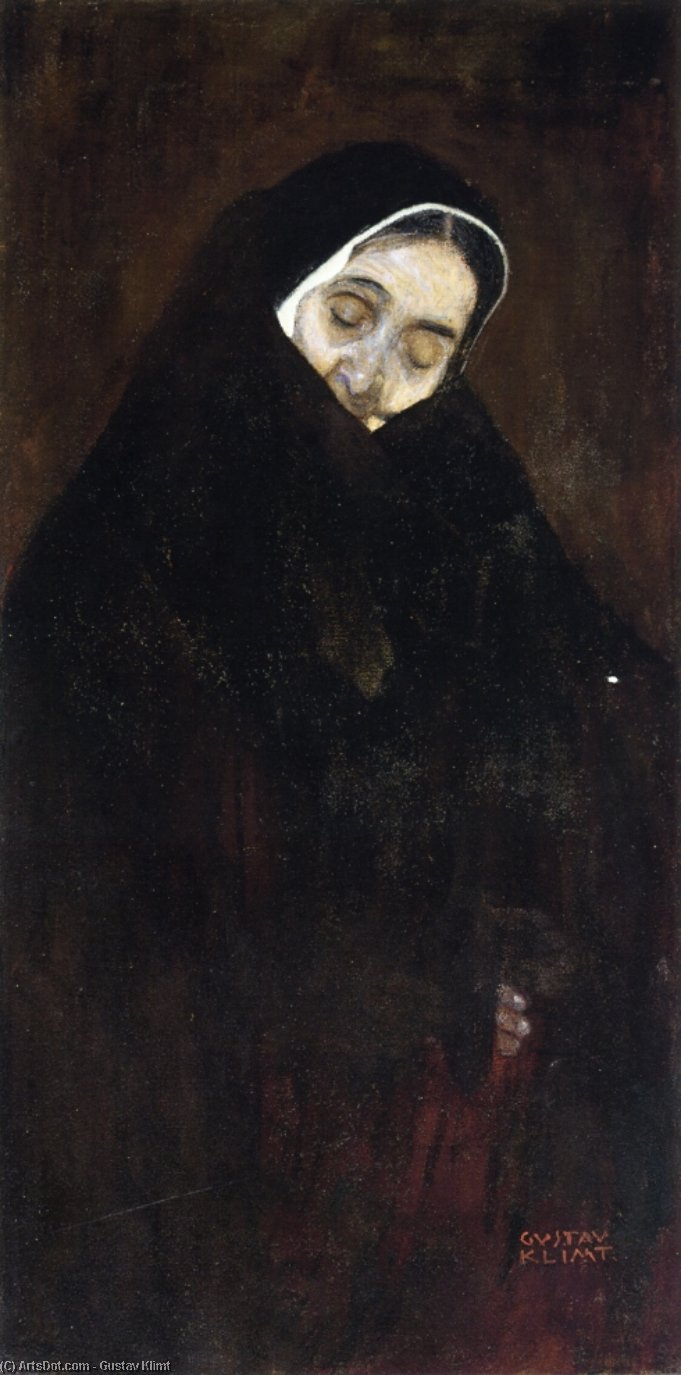
Old Woman by Gustav Klimt
Gustav Klimt’s “Old Woman,” completed in 1909, stands as a cornerstone of Symbolist art and embodies the Austrian artist's distinctive vision. Measuring 95 x 47 cm, this oil on canvas painting transcends mere representation; it delves into profound themes of aging, solitude, and contemplation—elements central to Klimt’s artistic exploration during his “Golden Phase.” The artwork resides in a private collection, offering rare insight into the artist's oeuvre.
Symbolism and Artistic Style
Klimt’s approach to painting was radically different from prevailing academic traditions. He eschewed realism for an intensely stylized aesthetic characterized by elongated figures, intricate geometric patterns interwoven with organic forms, and a deliberate manipulation of color—primarily muted hues accented by shimmering gold leaf. This technique wasn't merely decorative; it served as a conduit for conveying symbolic meaning. Klimt’s masterful blending of visual elements created a mesmerizing tapestry that captivated audiences and cemented his reputation as a pioneer of Art Nouveau.
Artistic Influences
Klimt drew inspiration from diverse artistic currents, notably Byzantine mosaics—particularly the shimmering tesserae that adorned churches in Constantinople—and the flowing lines and floral motifs prevalent in Art Nouveau design. These influences manifested in “Old Woman” through its composition and textural richness. Klimt’s meticulous attention to detail mirrored the grandeur of imperial art, reflecting his desire to elevate artistic expression beyond mere imitation of nature. The artist's preoccupation with feminine beauty—a recurring motif throughout his work—is palpable here, hinting at a deeper meditation on femininity and mortality.
Light and Composition
Despite its subdued palette, “Old Woman” possesses an arresting luminosity achieved through subtle gradations of tone and the strategic placement of light sources. Klimt skillfully utilized chiaroscuro—the interplay between light and shadow—to sculpt the figure’s form and imbue it with a sense of inner stillness. The geometric shapes—circles and squares—that dominate the canvas contribute to an overall feeling of balance and harmony, mirroring the artist's belief in the power of visual order to communicate profound ideas. These elements coalesce into a composition that invites contemplation and evokes emotions of melancholy and serenity.
Artistic Legacy
Gustav Klimt’s “Old Woman” irrevocably altered the trajectory of modern art, establishing him as one of the foremost figures of Symbolism. His uncompromising stylistic vision continues to inspire artists today who seek to express complex psychological states through innovative visual language. The painting's enduring appeal lies in its ability to capture the essence of human experience—the quiet dignity of aging, the solace found in solitude—themes that resonate powerfully across generations. As a testament to Klimt’s artistic genius and his unwavering commitment to pushing creative boundaries, “Old Woman” remains an invaluable contribution to the history of art.