Discover Gustav Klimt (1862-1918), the Austrian Symbolist master of Art Nouveau! Explore his iconic 'Golden Phase,' sensual portraits, and masterpieces like *The Kiss*. Learn about his life, influences & legacy.
Explore Vienna's artistic soul at the Wien Museum! Discover Klimt masterpieces & delve into centuries of history through stunning art collections, archaeological finds & architectural grandeur.
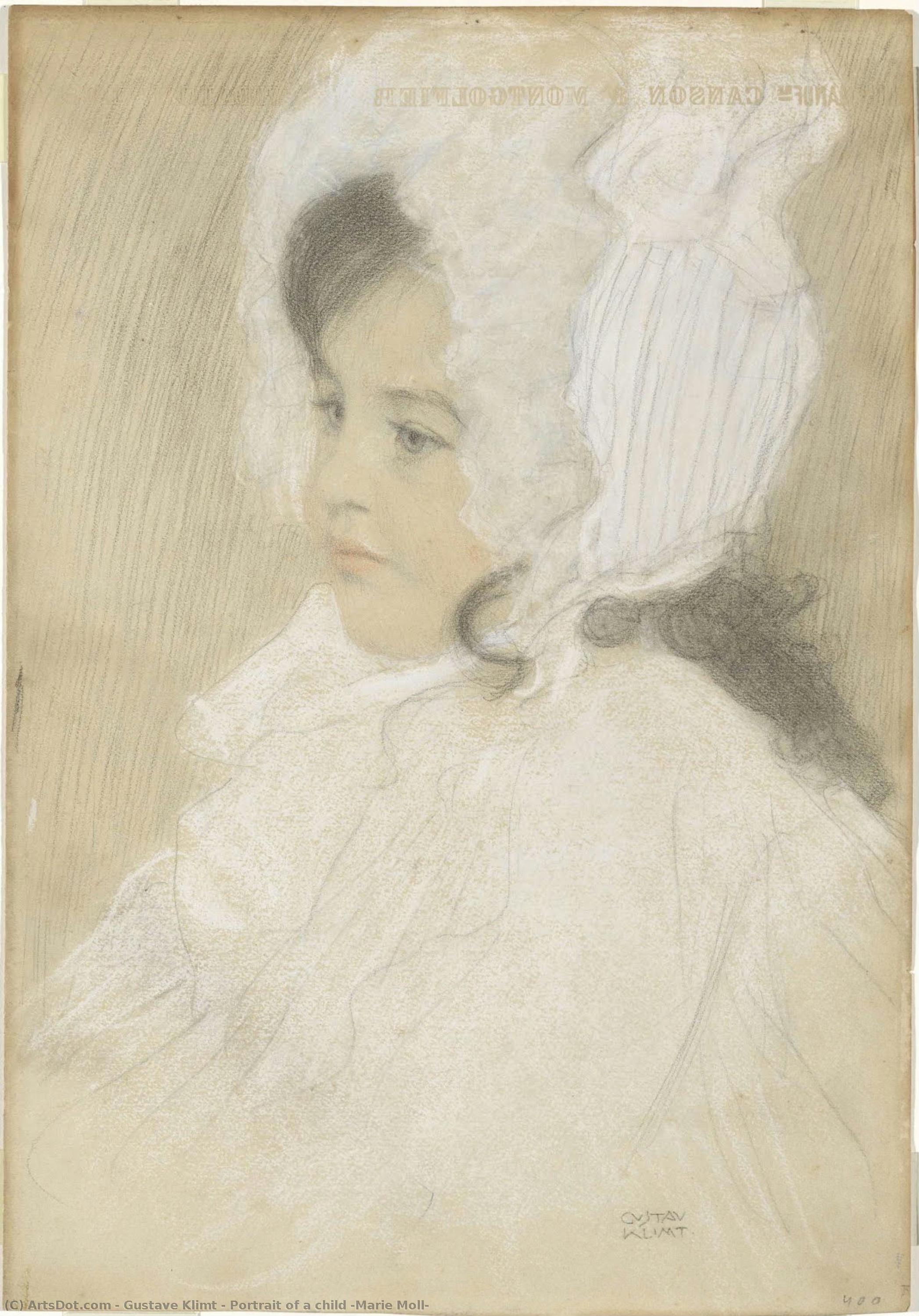
A Delicate Veil of Memory: Exploring Gustav Klimt’s “Portrait of a Child (Marie Moll)”
Gustav Klimt's "Portrait of a child (Marie Moll)," painted in 1904, transcends mere representation; it embodies the ethereal beauty characteristic of Klimt’s signature style and delves into themes of innocence, vulnerability, and the fleeting nature of childhood. Captured in muted tones—primarily ochre, gold leaf, and ivory—the painting presents a young girl seated gracefully, her gaze averted downwards, creating an immediate sense of intimacy and contemplation. The photograph accompanying this description reveals subtle imperfections that lend to its authenticity, hinting at the passage of time and reminding us that even reproductions strive to capture the essence of original artistry.
- Subject Matter: Klimt’s focus is singular—a child—chosen deliberately to convey a profound stillness and purity. Marie Moll herself was Klimt's daughter, adding a personal dimension to the artwork and reflecting his deep affection for his family.
- Style: The painting firmly establishes Klimt within the Art Nouveau movement, prioritizing organic forms and decorative embellishment over strict geometric precision. Influenced by Byzantine mosaics and Celtic art, Klimt’s aesthetic seeks to evoke a sense of timelessness and spiritual resonance.
The artist's meticulous technique is immediately apparent. Klimt employed oil paint combined with gold leaf—a groundbreaking innovation at the time—to achieve an unparalleled luminosity and textural richness. The gold leaf isn’t merely decorative; it symbolizes divine grace, fertility, and immortality – concepts central to Klimt’s broader artistic vision. Each brushstroke contributes to a surface that feels simultaneously smooth and textured, inviting viewers to linger on its intricate details. This layering of pigment creates an illusionistic depth that draws the eye inwards, mirroring the child's downward gaze.
Historical Context: Vienna at the Dawn of Modernity
Vienna in 1904 was a crucible of artistic experimentation and intellectual ferment. Klimt stood alongside artists like Josef Maria Auerbach and Edvard Munch, pushing boundaries against academic conventions and embracing expressive symbolism. The painting reflects the anxieties and aspirations of the era—a desire to recapture lost traditions while simultaneously forging new paths toward artistic innovation. Furthermore, Klimt’s work engaged with psychoanalytic theories emerging at the time, exploring themes of subconscious desires and emotional complexity – elements subtly present in the portrait's contemplative mood.
- Symbolism: The veil or scarf draped over Marie Moll’s face serves as a powerful visual metaphor for concealment and protection. It suggests that innocence is fragile, vulnerable to external influences, yet simultaneously shielded by an inner strength—a quiet dignity that transcends mere appearance.
- Emotional Impact: “Portrait of a Child (Marie Moll)” evokes feelings of tenderness, nostalgia, and profound serenity. Klimt’s masterful use of color and texture invites viewers into a realm of contemplative beauty, prompting reflection on themes of childhood, memory, and the enduring power of maternal love.
Ultimately, Klimt's "Portrait of a child (Marie Moll)" remains an extraordinary achievement—a testament to his artistic genius and a captivating glimpse into the spirit of Vienna’s Belle Époque. Its exquisite craftsmanship and evocative symbolism continue to inspire admiration and offer invaluable insight into the artist’s profound understanding of human emotion and spiritual aspiration. Reproductions crafted with meticulous attention to detail allow collectors and interior designers alike to experience this masterpiece firsthand, preserving its timeless beauty for generations to come.