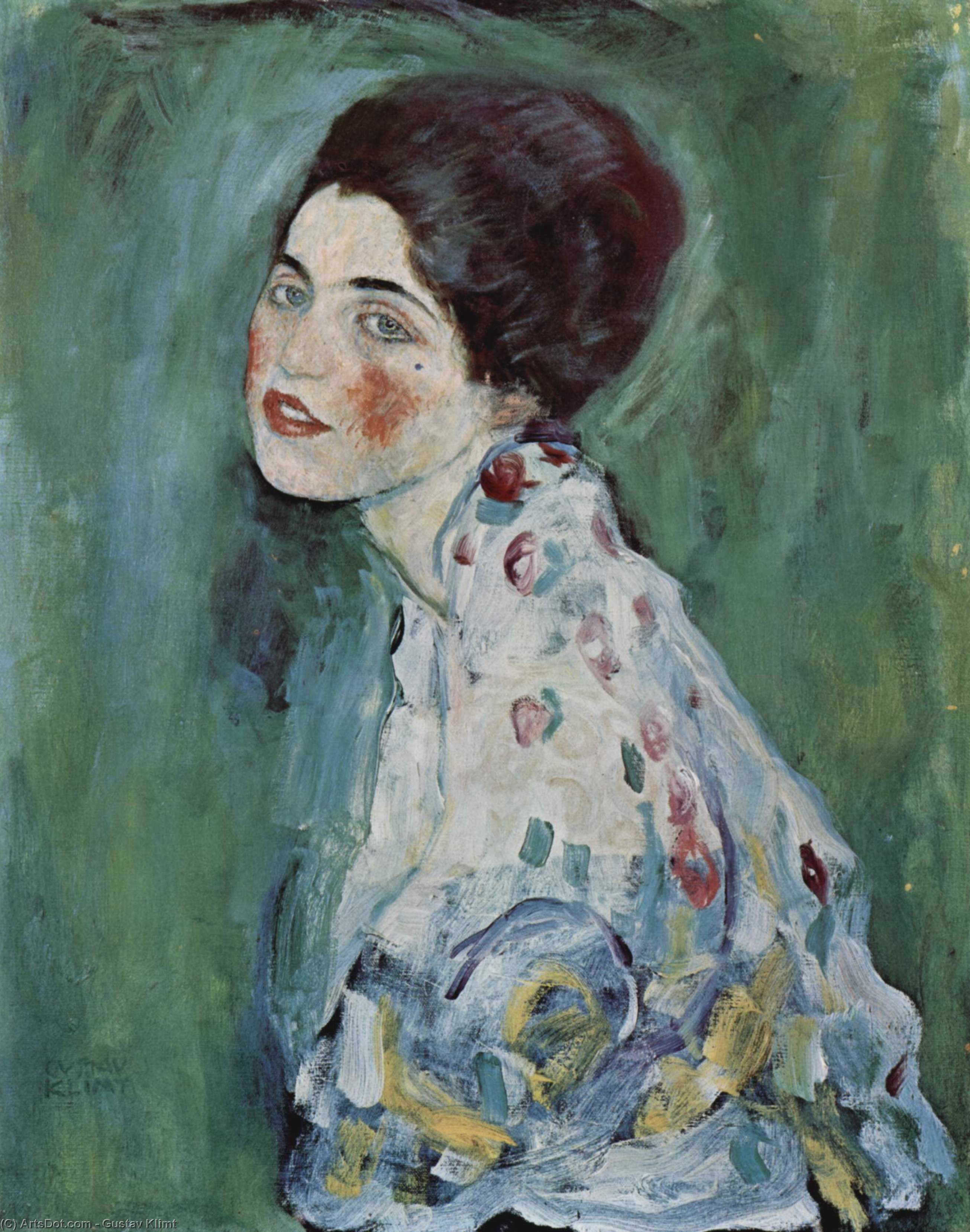
This artwork is inspired by Klimt’s exploration of symbolism and his masterful blend of realism and abstraction, showcased in pieces like ‘The Kiss.’ Explore similar artists and styles at ArtsDot.
Discover Gustav Klimt (1862-1918), the Austrian Symbolist master of Art Nouveau! Explore his iconic 'Golden Phase,' sensual portraits, and masterpieces like *The Kiss*. Learn about his life, influences & legacy.
Portrait of a Lady: A Symbolist Reverie
The Portrait of Gustav Klimt’s Lady is more than just a depiction of a woman; it's an immersion into the heart of Symbolism, a movement that sought to transcend mere representation and delve into the realm of psychological and spiritual significance. Painted in 1897 during Klimt’s “Golden Phase,” this pastel masterpiece exemplifies his masterful blending of decorative artistry with profound emotional resonance—a combination that continues to captivate audiences today.
Composition & Technique: Layers of Texture and Color
Klimt's meticulous approach is immediately apparent upon viewing the artwork. He employs a technique characterized by intricate layering of pastel pigments, meticulously applied to create textures that mimic the richness of gold leaf – a hallmark of his signature style. The central figure dominates the canvas, her face positioned prominently against a softly textured background reminiscent of verdant foliage. Klimt’s deliberate use of color—primarily blues and reds—is not merely aesthetic; it serves as a conduit for conveying mood and emotion. The blue dress symbolizes serenity and grace, while the crimson accents inject warmth and passion into the composition, mirroring the complexities of human experience. Notice how Klimt skillfully utilizes geometric patterns interwoven with organic forms to create visual harmony and reinforce the symbolic narrative.
Symbolism & Narrative Depth
The Portrait transcends a simple likeness; it embodies Symbolist ideals. The woman’s gaze directly confronts the viewer, inviting contemplation and prompting questions about identity and perception. Her hair, adorned with floral motifs—a recurring theme in Klimt's oeuvre—represents fertility and beauty, yet also hints at vulnerability. The pearl necklace symbolizes purity and innocence, contrasting subtly with the boldness of her expression. Klimt’s masterful use of symbolism elevates the artwork beyond a visual experience, transforming it into an exploration of inner states and universal themes. It speaks to the anxieties and aspirations inherent in human existence—a timeless message conveyed through exquisitely crafted artistry.
Historical Context & Artistic Influences
Klimt's work emerged during the burgeoning Art Nouveau movement, which championed organic forms, flowing lines, and opulent ornamentation as responses to industrialization’s rigid aesthetic. Klimt drew inspiration from Byzantine mosaics and Celtic art, incorporating geometric patterns and stylized representations of nature into his compositions. The Portrait stands alongside other celebrated works of Symbolism like Edvard Munch's *The Scream*, demonstrating the movement's preoccupation with psychological drama and emotional intensity. Its enduring appeal lies in its ability to capture a moment of quiet contemplation amidst the turbulent currents of artistic innovation—a testament to Klimt’s genius and the power of Symbolist vision.
A Legacy Enduring Through Reproduction
Today, reproductions of *Portrait of a Lady* are available on ArtsDot, allowing art enthusiasts worldwide to experience Klimt's unparalleled artistry firsthand. Imagine adorning your home with this iconic image—a tangible connection to a pivotal moment in European art history and a celebration of timeless beauty. Explore the Museo d’Arte Moderna Ca’ Pesaro in Venice where you can admire Klimt’s *Allegory of Sculpture*, alongside other masterpieces from the Belle Époque era.