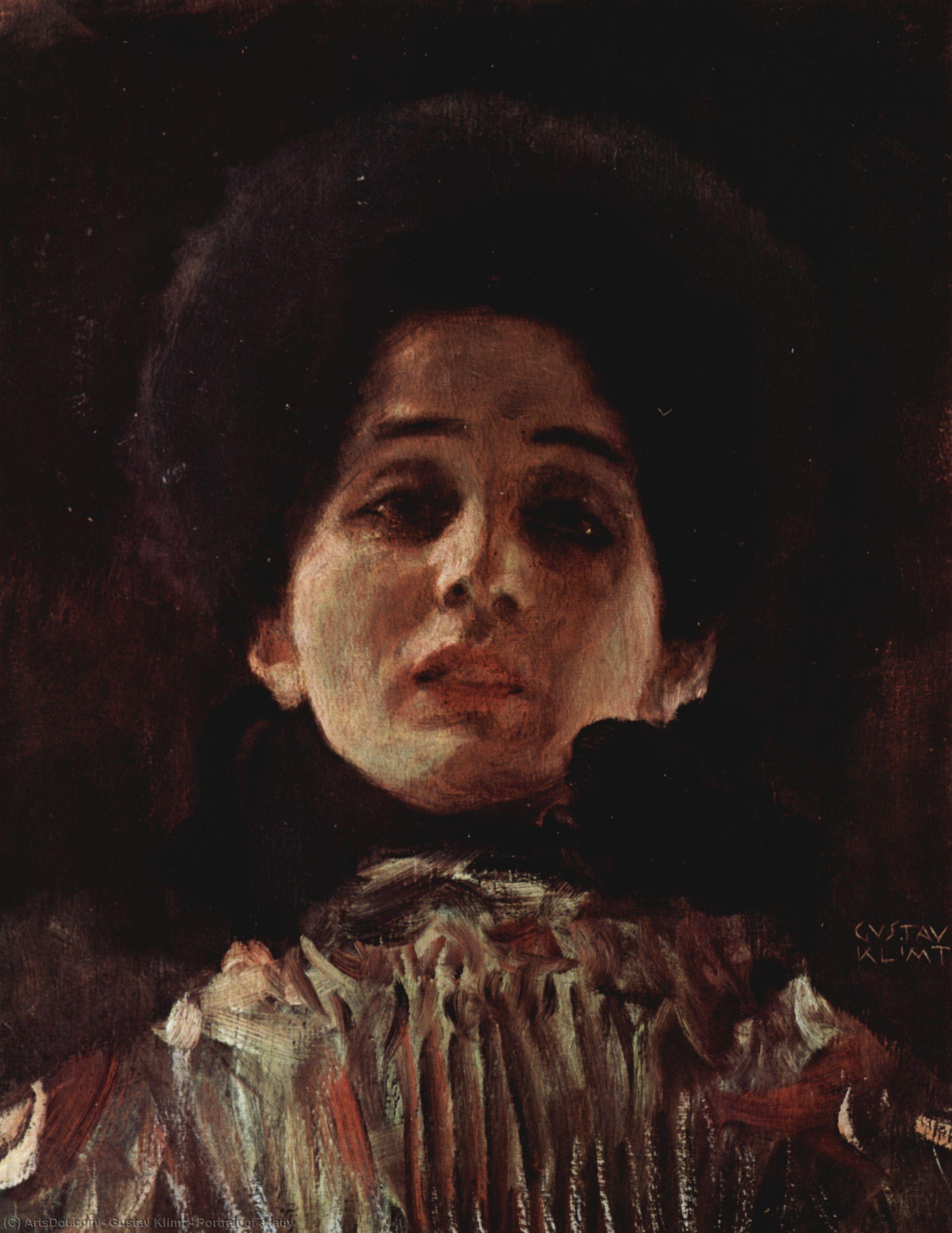
A Window into Symbolism: Gustav Klimt’s “Portrait of a Lady”
Gustav Klimt, born July 14, 1862, in Baumgarten near Vienna, stands as one of the most distinctive figures in Austrian Symbolist painting. His oeuvre is characterized by an unparalleled fusion of realism and intricate ornamentation—a stylistic hallmark that continues to fascinate audiences today. “Portrait of a Lady,” completed in 1894, exemplifies Klimt’s artistic vision during his formative years, marking a pivotal moment in his journey from academic influences toward the expressive language of Symbolism.
- Background and Style: The painting emerged from Klimt's experimentation with diverse styles. It represents a deliberate departure from traditional realism, prioritizing symbolic representation—a trend powerfully influenced by movements like Japonisme. Klimt’s meticulous attention to detail is evident in the depiction of the woman’s face and attire, reflecting his desire to convey deeper meanings beyond mere visual likeness.
- Artistic Elements: Klimt skillfully employs oil on canvas to achieve rich textures and vibrant colors. The subject—a woman gazing directly at the viewer—is rendered with remarkable accuracy, capturing her solemn expression and conveying a sense of quiet contemplation. Geometric patterns interwoven throughout the composition contribute to the painting’s visual dynamism and underscore its connection to Japonisme.
- Symbolism and Influence: Klimt's artistic sensibilities were profoundly shaped by Symbolist ideals—beliefs that art should transcend literal representation, communicating spiritual truths through evocative imagery. Recurring motifs of gold leaf—a technique Klimt championed throughout his career—symbolize wealth, divinity, and the transformative power of beauty. The painting’s influence extends beyond its immediate aesthetic qualities, foreshadowing developments in modern art.
- Historical Context: Created during Vienna's Belle Époque, “Portrait of a Lady” reflects the cultural climate of its time—a period marked by intellectual ferment and artistic innovation. Klimt’s work aligns with broader trends toward abstraction and psychological exploration, signaling a significant shift away from representational art.
- Legacy Today: Gustav Klimt's legacy persists in museums worldwide, including the Museu Nacional D'arte de Catalunya in Barcelona, Spain, where “Portrait of a Lady” resides as a testament to his artistic genius. Its enduring appeal lies not only in its visual splendor but also in its ability to provoke contemplation about themes of femininity, spirituality, and the complexities of human emotion—themes that continue to resonate with contemporary viewers.
The Museu Nacional D'arte de Catalunya houses a stunning reproduction of Klimt’s masterpiece. This meticulously crafted print allows art enthusiasts to appreciate the painting’s nuanced details and immersive atmosphere, bringing Klimt’s vision into homes and galleries across Europe.