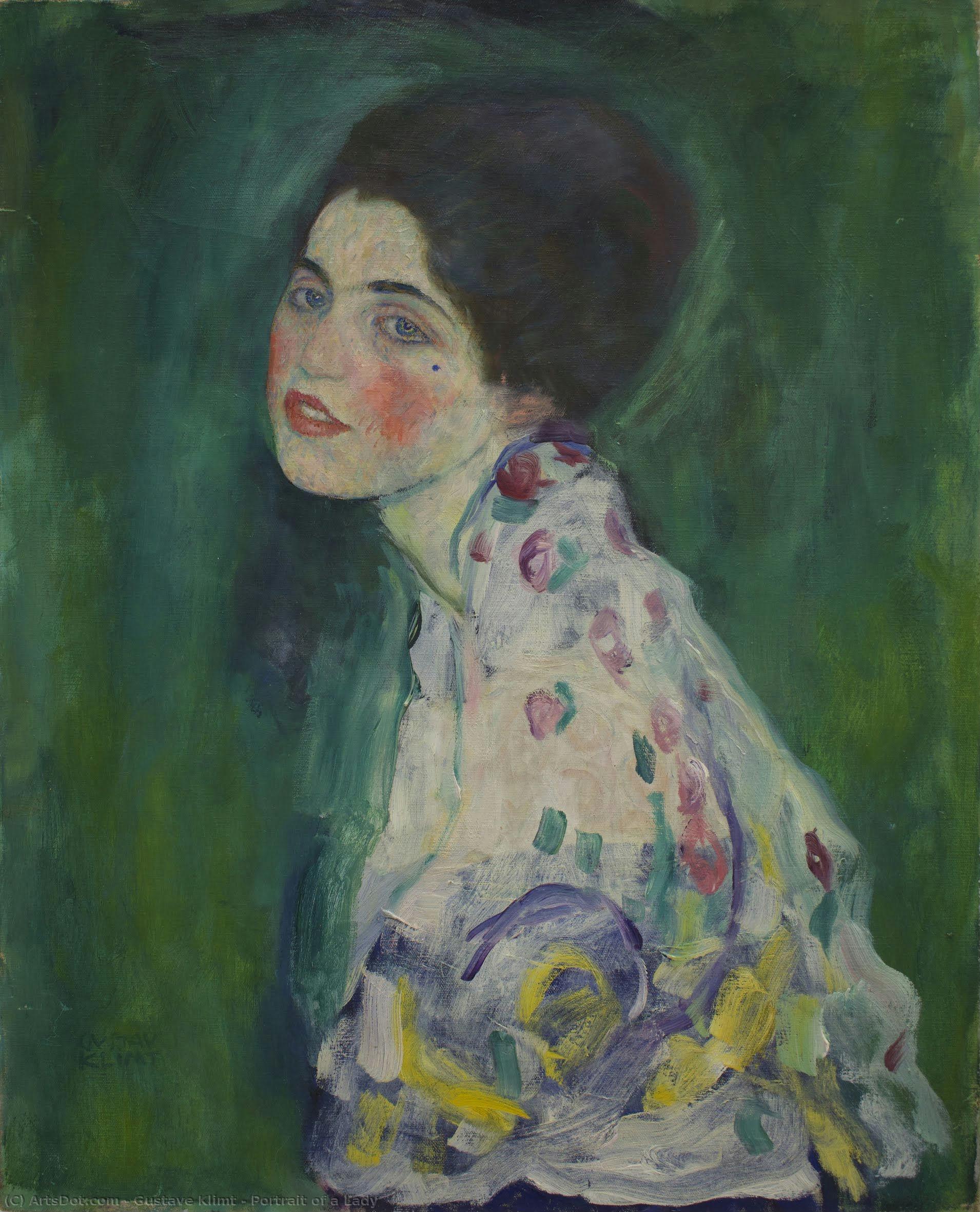
A Glimpse into Klimt’s Expressionist Phase: Portrait of a Lady (1917)
This captivating portrait, executed in 1917, offers a compelling insight into Gustav Klimt's stylistic evolution beyond his celebrated Golden Phase. While retaining elements reminiscent of Art Nouveau, *Portrait of a Lady* boldly embraces the burgeoning Expressionist movement, revealing a more raw and emotionally charged approach to portraiture.
Subject & Composition
The artwork presents a close-up depiction of a young woman, dominating the canvas with her presence. Klimt centers the composition on her face and upper torso, fostering an immediate and intimate connection with the viewer. The subject’s direct gaze is particularly striking – it's both engaging and subtly wistful, inviting contemplation about her inner world. The dark, muted green background serves as a stark foil to the lighter tones of her skin and clothing, intensifying the focus on the figure herself.
Style & Technique
Klimt’s masterful technique is immediately apparent in the painting's rich texture. He employs
thick, impasto brushwork, creating a tactile quality that invites close inspection. The lines are gestural and visible, particularly defining her hair, dress, and facial features – a departure from the smoother, more decorative surfaces of his earlier work. Shapes are largely organic, with flowing curves characterizing her hair and garments, while simplified forms define her face. Though lacking strong highlights or shadows, the diffused lighting contributes to a melancholic yet alluring mood. The painting is executed in oil on canvas, showcasing Klimt’s command of this traditional medium.
Historical Context & Artistic Influences
Created during the final years of his life – just a year before his death in 1918 – *Portrait of a Lady* reflects a period of significant artistic and societal upheaval. World War I was raging, casting a shadow over Europe and influencing artists to explore more profound emotional depths. Klimt, already a leading figure in the Vienna Secession movement which challenged academic traditions, continued to push boundaries with this work. His earlier exposure to Japanese art – particularly its emphasis on flattened perspective and decorative patterns – continues to subtly influence his compositions, though here it’s tempered by the expressive energy of Expressionism.
Symbolism & Emotional Impact
While Klimt often imbued his works with complex symbolism, *Portrait of a Lady* feels more focused on capturing an
emotional state. The woman's gaze and subtle expression suggest introspection and perhaps a hint of sadness. The lack of detailed background elements further emphasizes her isolation and internal life. The painting’s power lies in its ability to evoke empathy and invite viewers to project their own interpretations onto the subject.
For Collectors & Interior Designers
This artwork, or a high-quality reproduction, would serve as a striking focal point in any collection or interior space. Its expressive style and rich texture lend themselves well to both modern and traditional settings. The muted color palette allows for versatility, complementing a range of décor schemes. Its emotional depth adds an element of sophistication and intrigue, making it a conversation starter and a source of enduring aesthetic pleasure.
- Style: Expressionism, Art Nouveau influences
- Medium: Oil on Canvas
- Dimensions: 60 x 55 cm
- Year: 1917