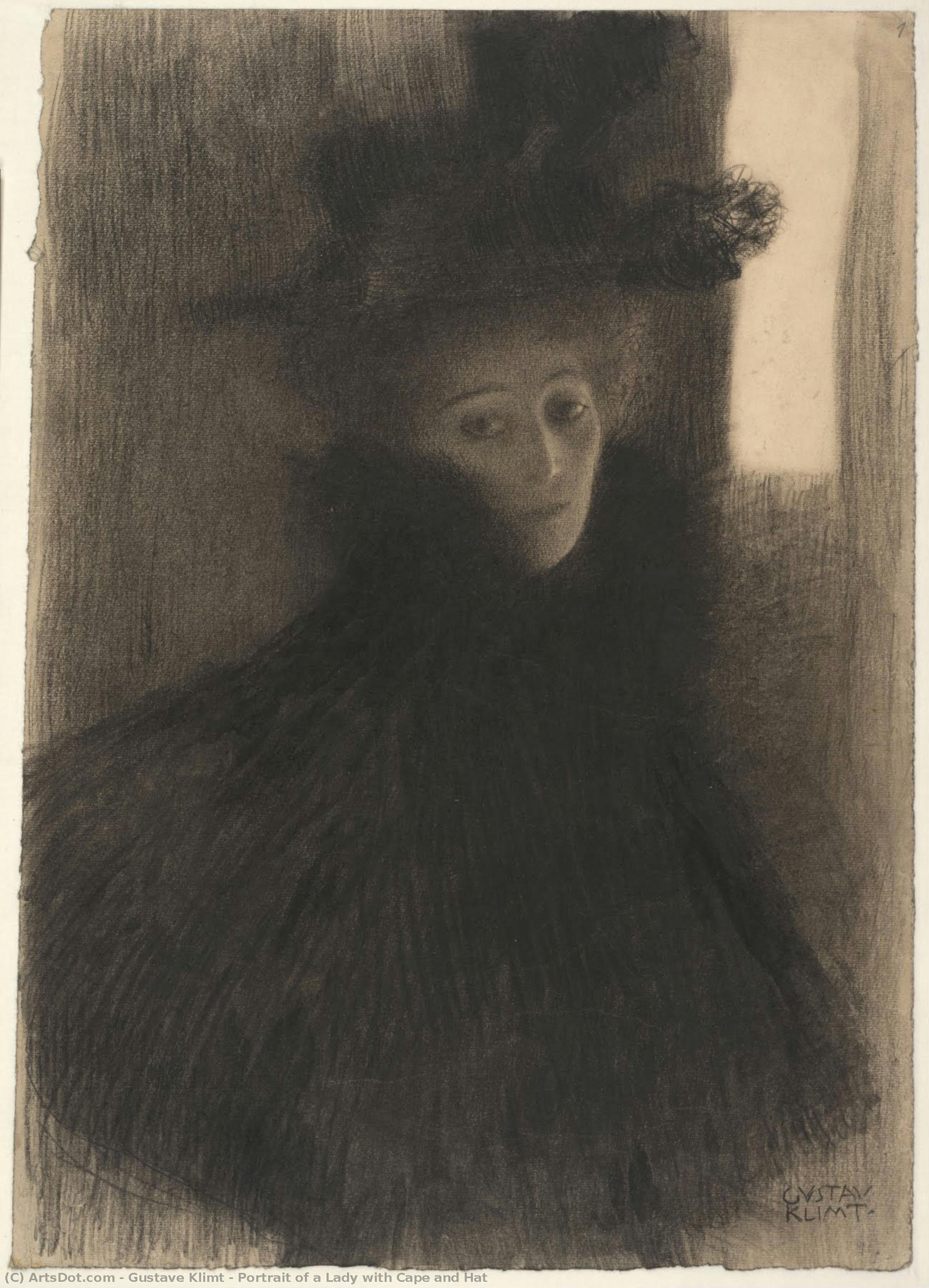
Experience the opulent textures and shimmering gold leaf of Gustav Klimt's 1898 masterpiece Portrait of a Lady with Cape and Hat, a stunning symbol of Viennese Secession art that invites you to bring elegance home.
Discover Gustav Klimt (1862-1918), the Austrian Symbolist master of Art Nouveau! Explore his iconic 'Golden Phase,' sensual portraits, and masterpieces like *The Kiss*. Learn about his life, influences & legacy.
Explore art history's treasures at the Albertina Museum in Vienna! Discover stunning prints, drawings & masterpieces spanning centuries within its unique architectural spaces.
A Vision in Gold and Grace: Unveiling Klimt’s Elegance
In the heart of late nineteenth-century Vienna, a period defined by both imperial grandeur and radical artistic rebellion, Gustav Klimt captured a moment of profound stillness with his 1898 masterpiece, Portrait of a Lady with Cape and Hat. This work serves as a breathtaking gateway into the Viennese Secession movement, a time when artists sought to break free from the stifling constraints of academic tradition to embrace a more expressive, symbolic language. The portrait is far more than a mere likeness of a high-society woman; it is an evocative exploration of femininity and the delicate boundary between one's public persona and their private, inner world. As the viewer gazes upon her, there is an immediate sense of being invited into a space where luxury meets spirituality, making it an irresistible centerpiece for any collection that values depth and decorative splendor.
The Alchemy of Technique and Ornamentation
What distinguishes this portrait is Klimt’s masterful command over texture and light, a skill likely inherited from his father, a gold engraver. The painting is a triumph of tempera on canvas, utilized to create a surface that feels almost tactile in its richness. Klimt’s signature use of gold leaf—a technique that would later define his legendary "Golden Period"—is present here in its formative, mesmerizing glory. This shimmering application does not merely serve as an ornament; it acts as a divine illumination, referencing the sacred beauty of Byzantine mosaics and imbuing the subject with an ethereal, almost saintly aura. The interplay between geometric patterns and organic, flowing lines creates a rhythmic visual dance, where the heavy, embroidered textures of the lady's cape contrast beautifully with the soft, luminous rendering of her skin. For the interior designer, this piece offers a sophisticated balance of opulent weight and delicate grace, capable of anchoring a room with its commanding presence.
Symbolism and the Soul of the Secession
Beyond the surface brilliance lies a profound layer of symbolism that speaks to the psychological ferment of the era. As Vienna became the cradle of psychoanalysis, Klimt’s work began to reflect the complexities of the human psyche. In this portrait, the lady's attire—the heavy cape and the structured hat—functions as both a symbol of her elevated social status and a protective shell against the external world. Her gaze, directed toward something unseen beyond the frame, suggests a contemplative, perhaps even melancholic, introspection. This tension between the decorative exterior and the soulful interior is what gives the artwork its enduring emotional impact. To possess a reproduction of this piece is to bring into one's home not just a beautiful object, but a conversation piece that explores themes of identity, mystery, and the timeless allure of the human spirit. It remains an essential inspiration for those who seek to surround themselves with art that is as intellectually stimulating as it is visually breathtaking.