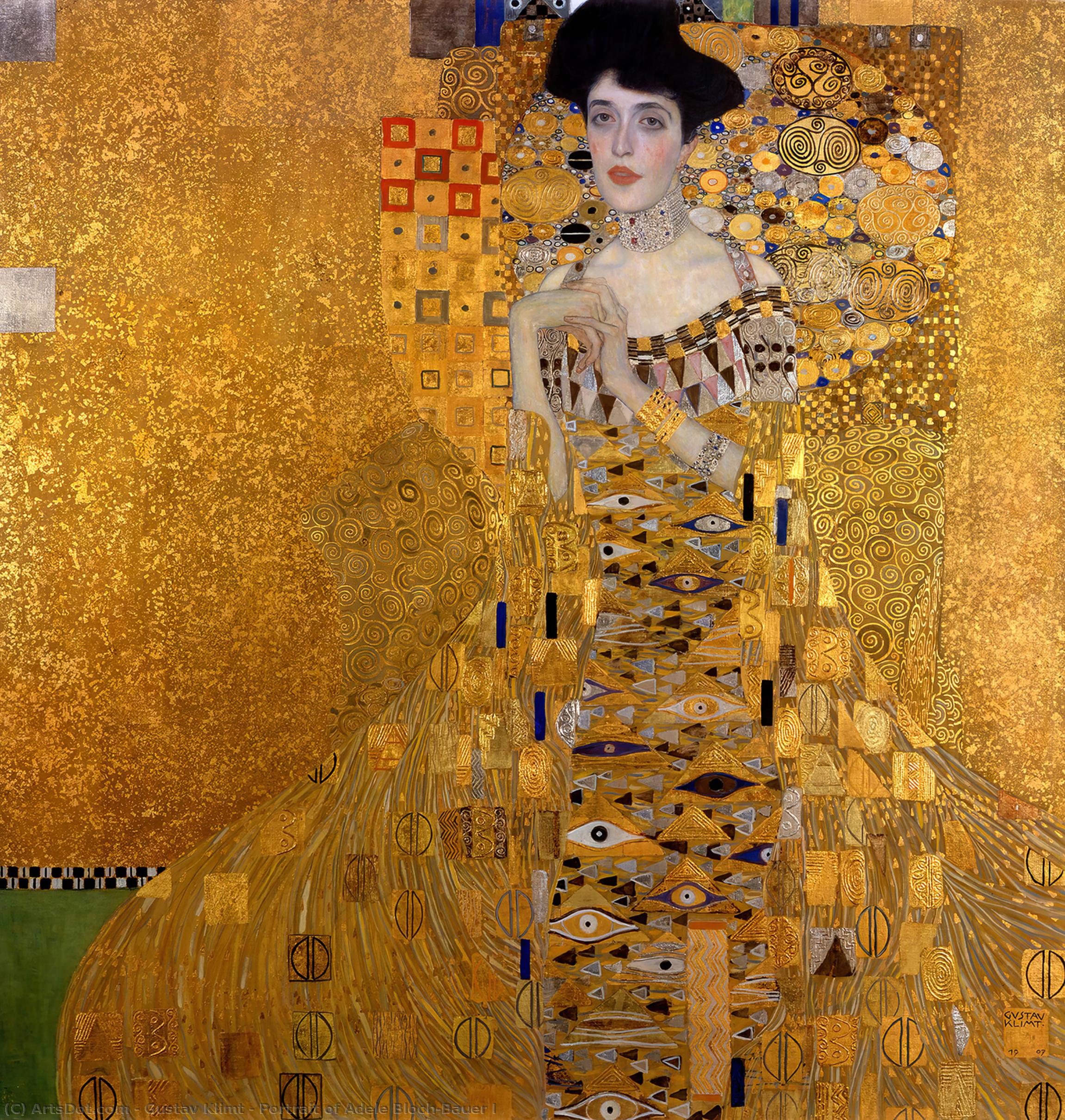
Klimt’s distinctive style blends Byzantine mosaics with Art Nouveau principles, utilizing intricate patterns and vibrant colors—primarily gold—to convey luxury and emotion. The portrait's symbolism delves into themes of identity and femininity, establishing itself as a cornerstone of modern art.
Portrait of Adele Bloch-Bauer I: A Golden Reflection of Viennese Symbolism
Gustav Klimt’s “Portrait of Adele Bloch-Bauer I,” completed between 1903 and 1907, stands as arguably the most iconic image of his celebrated golden phase—a period defined by an audacious embrace of gold leaf and intricate decorative patterns that irrevocably altered the course of European art history. Commissioned by Ferdinand Bloch-Bauer, Adele’s husband, this monumental canvas transcends mere representation; it embodies a profound exploration of femininity, identity, and the opulent allure of Belle Époque Vienna.
- The Golden Phase: Klimt's fascination with Byzantine mosaics—particularly those adorning San Vitale in Ravenna—fueled his groundbreaking technique. He meticulously applied gold leaf to create shimmering surfaces that mirrored the grandeur of imperial splendor, establishing a visual language synonymous with his name and influencing generations of artists.
- Symbolic Layers: The portrait is rife with symbolism reflecting Klimt’s preoccupation with esoteric concepts. The stylized dress—a swirling vortex of geometric shapes—represents not only Adele's beauty but also the complexities of female psychology, mirroring the artist’s own interest in exploring hidden depths beneath outward appearances.
- Technique: Klimt’s masterful blending of oil paint and gold leaf demanded unparalleled precision. Each flake of gold was painstakingly adhered to the canvas, resulting in a surface that radiates warmth and luminosity—a testament to his dedication to craftmanship and an embodiment of Art Nouveau's commitment to tactile richness.
- Historical Significance: The painting’s journey through history is marked by drama and intrigue. Stolen during the Nazi occupation of Austria, it languished in obscurity for decades before its triumphant return to public view in 2006—a story that underscores the importance of preserving cultural heritage and celebrating artistic achievement.
A Window into Viennese Culture
Vienna at the turn of the century was a crucible of artistic innovation, fueled by intellectual currents such as psychoanalysis and Nietzschean philosophy. Klimt’s “Portrait of Adele Bloch-Bauer I” captures this spirit—reflecting the era's fascination with ornamentation, eroticism, and the exploration of psychological states. The painting served as a visual manifesto for the Vienna Secession movement, which rejected academic conventions in favor of bold experimentation and expressive freedom.
The Artist’s Vision
Gustav Klimt (1862-1918) possessed an unparalleled ability to distill complex ideas into visually arresting images. He approached portraiture not merely as a depiction of likeness but as an attempt to convey the inner life of his subject—a feat accomplished with remarkable sensitivity and artistic virtuosity. “Portrait of Adele Bloch-Bauer I” remains a cornerstone of Klimt’s oeuvre, cementing his legacy as one of the most influential artists of the Belle Époque.
Contemporary Relevance
Today, “Portrait of Adele Bloch-Bauer I” continues to captivate audiences worldwide. Its mesmerizing beauty—coupled with its profound symbolic depth—serves as an enduring reminder of Klimt’s artistic genius and the transformative power of art. Reproductions offer a chance to experience this masterpiece firsthand, bringing its radiant splendor into homes and inspiring contemplation on themes of femininity, identity, and the enduring allure of decorative artistry.