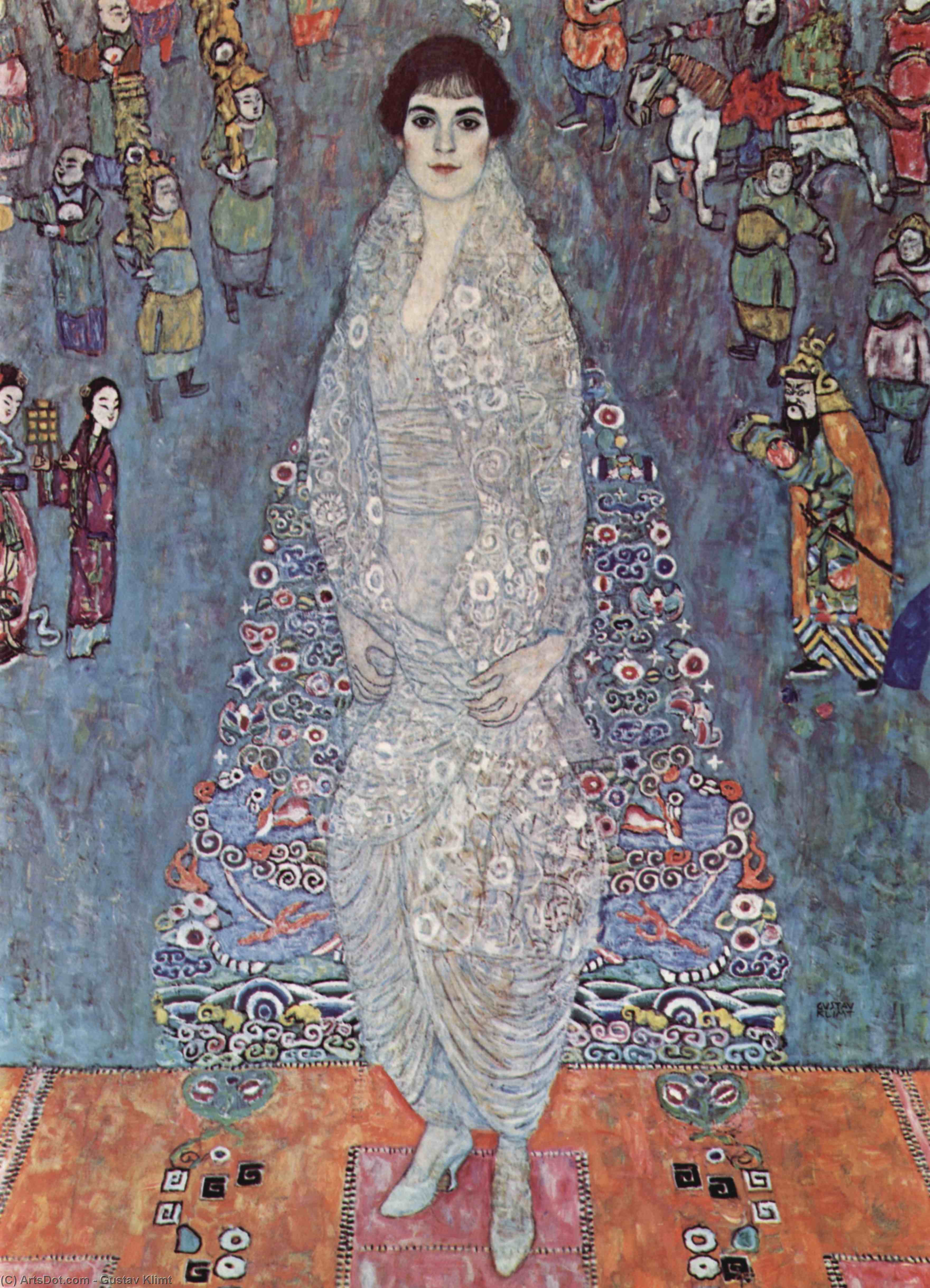
A Portrait of Refined Serenity: Klimt’s Baroness Elisabeth Bachofen-Echt
Gustav Klimt's 1916 *Portrait of Baroness Elisabeth Bachofen-Echt* is a captivating example of his mature style, seamlessly blending elements of Art Nouveau with the burgeoning Symbolist movement. The painting doesn’t merely depict a woman; it evokes an atmosphere of quiet dignity and introspective beauty. The Baroness, a prominent figure in Viennese society, is presented not as a symbol of wealth or status – though her elegant attire hints at both – but as an individual possessing inner strength and contemplative grace. Klimt masterfully moves beyond simple representation to capture the *essence* of his sitter.
Technique & Style: The Golden Touch of Viennese Secession
Klimt’s technique in this portrait is characteristic of his “Golden Phase.” He employs oil paint with a delicate touch, layering colors and incorporating subtle gold leaf accents to create a luminous surface. The Baroness's dress appears almost ethereal, flowing around her form like liquid light. Notice how Klimt deliberately flattens the perspective, minimizing depth and emphasizing the decorative qualities of the composition. This stylistic choice is deeply rooted in the principles of Art Nouveau – a rejection of traditional academic realism in favor of stylized forms, organic lines, and opulent ornamentation. The limited color palette—primarily whites, creams, and golds with touches of muted blues—further enhances the painting’s sense of refined elegance. The veil, subtly draped, adds an air of mystery and suggests a hidden depth to her character.
Symbolism & Historical Context: Vienna on the Brink
Painted during World War I, *Portrait of Baroness Elisabeth Bachofen-Echt* exists within a period of immense social and political upheaval. While not overtly referencing the war, the painting’s introspective mood can be interpreted as a reflection of the anxieties and uncertainties of the time. The Baroness's calm gaze and composed posture suggest resilience in the face of adversity. The necklace she wears, while aesthetically pleasing, could also symbolize her social standing and responsibilities. Klimt often imbued his portraits with symbolic meaning, drawing from mythology, literature, and contemporary psychological theories.
It’s important to note that Klimt's work frequently explored themes of female identity and sexuality, though in this portrait, the sensuality is more subdued, replaced by a sense of intellectual and emotional depth.
Emotional Impact & Interior Design Considerations
The *Portrait of Baroness Elisabeth Bachofen-Echt* possesses a remarkable ability to evoke feelings of serenity and contemplation. It’s a painting that invites prolonged viewing, rewarding the observer with subtle details and nuanced expressions.
For interior design, this artwork would serve as a stunning focal point in a living room, dining room, or study. Its muted color palette complements both modern and traditional décor styles. The portrait's vertical format makes it ideal for hallways or above fireplaces. A high-quality reproduction of this Klimt masterpiece will bring an air of sophistication and timeless beauty to any space, offering a daily reminder of the power of art to inspire and uplift.
- Style: Art Nouveau / Symbolism
- Medium: Oil on Canvas with Gold Leaf Accents
- Period: 1916 (World War I Era)
- Key Themes: Refinement, Introspection, Resilience, Female Portraiture