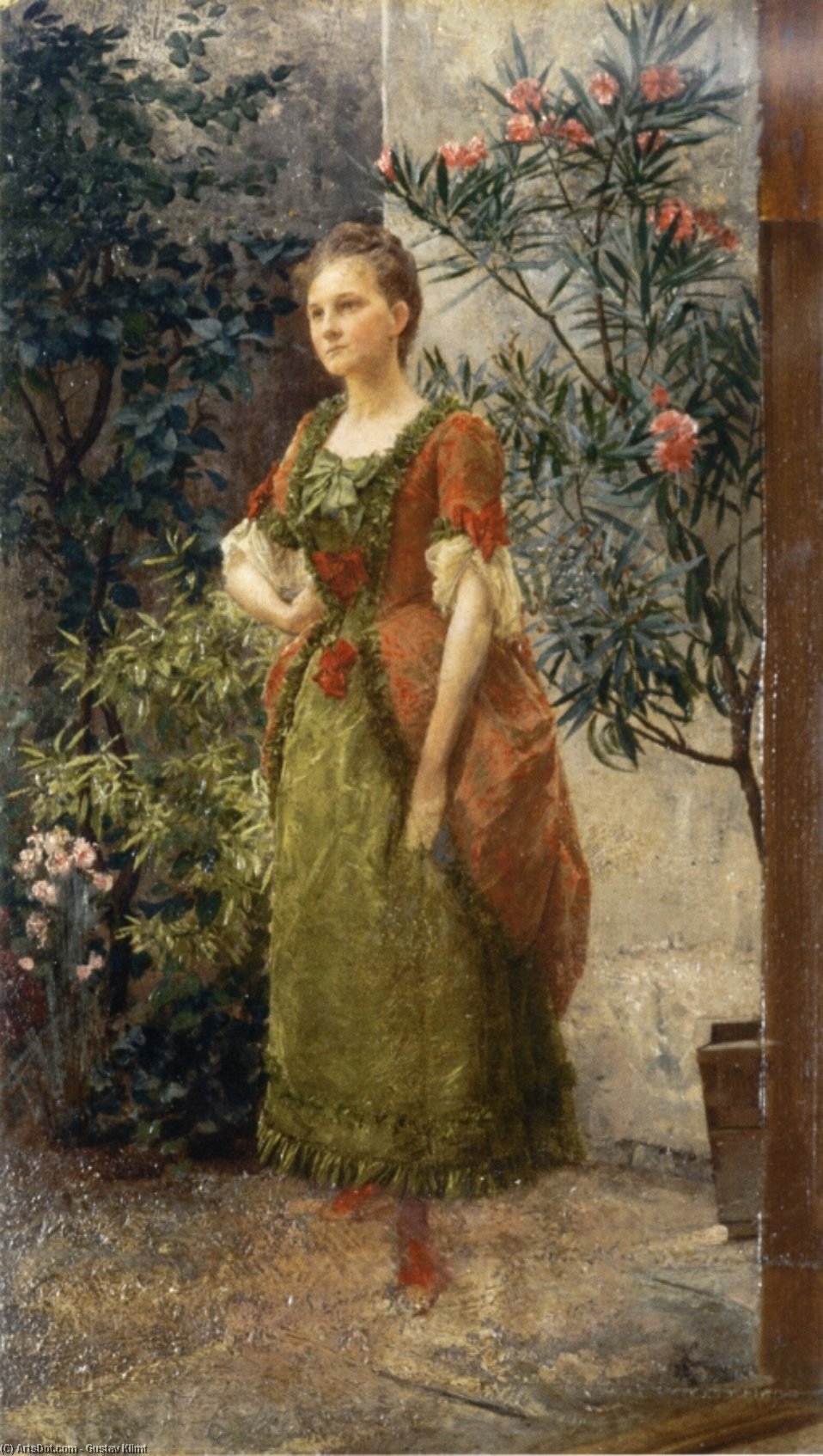
Portrait of Emile Floge: A Viennese Reverie in Blue and Gold
Gustav Klimt, a titan of Symbolism and Art Nouveau, remains an artist whose oeuvre continues to fascinate scholars and connoisseurs alike. Among his prolific output,
Portrait of Emile Floge stands as a testament to Klimt’s singular vision and his masterful command of decorative art—a captivating glimpse into the heart of Vienna’s artistic landscape at the turn of the century. Measuring 41 x 24 cm, this oil on panel painting from 1892 encapsulates the essence of Klimt's early stylistic explorations, revealing a profound sensitivity to color and form that would define his enduring legacy.
The Subject: Emilie Flöge – Beyond Appearance
Emilie Flöge was more than just a muse; she was Klimt’s lifelong companion—a woman who embodied intellectual curiosity and artistic engagement. The portrait depicts her standing beside a tree adorned with delicate pink blossoms, an image imbued with serenity and contemplation. Her long hair cascades down her back, mirroring the graceful curves of the tree branches and subtly echoing Klimt's preoccupation with feminine beauty. The dress she wears—a muted green—contrasts beautifully against the vibrant hues of the floral backdrop, creating a harmonious balance between organic form and chromatic richness.
Art Nouveau’s Embrace: Flowing Lines and Decorative Detail
- Style: This painting is undeniably rooted in Art Nouveau, a movement that championed flowing lines, organic motifs, and an opulent embrace of decorative elements. Klimt skillfully employs these stylistic conventions to elevate the portrait beyond mere representation—transforming it into a richly textured visual experience.
- Technique: Klimt’s technique is characterized by meticulous layering of paint—particularly gold leaf—which lends the artwork an ethereal glow and reinforces its symbolic significance. The shimmering surface captures light in unexpected ways, mirroring the elusive beauty he sought to convey.
- Color Palette: Dominated by shades of blue—ranging from pale cerulean to deeper indigo—the palette evokes a sense of melancholy yet also conveys profound peace. These hues are juxtaposed with the rosy blossoms and the verdant foliage, creating a harmonious interplay of color that underscores the painting’s contemplative mood.
Historical Context: Vienna Secession and Artistic Innovation
Created in 1892 during Klimt's formative years, Portrait of Emile Floge reflects the broader artistic currents of Vienna Secession—a rebellious movement that challenged academic conventions and championed avant-garde experimentation. Klimt’s refusal to adhere to traditional stylistic norms signaled a decisive break from established artistic traditions, establishing him as a pioneer of modern art.
Symbolism Beyond Surface Beauty
The tree itself serves as a potent symbol—representing resilience, growth, and connection to nature—themes that resonate throughout Klimt’s oeuvre. The woman's gaze directs towards the viewer, inviting contemplation and prompting us to consider the complexities of human emotion and experience. Ultimately, Portrait of Emile Floge transcends mere visual splendor—it embodies Klimt’s profound engagement with the spiritual and psychological dimensions of art.
For more information on Gustav Klimt and his remarkable artistic achievements, visit Gustav Klimt: Portrait of Emile Floge at ArtsDot.