A Glimpse into the Golden Age: Exploring Gustav Klimt’s ‘Portrait of Eugenia Primavesi’
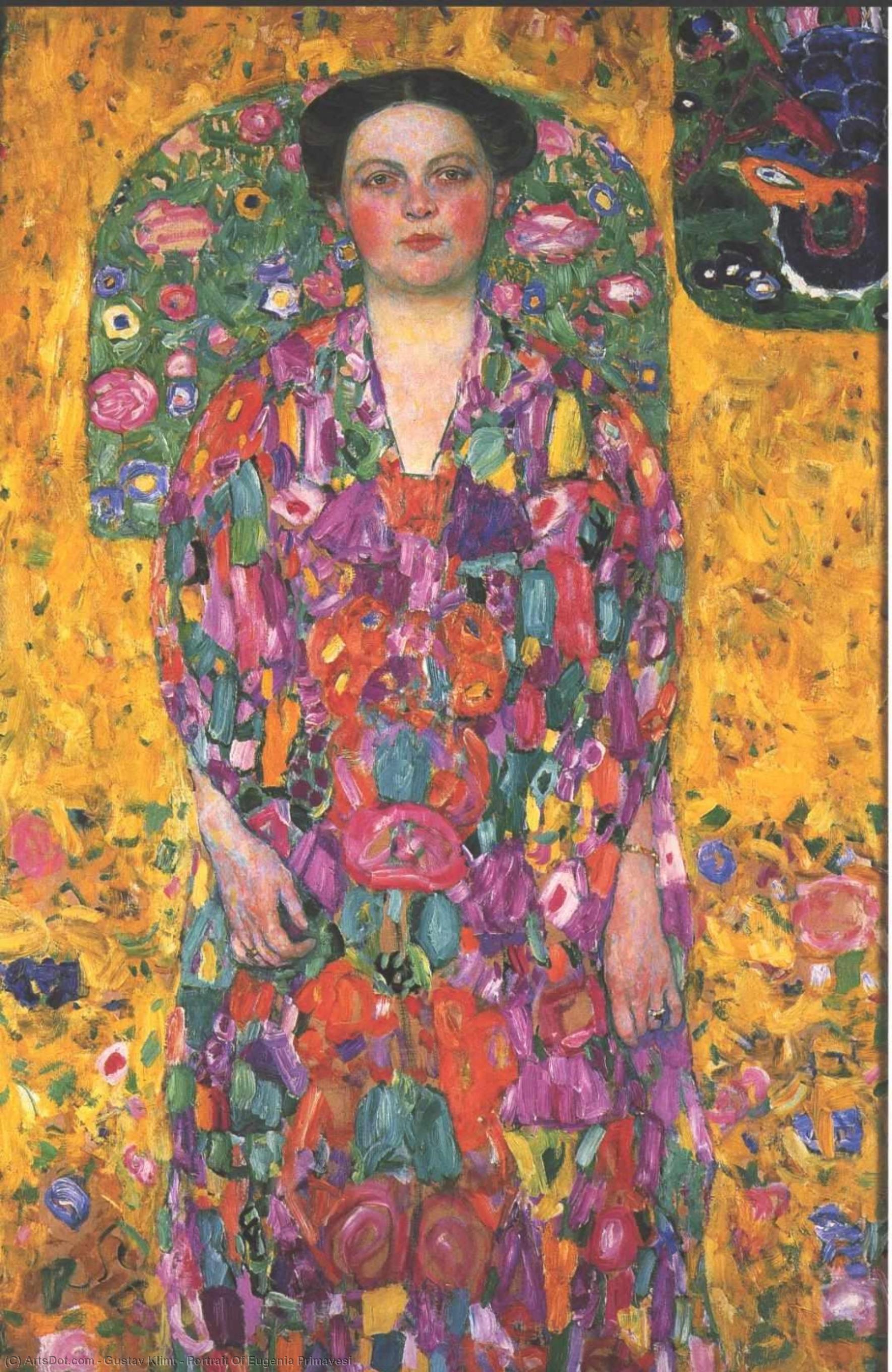
Gustav Klimt's “Portrait of Eugenia Primavesi,” painted in 1913, isn’t merely a depiction of a young woman; it’s an immersion into the heart of Vienna’s vibrant artistic landscape at the dawn of the 20th century. This captivating work, residing within the private collections of art enthusiasts and collectors alike, stands as a testament to Klimt's mastery of Art Nouveau and his profound ability to infuse symbolism into every brushstroke. The painting immediately draws the eye with its opulent color palette – a rich tapestry of yellows, greens, and subtle golds that seem to shimmer with an inner light. Eugenia Primavesi herself is presented in a pose of quiet dignity, her gaze directed downwards, inviting the viewer into a world of delicate beauty and unspoken emotion. It’s a portrait that transcends simple representation, becoming a meditation on youth, femininity, and the allure of the decorative arts.
Klimt's genius lies in his seamless blending of traditional portraiture with the radical innovations of the Vienna Secession movement. He deliberately eschewed the rigid formality of academic painting, opting instead for a more fluid, expressive style. The background isn’t merely a backdrop; it’s an integral part of the composition, a swirling mosaic of geometric patterns and floral motifs that echo the decorative sensibilities of Art Nouveau. These elements aren't simply ornamental; they subtly suggest a world beyond the immediate subject, hinting at hidden depths and symbolic meanings. The influence of Japanese art is particularly evident in this work – Klimt’s use of flattened perspectives, bold outlines, and intricate patterns reflects the aesthetic principles he admired from across the globe.
Decoding Symbolism: The Language of Color and Form
Each element within “Portrait of Eugenia Primavesi” carries a potent symbolic weight. The dominant yellow hue is often associated with wealth, luxury, and even madness – a deliberate choice that reflects Klimt’s fascination with the darker aspects of human experience. The pink flower delicately placed in her hair isn't just a decorative flourish; it represents beauty, fragility, and perhaps even a fleeting moment of youth. The kimono she wears, fashionable in Vienna at the time, speaks to her social standing and connection to the city’s vibrant cultural scene. Klimt masterfully uses color not only to create visual interest but also to communicate deeper meanings – a testament to his skill as a symbolic artist.
The composition itself is carefully constructed to draw attention to Eugenia's face, emphasizing her youthful beauty and serene expression. The subtle tilt of her head, the delicate curve of her lips, all contribute to an aura of quiet grace. Klimt’s use of light and shadow creates a sense of depth and volume, bringing the portrait to life with remarkable realism despite its stylized elements. The interplay between the figure and the background is particularly striking – they seem to merge and flow into one another, creating a harmonious whole that embodies the spirit of Art Nouveau.
A Legacy Forged in Gold: Klimt’s Artistic Impact
Gustav Klimt's “Portrait of Eugenia Primavesi” represents a pivotal moment in his artistic evolution. Early in his career, he was known for his architectural decorations and murals, often commissioned by wealthy patrons. However, as he developed his own distinctive style, he increasingly challenged conventional norms and embraced the avant-garde spirit of the Vienna Secession movement. This shift is vividly illustrated in this portrait – a departure from traditional portraiture that foreshadows Klimt’s later masterpieces, such as “The Kiss.”
Klimt's influence on subsequent generations of artists is undeniable. Egon Schiele, one of his most prominent pupils, absorbed Klimt’s techniques and aesthetic sensibilities, carrying them forward into his own distinctive style. Today, Klimt’s paintings command record-breaking prices at auction, solidifying his position as one of the most valuable and influential artists in history. Reproductions of “Portrait of Eugenia Primavesi,” offered through platforms like ArtsDot, provide a remarkable opportunity to experience the beauty and power of this iconic work firsthand.
Learn More: ArtsDot Reproduction | Original Artwork Details | Wikipedia - Gustav Klimt