A Portrait Steeped in Viennese Elegance and Symbolism
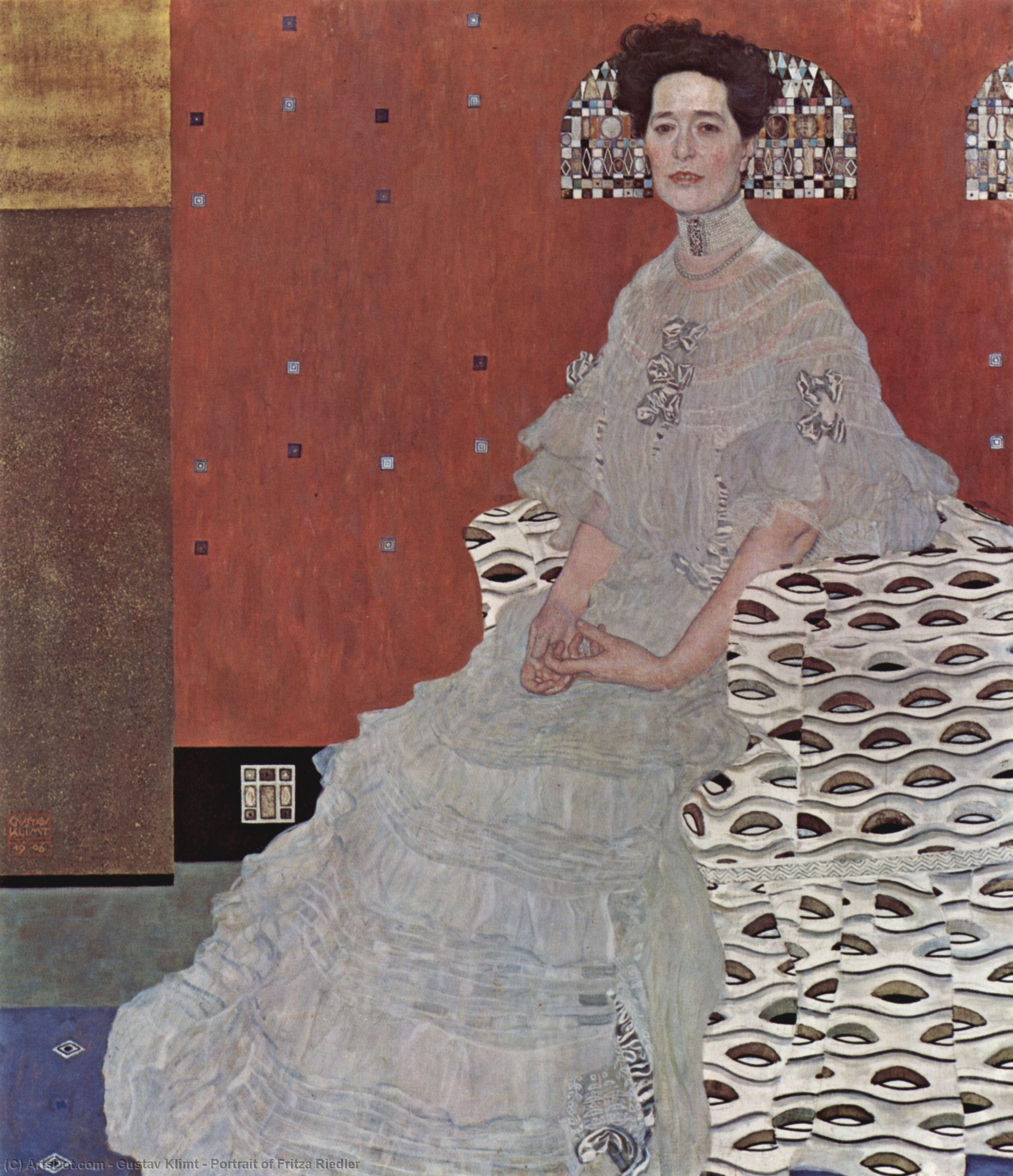
Gustav Klimt’s Portrait of Fritza Riedler, painted in 1906, is more than just a likeness; it's an immersive experience into the heart of early 20th-century Vienna. This oil on canvas, measuring 153 x 133 cm, transcends the conventions of traditional portraiture, embodying Klimt’s signature style – a masterful blend of Art Nouveau sensuality, Byzantine influence, and opulent gold leaf. The painting captures Friederike Langer, later known as Fritza Riedler, wife of Alois Riedler, a prominent figure in Berlin's technical college scene. It’s a glimpse into the lives of Vienna’s burgeoning bourgeoisie – a world of wealth, social standing, and an embrace of artistic innovation.
At first glance, the composition is deceptively simple: Fritza sits gracefully on a bed, her hands clasped before her in a gesture of quiet contemplation. However, closer inspection reveals layers of intricate detail and symbolic meaning. The room itself – dominated by a striking red wall – immediately establishes an atmosphere of luxury and timelessness. Two clocks punctuate the scene, not merely as functional objects but as visual anchors, suggesting the passage of time and perhaps hinting at the fleeting nature of beauty and social status. The bowl on the bed adds to the sense of domestic comfort and refinement.
The Golden Phase: Technique and Artistic Innovation
Klimt’s masterful use of gold leaf is, undoubtedly, the painting's most arresting feature. It wasn’t simply applied as decoration; it was integral to the composition, creating shimmering patterns that seem to radiate outwards from Fritza’s face. This technique, deeply rooted in Byzantine mosaics and medieval illuminated manuscripts, elevates the portrait beyond a mere representation of the sitter. Klimt’s meticulous layering of gold, silver, and platinum creates an almost sculptural effect, transforming the background into a complex tapestry of geometric shapes and stylized motifs – reminiscent of both ancient Egyptian art and the intricate designs of Pallas Athene.
The painting's execution is equally impressive. Klimt’s brushwork is remarkably smooth and controlled, particularly in rendering Fritza’s delicate features and the luxurious folds of her gown. The subtle gradations of color – from the pale eau de nil of her dress to the rich reds and golds of the background – contribute to a sense of depth and realism. Notably, Klimt deliberately simplifies the setting, reducing the armchair to an almost abstract outline, drawing attention directly to Fritza’s face and emphasizing its central importance within the composition.
Vienna Secession and a Portrait of Its Time
Portrait of Fritza Riedler is inextricably linked to the Vienna Secession movement, a group of artists who sought to break free from the rigid traditions of the established art world. Klimt was a key figure in this revolutionary movement, advocating for a more expressive and symbolic approach to art. The Secession’s rejection of academic conventions paved the way for new artistic styles and ideas, influencing generations of artists to come.
Considering Klimt's previous works, such as *Portrait of Margarethe Stonborough-Wittgenstein*, it is clear that he was influenced by his experience capturing the essence of prominent figures like Karl Wittgenstein’s daughter. This exposure likely informed his approach to portraying Fritza Riedler, allowing him to capture not just her physical appearance but also a sense of her personality and social standing. The painting reflects the values and aspirations of Vienna's elite at the turn of the 20th century – a society embracing modernity while still deeply rooted in tradition.
A Legacy Preserved: Display and Significance
Today, Portrait of Fritza Riedler resides within the prestigious collection of the Munich Residenz Museum, one of Germany’s largest city palaces. This location underscores the painting's historical significance and its enduring appeal to art lovers worldwide. The museum provides a remarkable setting for appreciating Klimt’s masterpiece, allowing visitors to immerse themselves in the artistic and cultural context of Vienna at the turn of the century.
For those seeking a high-quality reproduction of this iconic artwork, ArtsDot offers meticulously crafted hand-painted reproductions that capture the essence of Klimt's genius. Explore our collection today and bring a piece of Viennese art history into your home or office – a timeless testament to beauty, symbolism, and artistic innovation.