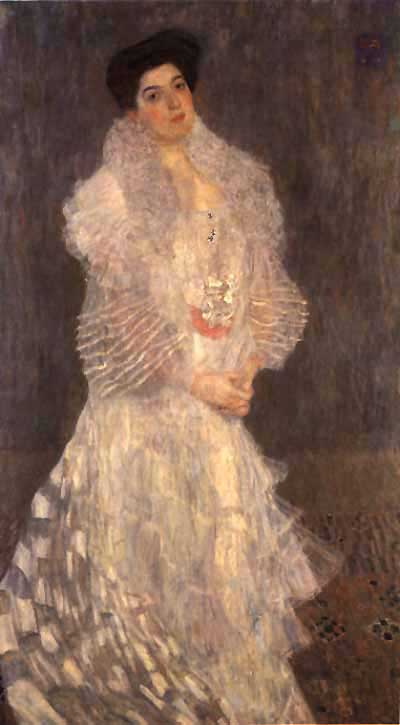
A Glimpse into Viennese Society: Gustav Klimt’s Portrait of Hermine Gallia
Gustav Klimt's *Portrait of Hermine Gallia*, painted in 1904, is more than just a likeness; it’s a captivating window into the opulent world of early 20th-century Vienna and a stunning example of Symbolist portraiture. Commissioned by the wealthy Moritz Gallia for his fashionable wife, Hermine, this full-length oil on canvas embodies Klimt's signature style – a harmonious blend of decorative artistry, psychological insight, and subtle eroticism.
Artistic Style & Technique: A Symphony of Pattern and Gold
Klimt masterfully departs from traditional portraiture with his innovative approach to form and ornamentation. Rather than focusing on strict realism, he employs a flattened perspective and an abundance of decorative patterns that envelop Hermine in a visually arresting composition. The subject’s dress isn't merely fabric; it’s a canvas for intricate geometric shapes, swirling floral motifs, and abstract designs – all rendered with Klimt’s characteristic use of
gold leaf. This lavish application of gold imbues the painting with a sense of luxury, spirituality, and otherworldly beauty. The loose brushwork and emphasis on texture create a dynamic surface that seems to shimmer and move before the viewer's eyes.
Symbolism & Interpretation: Decoding Klimt’s Visual Language
Klimt was a master of symbolism, embedding layers of meaning within his artwork. While interpretations vary, the patterns adorning Hermine’s dress are believed to hold symbolic weight. The geometric shapes may represent order and structure, while the floral motifs evoke femininity, growth, and sensuality. Some scholars suggest that the specific arrangement of these elements reflects Hermine's personality or social standing. The overall effect is one of
stylization, transforming a realistic portrait into an iconic representation of female beauty and societal grace.
Historical Context: Vienna at the Turn of the Century
*Portrait of Hermine Gallia* was created during a pivotal moment in Viennese history – a period marked by artistic innovation, social change, and burgeoning anxieties about modernity. Klimt was a leading figure in the
Vienna Secession, a movement that rejected traditional academic art in favor of more experimental and expressive forms. The painting reflects this spirit of rebellion and a desire to create a new aesthetic language for the modern age. Hermine Gallia herself was a celebrated fashion icon, representing the elegance and sophistication of Vienna’s upper class.
Emotional Impact & Legacy: A Lasting Impression
The portrait evokes a sense of both allure and melancholy. Hermine's gaze is direct yet enigmatic, hinting at an inner life that remains partially concealed. The opulent setting and elaborate attire suggest wealth and privilege, but there’s also a subtle undercurrent of vulnerability. Klimt doesn’t simply present Hermine as an object of beauty; he invites us to contemplate her identity, her desires, and her place in society. Today, *Portrait of Hermine Gallia* remains one of Klimt's most beloved works, captivating audiences with its exquisite detail, symbolic richness, and enduring emotional power.
Acquisition & Display
Currently housed at the
Belvedere Palace & Museum in Vienna, this masterpiece is a highlight of their extensive Klimt collection – alongside iconic pieces like *The Kiss*. High-quality reproductions are available, offering art enthusiasts and interior designers the opportunity to bring a touch of Viennese elegance into their homes.
- Explore more works by Gustav Klimt.
- Discover the treasures of the Belvedere Palace & Museum.
- Delve deeper into the history of the Vienna Secession.