Discover Gustav Klimt (1862-1918), the Austrian Symbolist master of Art Nouveau! Explore his iconic 'Golden Phase,' sensual portraits, and masterpieces like *The Kiss*. Learn about his life, influences & legacy.
Explore European art from the 13th-19th centuries at London's National Gallery! Discover masterpieces by Van Gogh, Rembrandt & more – free entry!
A Portrait Steeped in Viennese Elegance: Gustav Klimt’s Hermine Gallia
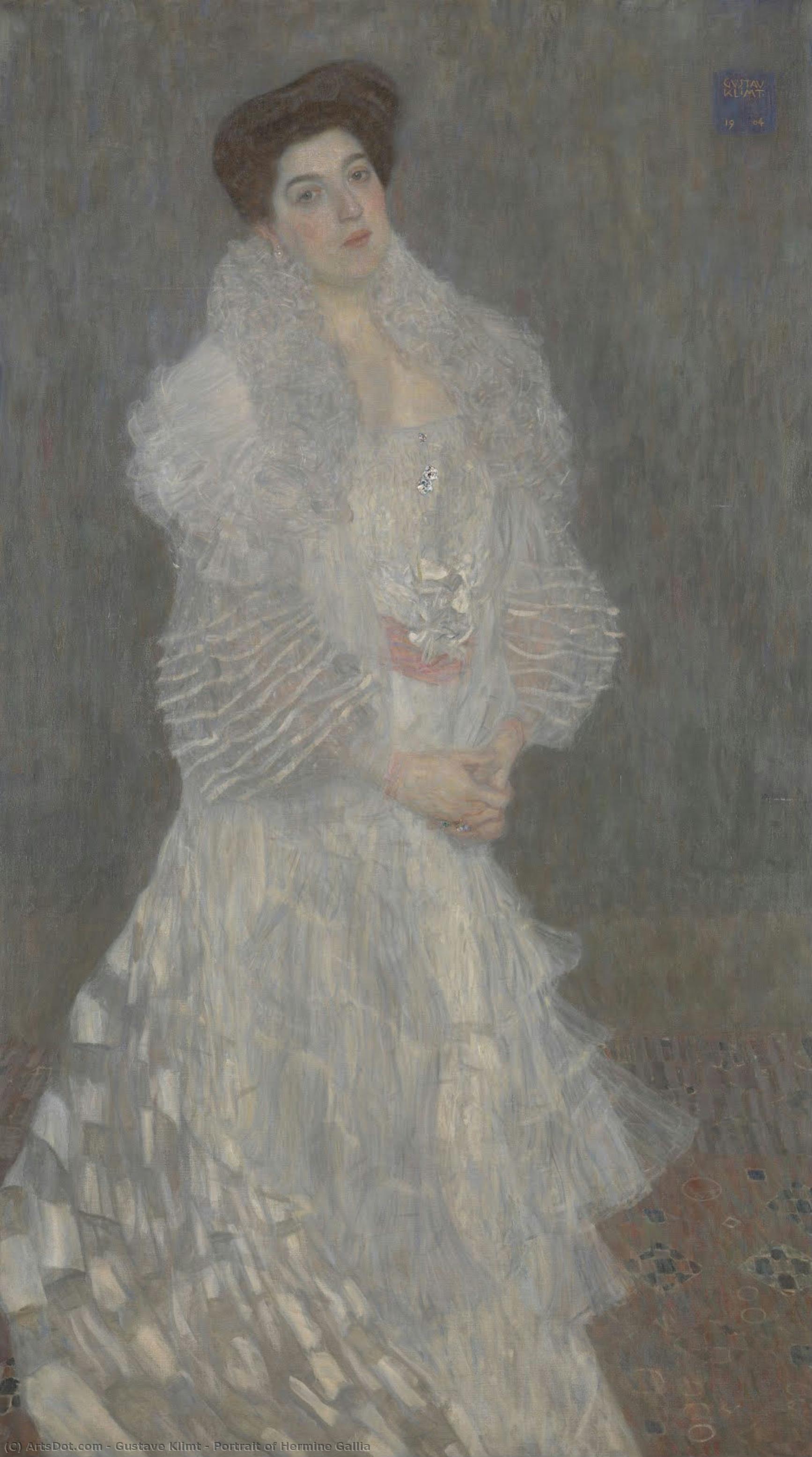
Gustav Klimt's "Portrait of Hermine Gallia," completed in 1904, stands as a testament to the artistic fervor of Vienna at the turn of the century and embodies Klimt’s signature style—a mesmerizing blend of Art Nouveau ornamentation and psychological depth. The painting depicts Hermine Gallia (née Hamburger), a woman whose life intersected with the influential circles of Viennese society and who commissioned Klimt himself to capture her likeness. More than just a depiction of a sitter, it's an exploration of identity, wealth, and the subtle tensions inherent in familial relationships—themes that resonate powerfully even today.
- Subject Matter: The portrait focuses on Hermine Gallia herself, presenting her with dignified poise against a backdrop of shimmering white fabric adorned with intricate floral motifs reminiscent of Klimt’s larger canvases like “Adele Bloch-Bauer I.”
- Style & Technique: Klimt's distinctive style is immediately recognizable through the extensive use of gold leaf—a technique he pioneered and perfected—which dominates the dress and subtly illuminates Gallia’s face. The painting employs a meticulous layering of textures, achieved primarily through oil paint combined with encaustic wax, creating a rich surface that captures light beautifully.
Historical Context: Vienna at the Dawn of Modern Art
Vienna in 1904 was experiencing a remarkable cultural renaissance fueled by patronage from wealthy families like the Gallias—particularly Moritz Gallia, Hermine’s uncle and a prominent government advisor. Klimt's work reflects this milieu, aligning with the broader artistic movement that sought to elevate decorative arts alongside painting and sculpture. The influence of Symbolism is palpable, prioritizing emotional expression over literal representation and delving into psychological states rather than simply portraying outward appearances. This was a period where artists wrestled with questions of beauty, morality, and the complexities of human experience—a preoccupation evident in Klimt’s careful consideration of composition and color palette.
- Symbolism: The floral patterns on Gallia's dress are not merely decorative; they symbolize fertility and renewal – motifs frequently employed by Klimt to convey ideas of femininity and spiritual aspiration.
- Influence of Art Nouveau: Klimt’s meticulous attention to detail, mirroring the flowing lines and organic forms characteristic of Art Nouveau, underscores his commitment to pushing artistic boundaries while honoring tradition.
Emotional Resonance & Artistic Legacy
“Portrait of Hermine Gallia” transcends mere visual representation; it communicates a sense of quiet contemplation and understated strength. Klimt’s masterful use of color—primarily gold, ivory, and muted reds—creates an atmosphere of opulent serenity that invites viewers to engage with the sitter's gaze. The painting’s enduring appeal lies in its ability to capture not just a likeness but also a psychological portrait—a glimpse into Gallia’s inner life and Klimt’s profound understanding of human emotion. It remains a cornerstone of Klimt’s oeuvre and exemplifies his unparalleled skill in blending artistic innovation with emotional sensitivity, cementing his place as one of the most influential artists of the early 20th century.
ArtsDot Reproduction: Bringing Klimt's Vision to Life
At ArtsDot.com, we offer exceptional reproductions of “Portrait of Hermine Gallia,” meticulously crafted using archival quality materials to faithfully recreate Klimt’s original masterpiece. Experience the brilliance of his technique and the captivating beauty of his artistic vision—a timeless treasure now accessible in stunning detail. Explore our collection today!