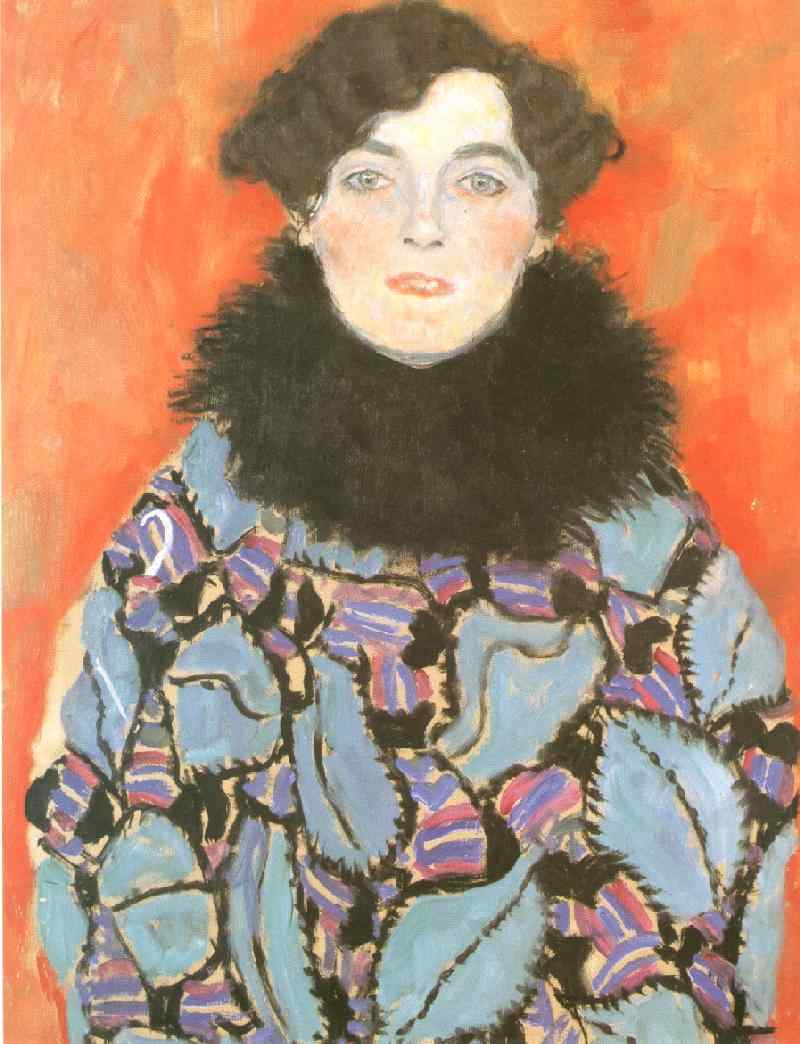
The
Portrait of Johanna Staude(unfinished) by
Gustave Klimt is a captivating oil painting that showcases the artist's unique blend of symbolism and Art Nouveau. Created in 1917, this piece is a testament to Klimt's skillful use of color and composition. The subject of the painting, Johanna Staude, is depicted as a woman with long hair, wearing a black dress and a fur around her neck.
Symbolism and Artistic Style
Klimt's style is characterized by his use of
symbolism and
realism, which is evident in this painting. The woman's face is prominently displayed, and she seems to be the main focus of the image. The blue background adds a sense of depth and tranquility to the piece. As seen in other works by Klimt, such as
Judith, the artist's use of symbolism is a key element in his paintings.
Comparison to Other Works
In comparison to other works by Klimt, such as
Island in the Attersee, the
Portrait of Johanna Staude(unfinished) showcases a more subdued color palette. However, the use of symbolism and the emphasis on the subject's face are consistent with Klimt's style. The Albertina museum in Vienna, Austria, is home to many of Klimt's works, including
Sitting Woman with Chin Propped (Study for the portrait).
- The painting is a testament to Klimt's skillful use of color and composition.
- The subject, Johanna Staude, is depicted as a woman with long hair, wearing a black dress and a fur around her neck.
- Klimt's style is characterized by his use of symbolism and realism.
BR The
Portrait of Johanna Staude(unfinished) is a significant work in Klimt's oeuvre, showcasing his unique artistic vision. As noted by art historians, such as
Carl Schuster, Klimt's use of symbolism is a key element in understanding his paintings. For more information on Klimt and his works, visit the Wikipedia page on
Gustav Klimt.