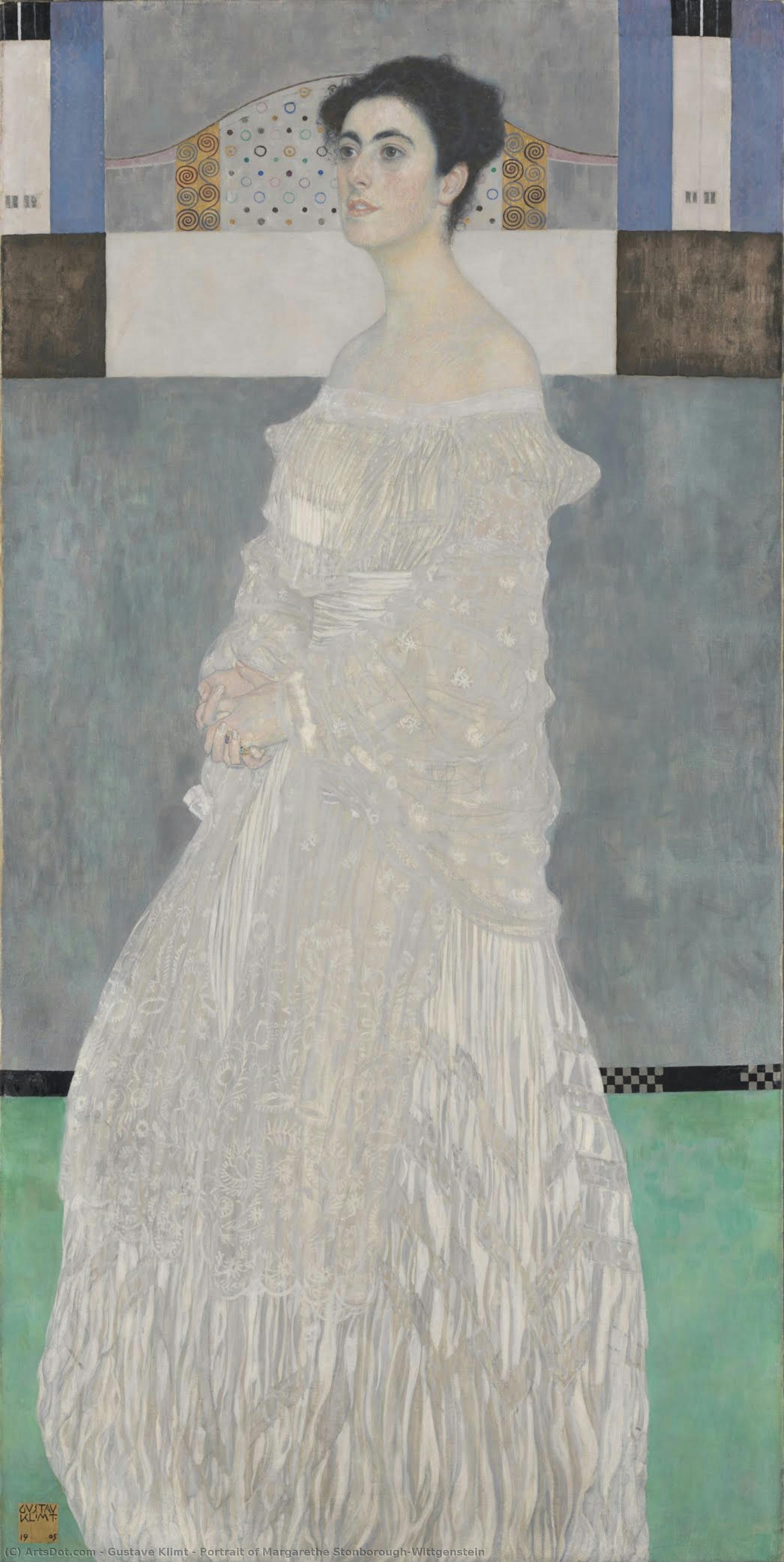
Portrait of Margarethe Stonborough-Wittgenstein

Gustav Klimt’s opulent Portrait of Margarethe Stonborough-Wittgenstein captures the elegance of early 20th century Vienna with intricate gold leaf detailing and symbolic ornamentation—a mesmerizing glimpse into a celebrated artist's masterful vision. Explore this iconic masterpiece and bring timeless beauty home.


Gustav Klimt (1862 - 1918)

Discover Gustav Klimt (1862-1918), the Austrian Symbolist master of Art Nouveau! Explore his iconic 'Golden Phase,' sensual portraits, and masterpieces like *The Kiss*. Learn about his life, influences & legacy.

A Glimpse Into Viennese Modernism: Gustav Klimt’s Portrait of Margarethe Stonborough-Wittgenstein

  • Subject Matter: This striking portrait captures Margarethe Stonborough-Wittgenstein, a prominent Austrian feminist and intellectual figure. The subject is depicted in repose, gazing directly at the viewer—a deliberate gesture that invites contemplation and establishes an intimate connection between sitter and artist.
  • Style: Klimt’s oeuvre embodies Viennese Secessionism, a movement that rejected academic conventions and championed decorative art as a vehicle for artistic expression. Stonborough-Wittgenstein's portrait exemplifies this stylistic ethos through its opulent ornamentation and stylized representation of the human form.
  • Technique: Klimt masterfully employed gold leaf—a technique borrowed from Byzantine mosaics—to imbue the painting with shimmering brilliance and symbolic richness. Alongside gold, he utilized oil paint on canvas, layering textures and hues to create a luminous surface that captures subtle nuances of light and shadow. The meticulous application of brushstrokes contributes to the overall impression of refined craftsmanship.
  • Historical Context: Created in 1907-1908, Stonborough-Wittgenstein’s portrait emerged during a period of significant intellectual ferment in Vienna—the Zeitgeist of the Austro-Hungarian Empire. Klimt's Secessionists sought to redefine artistic boundaries and challenge societal norms, reflecting broader debates about gender roles and artistic autonomy.
  • Symbolism: The floral motifs adorning Stonborough-Wittgenstein’s dress are laden with symbolic significance. Flowers traditionally represent femininity, beauty, and rebirth—themes central to feminist discourse of the time. Furthermore, Klimt's use of geometric patterns alongside organic forms underscores the tension between tradition and innovation inherent in Secessionist aesthetics.

More than just a likeness, Stonborough-Wittgenstein’s portrait is an emblem of Klimt’s artistic vision—a testament to his ability to transform visual imagery into profound statements about human experience. Its enduring appeal lies in its masterful blend of technique and symbolism, inviting viewers to delve into the complexities of Viennese Modernism and contemplate the role of art in shaping cultural consciousness.