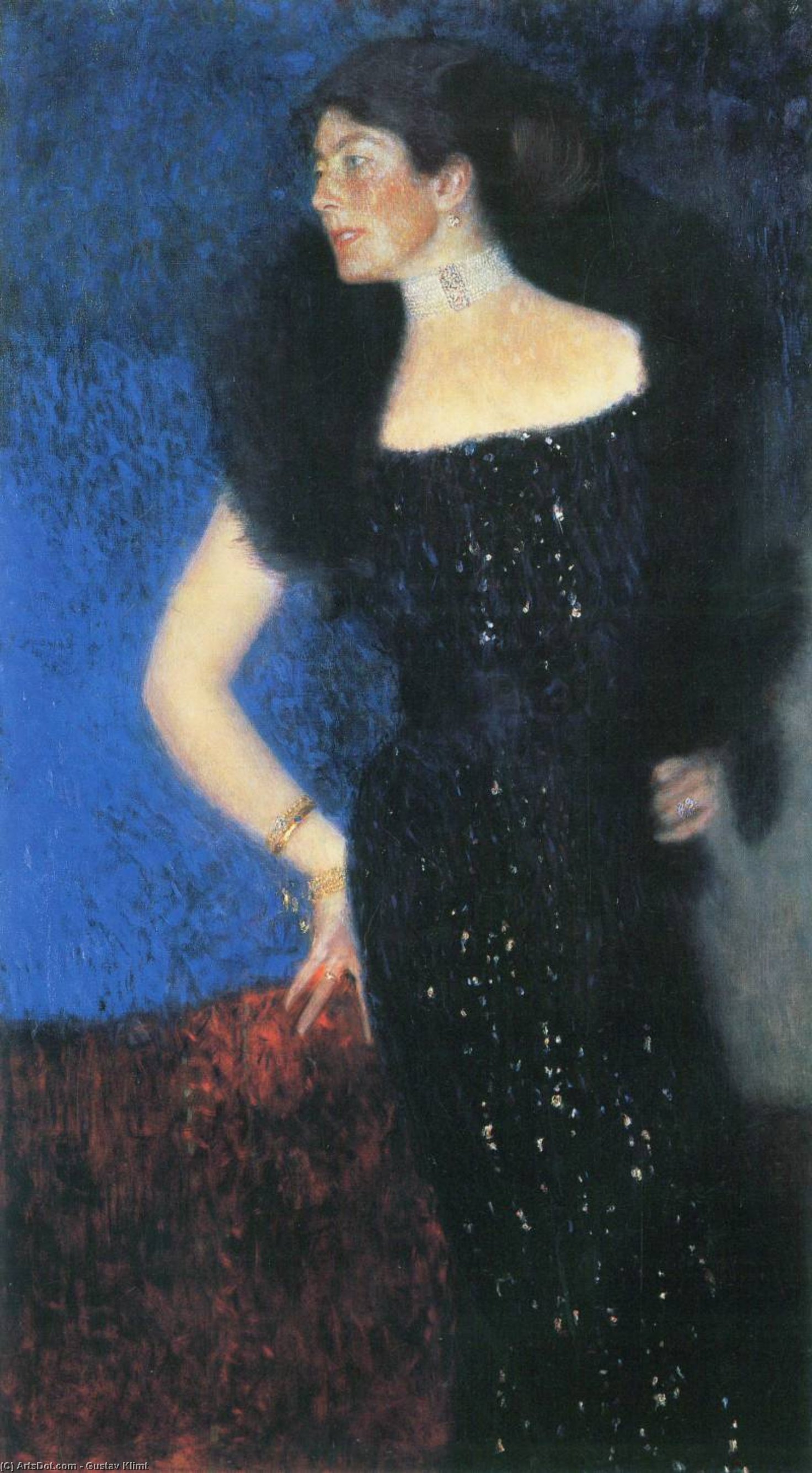
Portrait of Rose von Rosthorn-Friedmann: A Glimpse into Viennese Society Through Klimt’s Golden Lens
Gustav Klimt's 1901 painting, “Portrait of Rose von Rosthorn-Friedmann,” is more than a simple likeness; it’s a meticulously crafted tableau vivant—a snapshot of Vienna’s vibrant and complex high society. This captivating work, housed in the Belvedere Museum in Vienna, offers a rare glimpse into the world of a woman who embodied elegance, refinement, and a subtle connection to the burgeoning artistic circles of the era. Klimt masterfully employs symbolism and his signature style to create an image that is both visually stunning and deeply layered with meaning.
Rose von Rosthorn-Friedmann herself was a prominent figure in Viennese social life, known for her impeccable taste and association with artists and intellectuals. The portrait captures her poised demeanor and the quiet confidence of a woman accustomed to luxury. Her attire—a sleek black dress punctuated by a shimmering gold necklace—immediately draws attention, establishing a visual dialogue between wealth and artistic appreciation. The feather boa, a luxurious accessory, isn’t merely decorative; it speaks volumes about Rose's position within the social hierarchy and her engagement with the aesthetic sensibilities of the time.
The Language of Feathers: Symbolism in Klimt’s Palette
The most striking element of the painting is undoubtedly the profusion of feathers adorning Rose’s boa. Throughout history, feathers have carried profound symbolic weight, representing beauty, grace, spirituality, and even royalty. In Klimt's work, they transcend their literal function, acting as a visual key to understanding Rose’s character and her connection to the artistic world. As explored in “The Art of Feathers: A Journey Through History and Culture,” feathers have been utilized across diverse art forms – from ancient Egyptian murals to Renaissance tapestries – to convey notions of transcendence and elevated status. Here, they subtly suggest Rose's refined taste, her appreciation for beauty, and perhaps even a hint of the ethereal—a connection to something beyond the purely material.
The deliberate choice of feathers—likely ostrich or peacock plumes—further amplifies this symbolism. Ostrich feathers, associated with exoticism and luxury, underscore Rose’s privileged position. Peacock feathers, traditionally linked to divinity and immortality, hint at a deeper spiritual dimension within her personality. Klimt's strategic deployment of these elements transforms the boa from a simple accessory into a powerful visual statement.
A Symphony of Color and Form: Klimt’s Artistic Technique
Klimt’s distinctive style is immediately recognizable in “Portrait of Rose von Rosthorn-Friedmann.” The painting is characterized by bold, geometric patterns interwoven with rich, saturated colors. The striking contrast between the deep blue background and Rose's black dress creates a dramatic visual effect, drawing the viewer’s eye directly to her figure. The red carpet beneath her feet adds another layer of depth and opulence, grounding the portrait within the context of a lavish social setting.
Klimt’s masterful use of brushstrokes—often short, broken strokes that create a shimmering effect—contributes significantly to the painting's overall luminosity. This technique, combined with his skillful manipulation of light and shadow, imbues Rose with an almost ethereal quality. The portrait is not merely a representation of a woman; it’s a carefully constructed illusion, a testament to Klimt’s technical prowess and his ability to evoke emotion through color and form.
Beyond the Portrait: Klimt's Legacy and Artistic Context
“Portrait of Rose von Rosthorn-Friedmann” stands as one pivotal work within Gustav Klimt’s prolific oeuvre, a period marked by his exploration of Symbolism and his embrace of decorative elements. His contributions to the Vienna Secession movement—a group of artists who challenged academic conventions—were instrumental in shaping the course of modern art. Works like “Beethoven Frieze - Panel 3,” “Judith I,” and “Judith01” demonstrate Klimt’s ability to seamlessly blend symbolism with realistic depictions, creating pieces that are both intellectually stimulating and emotionally resonant.
At ArtsDot, we are proud to offer meticulously crafted oil painting reproductions of this iconic masterpiece. Our hand-painted reproductions capture the essence of Klimt's artistic vision, allowing you to bring a piece of Viennese art history into your own home. Explore our collection today and experience the beauty and complexity of “Portrait of Rose von Rosthorn-Friedmann” firsthand.