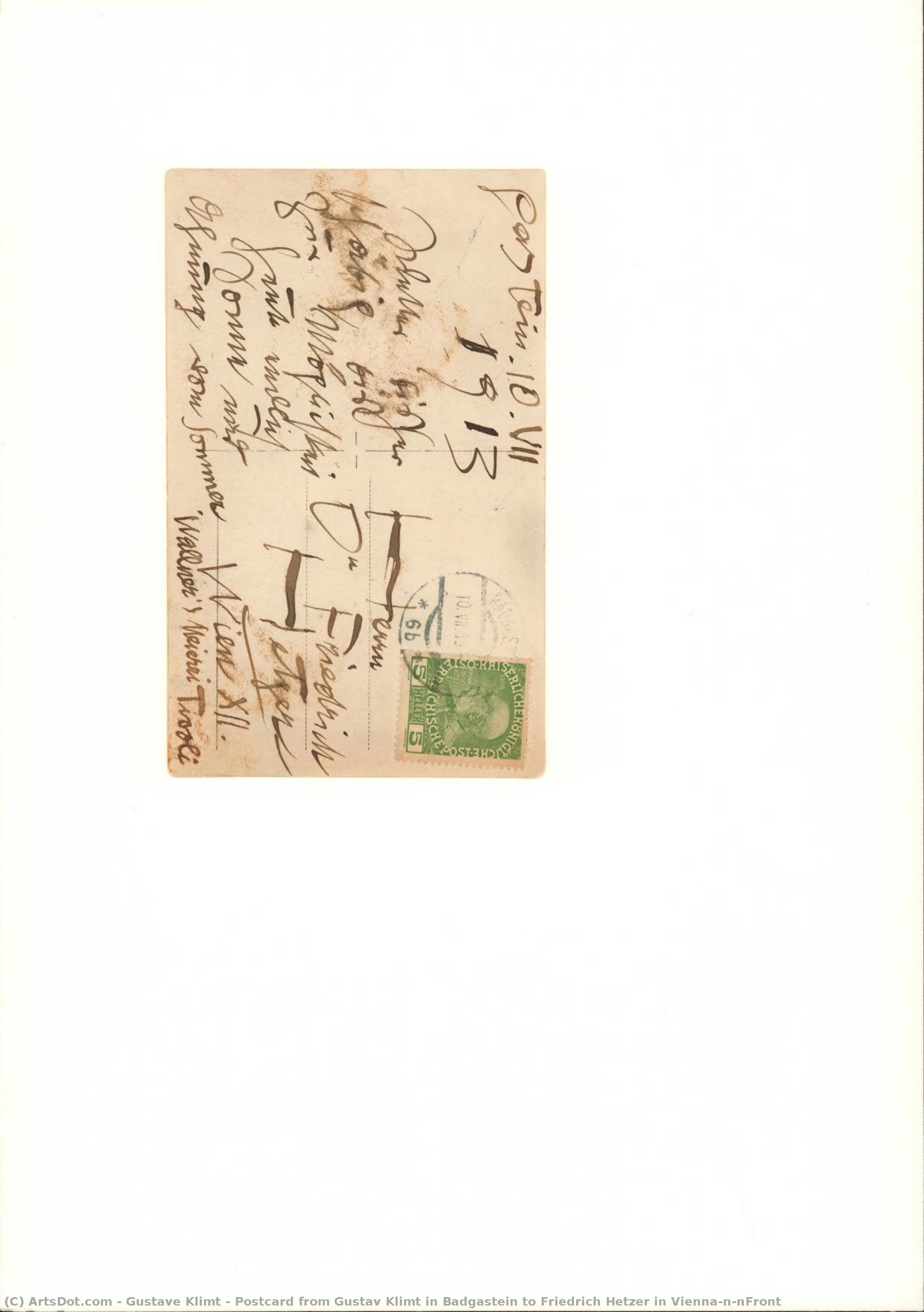
A Fragment of Klimt’s Vision: The Badgastein Postcard
Gustav Klimt's "Postcard from Gustav Klimt in Badgastein to Friedrich Hetzer in Vienna," painted in 1913, offers a glimpse into the artist’s creative process and personal correspondence during his formative years. This unassuming piece—measuring just 8 x 13 cm—holds considerable significance as it represents one of Klimt's earliest explorations of his signature style: opulent gold leaf embellishment combined with intricate decorative patterns inspired by Byzantine mosaics and Celtic spirals. The photograph documenting the postcard’s presence within an art book underscores its importance as a tangible artifact of Klimt’s artistic journey.
- Subject Matter & Composition: The painting depicts a stylized landscape—likely Badgastein, Austria—rendered in Klimt's characteristic flattened perspective and geometric abstraction. Rather than striving for realistic representation, Klimt prioritized conveying mood and atmosphere through carefully considered color palettes and textural contrasts.
- Style & Technique: Klimt’s technique is undeniably innovative. He employs a layering process involving multiple coats of paint—primarily egg tempera—followed by the painstaking application of gold leaf onto recessed areas of the canvas. This method, honed during his studies at the Kunstgewerbeschule, demonstrates an unwavering commitment to textural richness and visual splendor.
- Historical Context: Created in 1913, “Postcard from Gustav Klimt in Badgastein to Friedrich Hetzer in Vienna” reflects the broader artistic currents of the Viennese Secession. Founded in 1897 by Klimt, Emil Schiele, and Josef Maria Olbrich, the Secession championed a radical departure from academic conventions, advocating for an art that embraced symbolism and emotional expression—a stance firmly rooted in Nietzschean philosophy.
Symbolism & Decorative Elements:
The pervasive use of gold leaf is not merely decorative; it embodies Klimt’s fascination with Byzantine iconography and represents divine illumination. Geometric patterns—spirals, circles, and squares—echo Celtic motifs and symbolize wholeness, eternity, and interconnectedness. These elements contribute to the painting's meditative quality and invite contemplation on themes of spirituality and beauty.
Emotional Impact:
Despite its diminutive size, “Postcard from Gustav Klimt in Badgastein to Friedrich Hetzer in Vienna” exudes a palpable sense of artistic confidence. The meticulous craftsmanship speaks volumes about Klimt’s dedication to his craft and conveys an unwavering belief in the transformative power of art—a conviction that would define his entire oeuvre. It serves as a poignant reminder of Klimt's early experimentation with style, foreshadowing the monumental achievements that would solidify his place among Austria’s artistic titans.