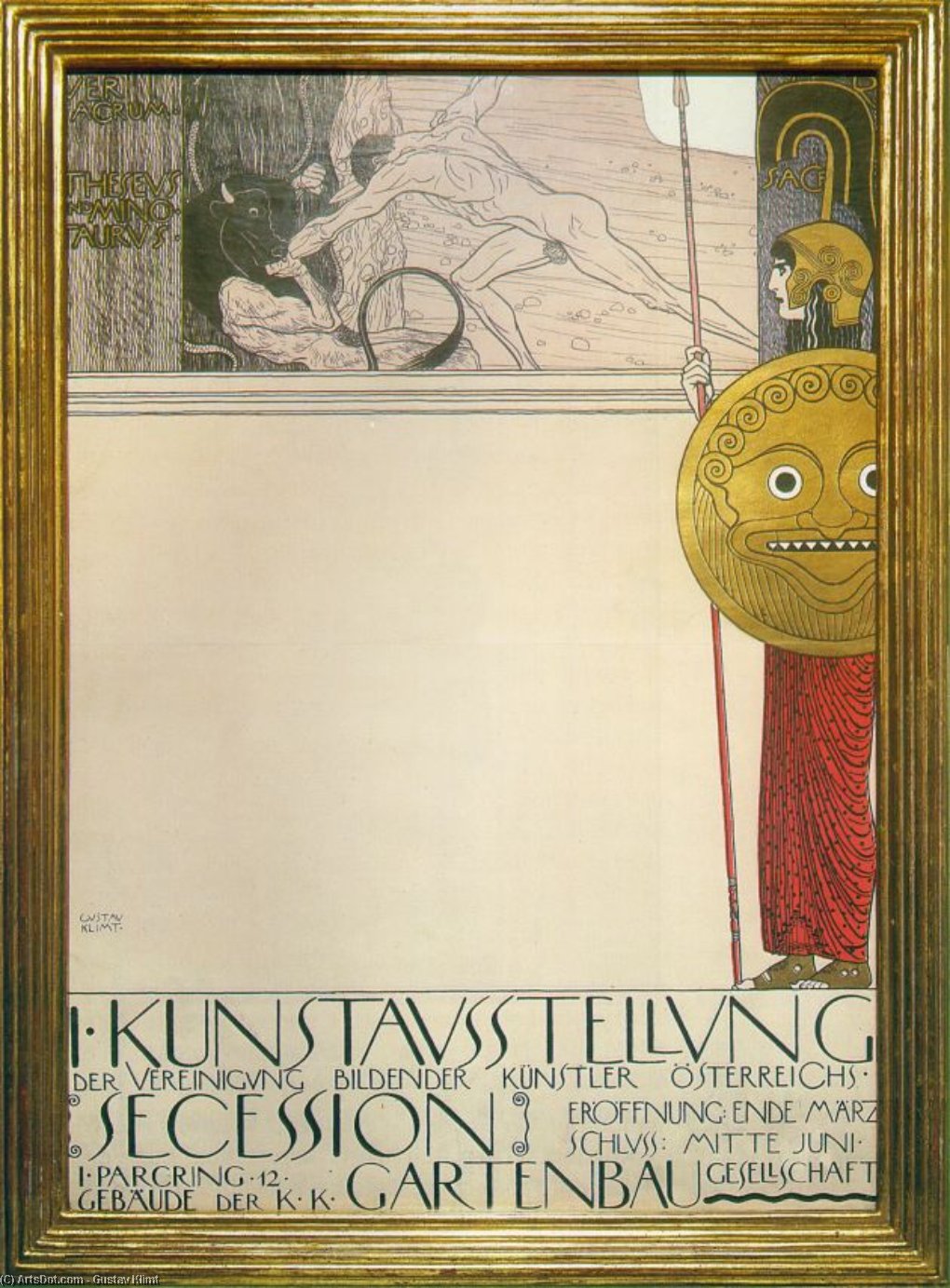
A Herald of Modernity: Unveiling Klimt’s 1st Secession Exhibition Poster
Gustav Klimt’s groundbreaking poster for the inaugural exhibition of the Vienna Secession in 1898 is far more than a promotional image; it's a defiant manifesto, a visual declaration of artistic independence, and an enduring icon of the Art Nouveau movement. This work encapsulates the spirit of rebellion against academic tradition that defined the Secessionists and signaled the dawn of modern art in Austria.
The Vienna Secession: A Revolt Against Convention
To fully appreciate this poster, one must understand its historical context. Founded in 1897 by Klimt and a collective of like-minded artists, the Vienna Secession aimed to break free from the conservative artistic establishment. They rejected the rigid constraints of the Academy of Fine Arts, embracing new styles – Symbolism, Art Nouveau (known as Jugendstil in German-speaking countries), and innovative approaches to subject matter. The Secessionists sought to create a *total work of art* (
Gesamtkunstwerk), integrating painting, sculpture, architecture, and design into a unified aesthetic experience.
Decoding the Visual Language: Symbolism & Composition
The poster’s composition is strikingly bold and unconventional for its time. Instead of depicting finished artworks, Klimt presents allegorical figures representing different artistic disciplines. Three female personifications – Painting (holding a banner), Poetry (with a floral wreath), and Sculpture (bearing a sculpted head) – stand triumphantly atop a globe, symbolizing the universal reach and ambition of art.
- The golden background, a hallmark of Klimt’s later “Golden Phase,” imbues the poster with an ethereal quality and elevates the figures to almost mythical status.
- The swirling, organic lines characteristic of Art Nouveau create a sense of dynamism and movement. These flowing forms contrast sharply with the rigid structures favored by traditional academic art.
- The inclusion of text – “Vienna Secession” and exhibition details – is seamlessly integrated into the design, demonstrating Klimt’s mastery of graphic arts.
- The globe itself isn't a realistic depiction but rather a stylized representation, emphasizing the Secessionists’ ambition to redefine artistic boundaries on a global scale.
Technique and Artistic Influences
Klimt employed a mixed-media technique, combining lithography with hand-coloring. This allowed for both precise graphic detail and vibrant chromatic effects. The poster’s design reflects influences from Japanese woodblock prints – particularly in its flattened perspective, bold outlines, and decorative patterns – which were highly fashionable among European artists at the time. The influence of Symbolism is also evident in the allegorical nature of the figures and the emphasis on subjective experience over realistic representation.
Emotional Impact & Lasting Legacy
This poster isn’t merely visually appealing; it evokes a powerful sense of optimism, innovation, and artistic freedom. It embodies the Secessionists' belief in the transformative power of art to challenge conventions and inspire change. The work continues to resonate today as a symbol of artistic rebellion and a testament to Klimt’s genius.
Its enduring appeal makes it a captivating addition to any collection or interior space, bringing a touch of Viennese elegance and modernist spirit into your home or office. A reproduction of this iconic poster is not just an artwork; it's a piece of art history.