A Symphony of Blossoms: Unveiling Klimt’s ‘Roses Under the Trees’
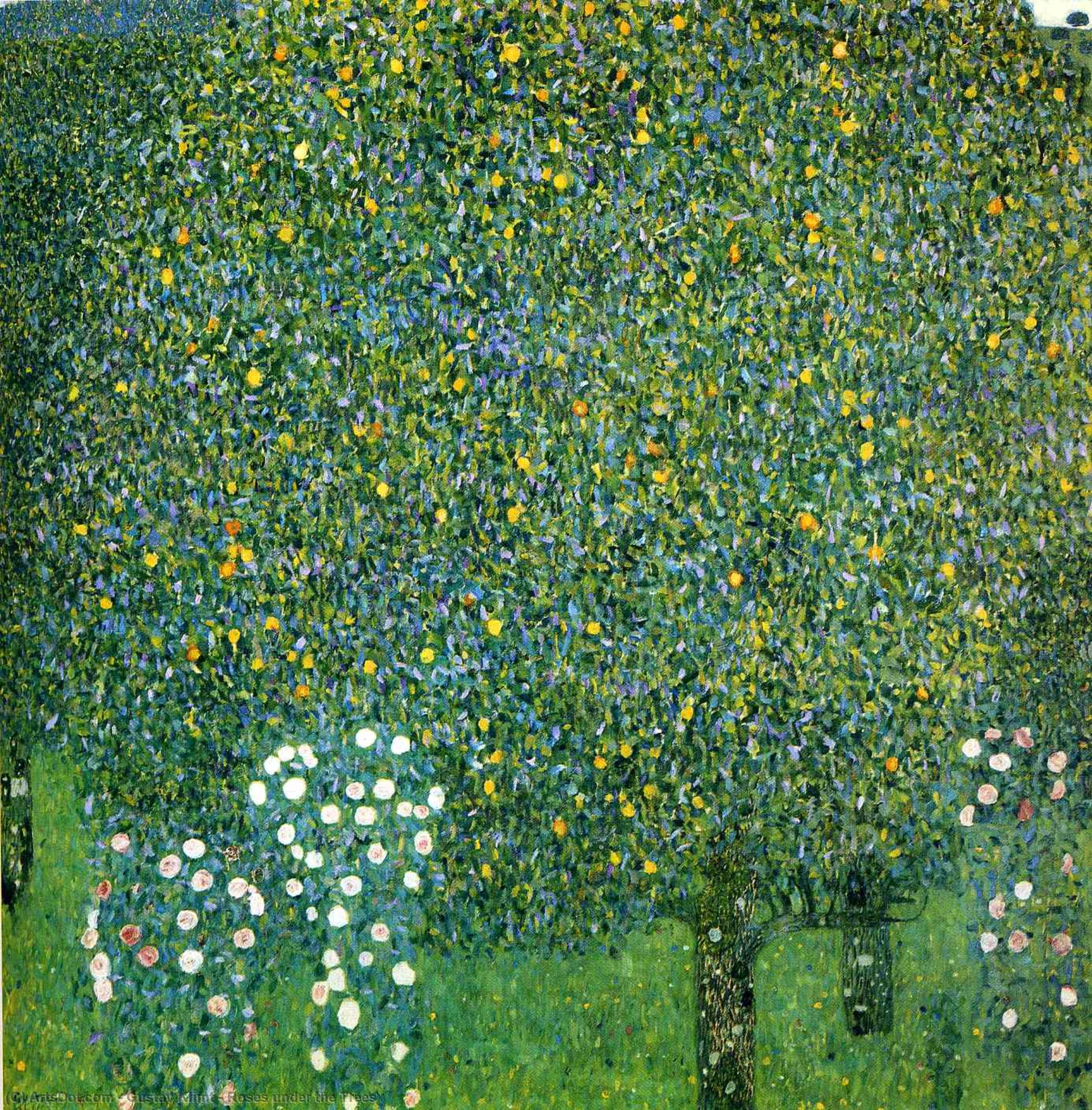
Gustave Klimt's 1905 masterpiece, *Roses Under the Trees*, is a quintessential example of Art Nouveau at its most evocative. Measuring 110 x 110 cm, this oil on canvas transports viewers into a dreamlike garden brimming with life and symbolic resonance. More than just a depiction of nature, it’s an exploration of feeling, a visual poem rendered in Klimt's signature style.
Subject & Composition: A Glimpse Into Eden
The painting centers around a blossoming tree, its branches laden with vibrant yellow flowers and colorful blooms that dominate the foreground. This isn’t a precise botanical study; rather, it’s an *impression* of abundance, a celebration of spring's vitality. Additional trees recede into the background, creating depth and suggesting an expansive, almost limitless garden space. A solitary figure stands to the left, subtly positioned as if observing or perhaps lost in contemplation within this floral paradise. The composition isn’t rigidly structured; instead, it flows organically, mirroring the natural growth of the depicted foliage.
Artistic Style & Technique: Klimt's Golden Touch
While not employing literal gold leaf as prominently as some of his other works (like *Schloss Kammer am Attersee II*), *Roses Under the Trees* embodies Klimt’s distinctive aesthetic. The painting showcases a masterful blend of naturalistic representation and abstract patterning. Notice how forms dissolve into shimmering textures, created through visible brushstrokes and an impasto technique – layers of paint applied thickly to create a tactile surface. This approach lends the artwork a sense of movement and energy. Klimt’s ability to capture light filtering through leaves is particularly striking, imbuing the scene with a luminous quality.
Historical Context: Art Nouveau & The Vienna Secession
*Roses Under the Trees* emerged during the height of the Art Nouveau movement (c. 1890-1910), a style characterized by sinuous lines, organic forms, and an embrace of decorative beauty. Klimt was a leading figure in the Vienna Secession, a group of artists who rebelled against the conservative artistic establishment in Austria. They sought to create a *Gesamtkunstwerk* – a “total work of art” – that integrated painting, architecture, and design. This desire for holistic aesthetic experience is evident in Klimt’s meticulous attention to detail and his harmonious blending of form and color.
Symbolism & Emotional Impact: A Garden of the Soul
The symbolism within *Roses Under the Trees* is open to interpretation, adding layers of meaning to its visual appeal. Roses themselves often represent love, beauty, and transience. The abundance of blossoms could symbolize fertility, growth, or even a longing for paradise. The solitary figure invites introspection – are they experiencing joy, melancholy, or simply peaceful contemplation? Klimt’s work frequently explores themes of life, death, and the human condition, and this painting is no exception. *Roses Under the Trees* evokes a sense of serenity, but also hints at an underlying emotional complexity.
For Collectors & Interior Designers
- A Statement Piece: This artwork’s vibrant colors and intricate details make it a captivating focal point for any room.
- Harmonious Palette: The predominantly green and yellow color scheme complements a wide range of interior styles, from modern to traditional.
- Timeless Appeal: Klimt’s enduring popularity ensures that *Roses Under the Trees* will remain a cherished artwork for generations.
- Reproductions Available: High-quality, handmade oil painting reproductions allow you to experience the beauty of this masterpiece in your own home.
Discover more about Gustave Klimt and his captivating works!