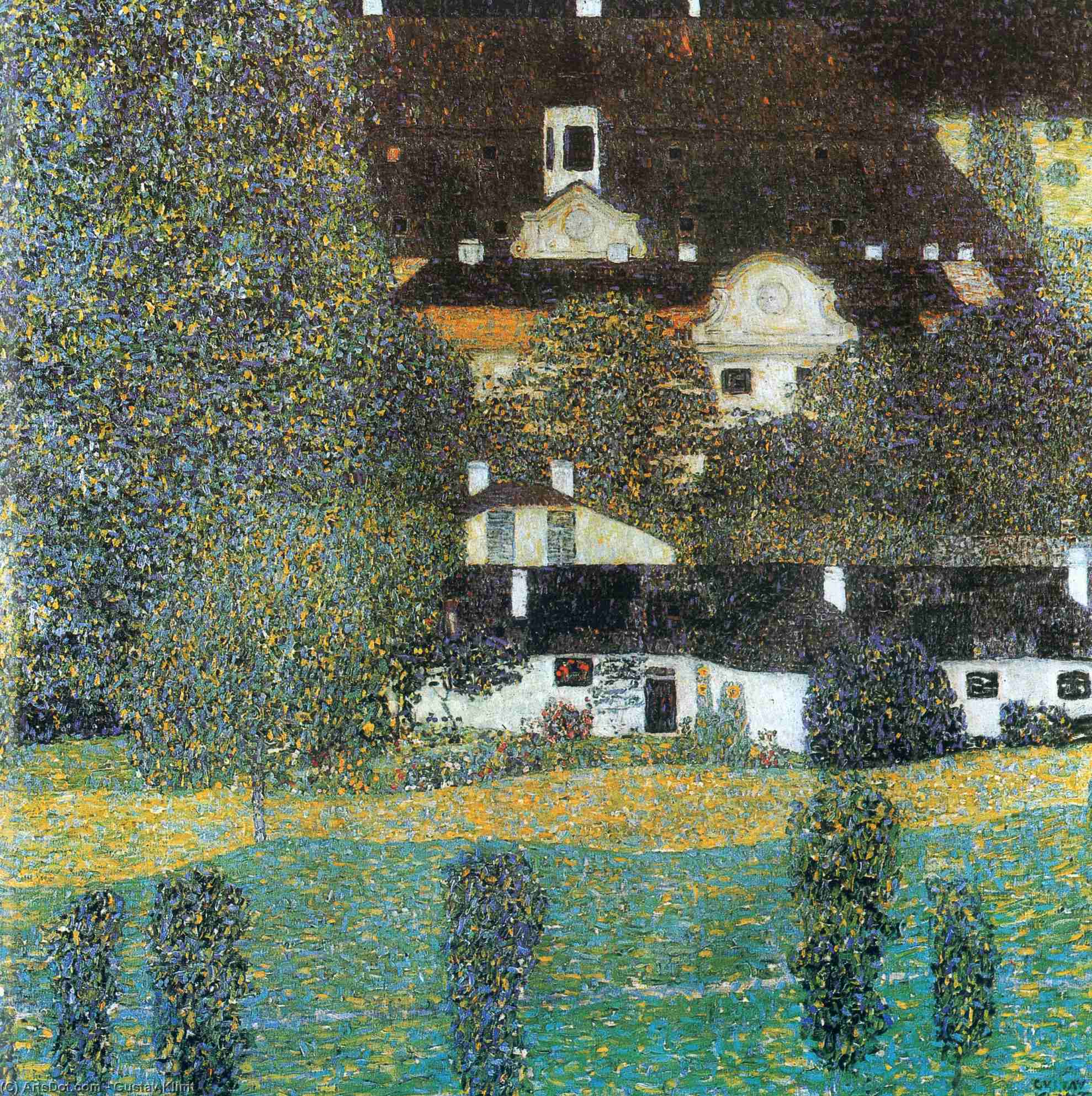
Schloss Kammer am Attersee, II: A Glimpse of Austrian Serenity
Gustav Klimt's Schloss Kammer am Attersee, II is a captivating oil on canvas painting that exemplifies the artist’s unique style and contribution to the Art Nouveau movement. Created in 1909, this piece measures 110 x 110 cm and offers a tranquil view of a lakeside estate, embodying Klimt's fascination with nature and architecture.
The Painting: A Harmonious Composition
The painting depicts a serene scene of Schloss Kammer am Attersee, a stately house with a distinctive yellow roof nestled amidst lush greenery. The white exterior of the building is punctuated by several windows, strategically positioned to create visual interest and depth. In the background, another smaller structure adds further dimension to the composition. A clock hanging on one of the buildings introduces an element of timelessness, suggesting a sense of enduring beauty and tranquility. Klimt’s masterful use of light and shadow creates a palpable atmosphere of daytime serenity, inviting viewers into this peaceful setting. The interplay of colors—the vibrant yellow of the roof against the verdant greens of the surrounding landscape—is particularly striking, demonstrating Klimt's keen eye for color harmony.
Artistic Context: Vienna Secession and Nature’s Embrace
Gustav Klimt was a pivotal figure in the Vienna Secession movement, which sought to break away from traditional artistic conventions. His work often blended Symbolism with Art Nouveau, resulting in unique and captivating pieces like Schloss Kammer am Attersee, II. This painting reflects his shift towards landscapes during this period, moving beyond purely decorative works to explore the beauty of the natural world. Klimt frequently retreated to the Salzkammergut region, including the Attersee lake, seeking inspiration in its picturesque scenery. Other notable works by Klimt include Church in Unterach on the Attersee and Stoclet Frieze, 1905-09 - Vienna, Secession, which showcase his versatility and artistic range.
Symbolism and Emotional Impact: A Sense of Peace
While seemingly straightforward, Schloss Kammer am Attersee, II carries subtle symbolic weight. The castle itself can be interpreted as representing stability and tradition, while the surrounding nature embodies vitality and renewal. Klimt’s flattened perspective and decorative treatment of forms contribute to a sense of dreamlike tranquility. The painting evokes feelings of peace, harmony, and connection with nature—a respite from the bustling urban life of Vienna. The clock suggests the passage of time, but within this scene, time seems suspended, creating an enduring moment of beauty.
Legacy and Appreciation
Schloss Kammer am Attersee, II stands as a testament to Klimt’s artistic genius and his ability to capture the essence of Austrian landscapes. The Hofmuseum Vienna, Austria houses a significant collection of royal treasures and artifacts, including works by Gustav Klimt. For art enthusiasts and collectors, high-quality, handmade oil painting reproductions offer an opportunity to appreciate this beautiful work of art in their own homes.