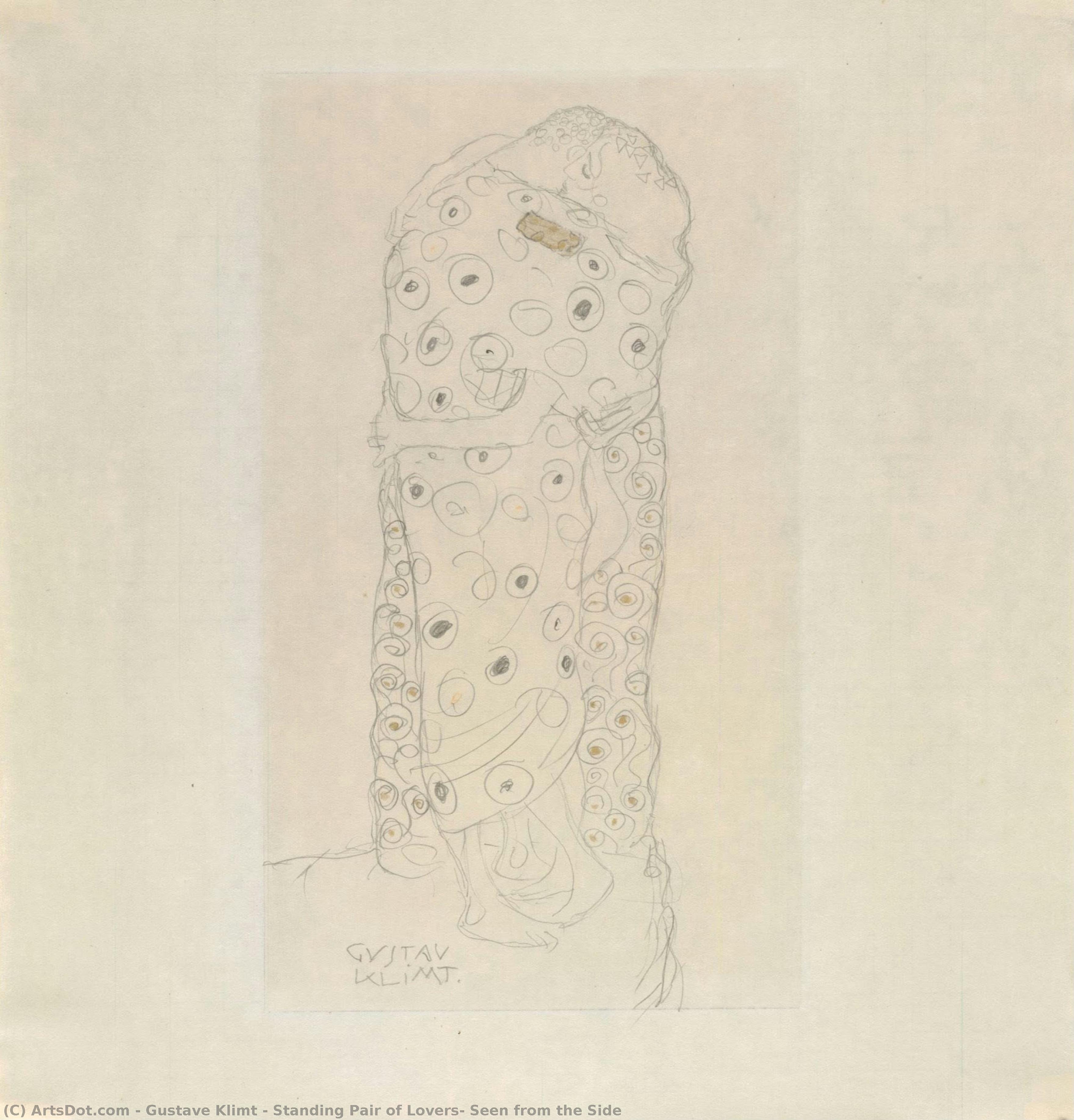
A Glimpse into Intimacy: Klimt’s “Standing Pair of Lovers, Seen from the Side”
Drawn in 1908, Gustav Klimt's "Standing Pair of Lovers, Seen from the Side" offers a tender and remarkably intimate portrayal of affection. This work, executed with graphite, red pencil, and delicate gold paint on paper, departs somewhat from Klimt’s more opulent and well-known “golden phase” paintings like *The Kiss*, yet retains his signature exploration of love, sensuality, and the human condition. The drawing presents a couple closely embraced, their forms rendered with flowing lines that suggest both physical closeness and emotional connection. What immediately captivates is not just the subject matter but Klimt’s innovative use of circular motifs scattered throughout the composition. These aren't merely decorative elements; they seem to pulse around the lovers, creating an atmosphere of swirling energy and perhaps hinting at the all-encompassing nature of their bond.
Vienna Secession and a Shift in Style
To understand this drawing fully, it’s essential to place it within the context of Klimt's career and the artistic ferment of Vienna at the turn of the 20th century. Klimt was a leading figure in the Vienna Secession, a movement that rebelled against the conservative academic traditions of the time. The Secessionists sought to create a *Gesamtkunstwerk* – a total work of art – integrating painting, architecture, and design. While Klimt is celebrated for his lavishly decorated paintings featuring gold leaf, this drawing reveals a more restrained yet equally expressive side of his artistic practice. It’s a study in line and form, demonstrating his mastery of draftsmanship. The choice of materials—graphite and red pencil alongside the subtle application of gold—suggests an exploration of texture and tonality, moving beyond pure ornamentation towards a deeper psychological portrayal.
Symbolism and Emotional Resonance
The symbolism within “Standing Pair of Lovers” is both delicate and suggestive. The circles that permeate the composition can be interpreted in multiple ways. They might represent the cyclical nature of life and love, or perhaps the protective embrace surrounding the couple, shielding them from the outside world. Klimt often imbued his work with hidden meanings, drawing upon mythology, allegory, and personal symbolism. The lovers themselves are not depicted with detailed facial features; their identities remain somewhat ambiguous. This anonymity invites viewers to project their own experiences of love and intimacy onto the scene, fostering a deeply personal connection with the artwork. The overall effect is one of quiet contemplation—a moment suspended in time, capturing the essence of human affection without resorting to overt sentimentality.
A Legacy of Sensuality and Modernity
Gustav Klimt’s influence on modern art remains profound. His exploration of female beauty, his innovative use of materials, and his rejection of traditional artistic conventions paved the way for future generations of artists. “Standing Pair of Lovers, Seen from the Side” is a testament to his enduring legacy—a work that embodies both the sensuality and the intellectual rigor that define his oeuvre. For collectors and interior designers alike, a reproduction of this drawing offers not only a beautiful aesthetic addition but also a glimpse into a pivotal moment in art history – a moment where tradition was challenged, and new forms of expression were born. It’s an artwork that speaks to the universal human desire for connection, making it a timeless treasure for any space.