A Murky Reflection: Klimt’s ‘Stiller Weiher’ – A Study in Ethereal Beauty
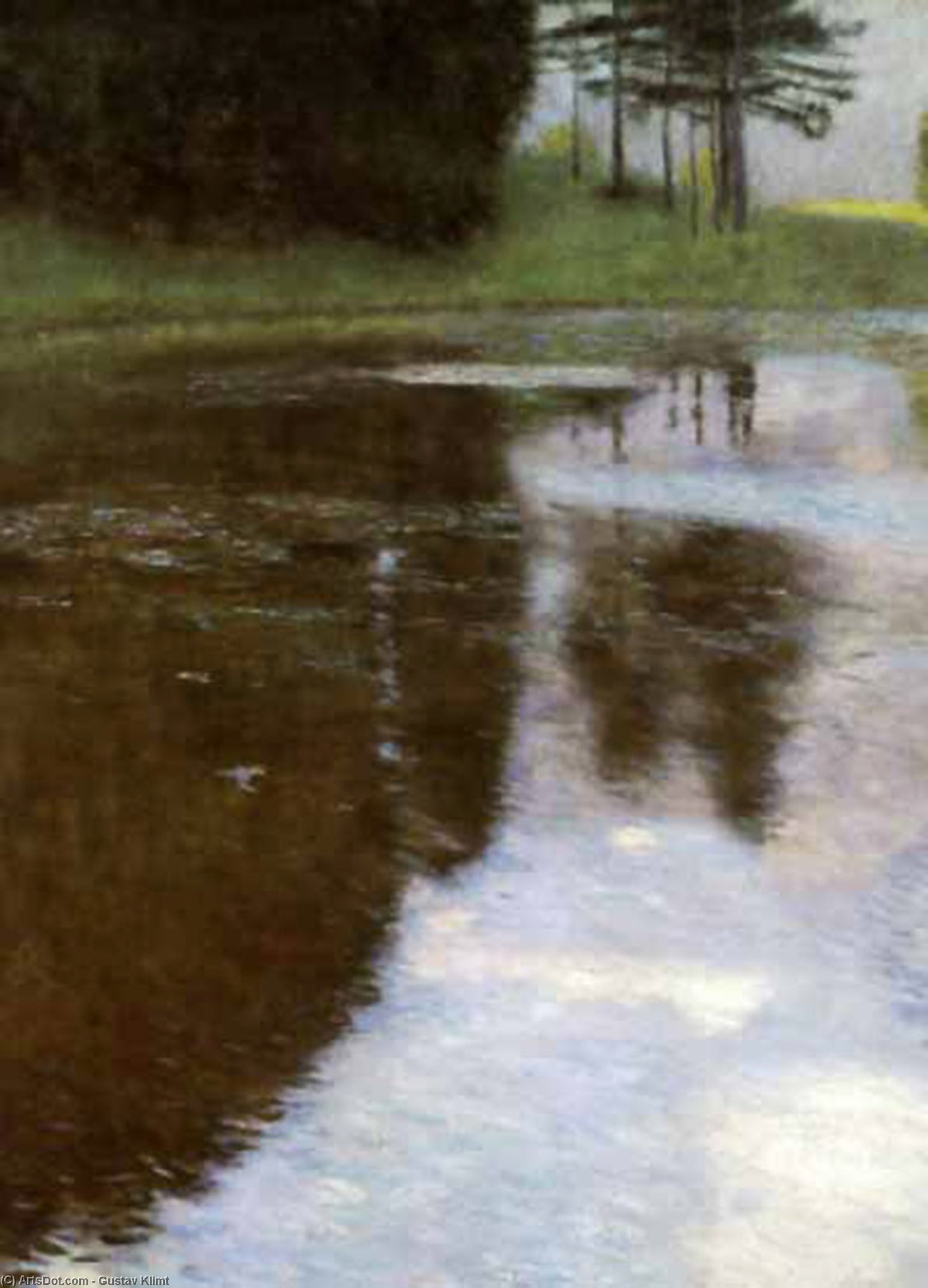
Gustav Klimt's “Stiller Weiher im Schlosspark von Kammer” (Silent Pond in the Schloss Park of Kammer), painted in 1909, is more than just a depiction of a tranquil pond; it’s a carefully constructed tableau brimming with Art Nouveau symbolism and an unsettling undercurrent of melancholy. This oil on canvas offers a glimpse into Klimt's evolving artistic vision during a period of profound personal and societal change – a world grappling with the anxieties of modernity while simultaneously yearning for beauty and escape. The painting immediately draws the viewer in with its muted palette dominated by greens, blues, and browns, creating an atmosphere of quiet contemplation, yet hinting at something deeper, something almost submerged.
Klimt’s technical mastery is evident in the meticulous rendering of the water's surface, which isn’t a simple reflection but rather a swirling, almost viscous quality. He employs broken brushstrokes and layered glazes to achieve this effect, mimicking the way light interacts with murky water – a technique that adds to the painting’s eerie allure. The trees surrounding the pond are rendered in broad, stylized strokes, their forms simplified yet retaining a recognizable elegance characteristic of Klimt's style. Notice how he uses gold leaf sparingly, not as an overwhelming display of opulence but rather to subtly highlight certain elements – perhaps the reflections on the water or the delicate branches of the trees – adding a touch of shimmering mystery.
The Language of Symbolism: Art Nouveau and Human Emotion
“Stiller Weiher” is firmly rooted in the principles of Art Nouveau, a movement that sought to break away from academic traditions and embrace organic forms, flowing lines, and decorative elements. Klimt’s work exemplifies this aesthetic through its emphasis on nature, particularly water – often associated with the subconscious and emotions – and its incorporation of stylized human figures. The presence of several individuals near the pond invites speculation about their relationship to the scene; are they observers, participants, or perhaps even lost souls drawn to the stillness? Their postures suggest a mixture of contemplation, sadness, and quiet observation.
The two birds depicted – one perched on a branch and another soaring above – carry symbolic weight. Birds frequently represent freedom, spirituality, and connection to the heavens in Klimt’s oeuvre. Their inclusion here could be interpreted as an aspiration for transcendence amidst the pond's melancholic atmosphere, or perhaps a subtle commentary on the human desire for escape from earthly concerns.
Historical Context: Vienna at the Turn of the Century
To fully appreciate “Stiller Weiher,” it’s crucial to understand the historical context in which it was created. Vienna at the turn of the 20th century was a city undergoing rapid transformation – a hub of artistic innovation, political unrest, and social change. Klimt, like many artists of his time, was deeply influenced by these developments. The rise of psychoanalysis, spearheaded by Sigmund Freud, profoundly impacted artistic thought, leading to an increased interest in the subconscious mind and its influence on human behavior. This exploration of inner states is palpable in “Stiller Weiher,” where the surface tranquility masks a potential undercurrent of emotional complexity.
The painting’s subject matter – a secluded pond within a Schloss (castle) park – also reflects a broader trend during this period: a desire for retreat from the pressures of urban life and a longing for connection with nature. The Schloss Park of Kammer itself was a popular destination for Viennese society, offering a space for leisure, contemplation, and social interaction. Klimt’s painting captures not just the visual beauty of this setting but also the emotional resonance it held for its visitors.
A Timeless Masterpiece: Reproduction and Artistic Legacy
ArtsDot offers meticulously crafted hand-painted reproductions of “Stiller Weiher im Schlosspark von Kammer,” allowing art lovers to experience Klimt’s masterpiece in a tangible way. Our artists carefully replicate the painting's intricate details, color palette, and atmospheric qualities, ensuring that each reproduction captures the essence of this iconic work. Whether you are an admirer of Art Nouveau, a collector seeking to expand your collection, or simply someone drawn to Klimt’s evocative style, our reproductions provide a beautiful and authentic representation of this timeless masterpiece. Consider how this piece would complement your interior design – its muted tones and contemplative mood lending themselves beautifully to spaces designed for relaxation and reflection.