Discover Gustav Klimt (1862-1918), the Austrian Symbolist master of Art Nouveau! Explore his iconic 'Golden Phase,' sensual portraits, and masterpieces like *The Kiss*. Learn about his life, influences & legacy.
Explore Austrian modernism at the Leopold Museum! Discover masterpieces by Klimt & Schiele, delve into art history, and experience a unique collection within Vienna’s vibrant MuseumsQuartier.
Study for Judith II: A Glimpse into Klimt's Creative Process
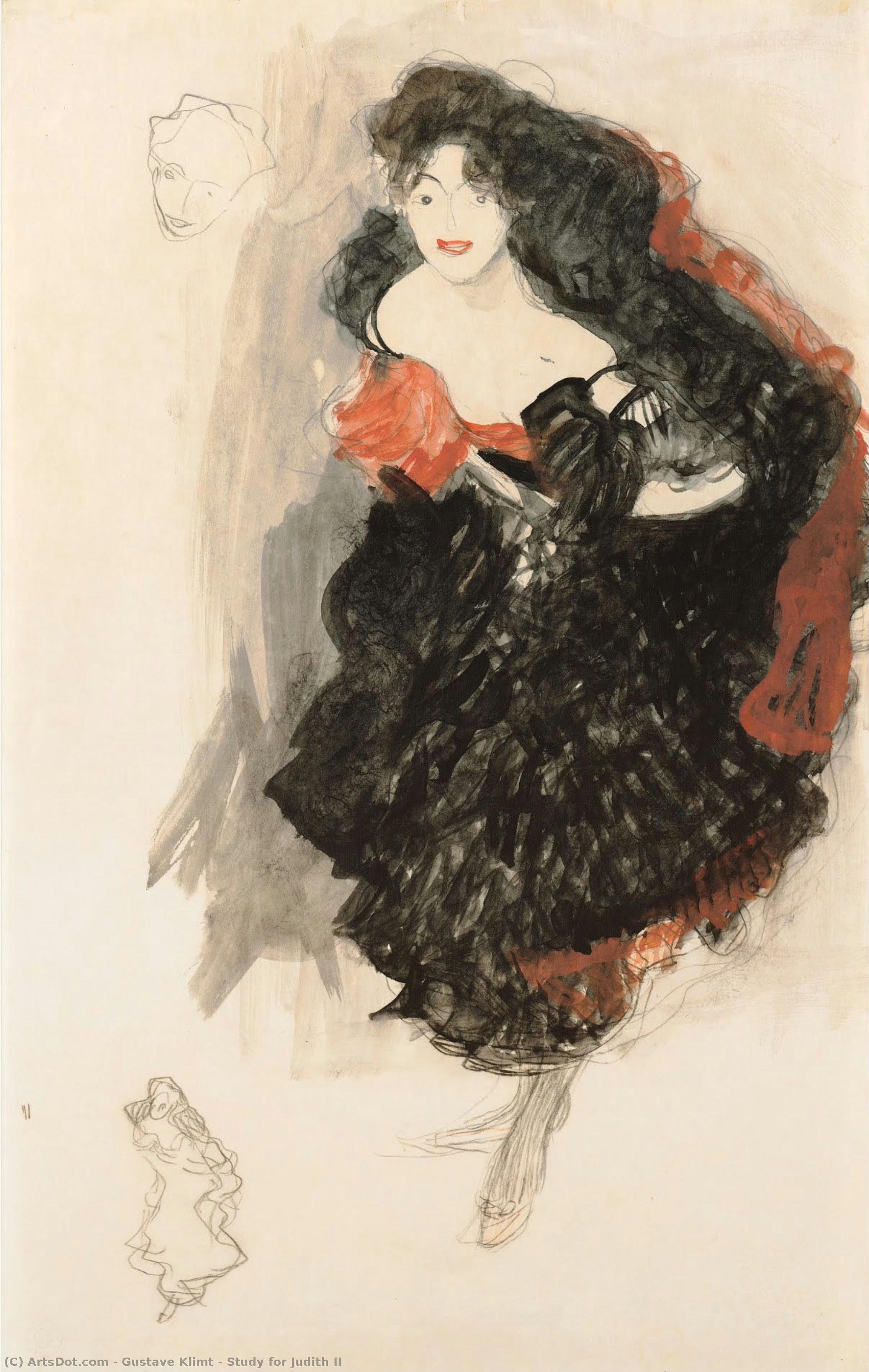
Gustav Klimt’s “Study for Judith II,” created around 1908, offers a fascinating window into the artist’s meticulous working methods. Far from being a finished artwork in itself, this piece is a preparatory sketch—a vital stage in Klimt’s process of developing his iconic paintings. It reveals a dynamism and energy that differs significantly from the final “Judith II” (Salome) housed in the Galleria d’Arte Moderna in Venice, showcasing the evolution of an artistic vision.
Subject and Style: From Flamenco Dancer to Biblical Figure
The study depicts a woman strikingly reminiscent of a flamenco dancer. Her pose is vigorous, suggesting rapid movement across the page—a stark contrast to the more static and opulent portrayal in the finished painting. Klimt’s signature Art Nouveau style is evident in the flowing lines and decorative details, though here they are rendered with a looser, more expressive quality than in his later, more polished works. The subject's transformation from a dancer to the biblical figure of Judith—who famously beheaded Holofernes—highlights Klimt’s ability to imbue diverse subjects with symbolic depth.
Technique and Materials: Watercolor as Exploration
Executed primarily in watercolor, this study demonstrates Klimt’s willingness to experiment with different media. Unlike many of his graphic works intended as preliminary sketches, this piece incorporates color—a rare occurrence for Klimt on paper. The technique involves wet-on-wet application, allowing colors to bleed and blend naturally, creating a soft, translucent effect. Visible brushstrokes contribute to the sense of immediacy and spontaneity. The artist skillfully contrasts the woman’s white, naked shoulders with her black dancing dress ornamented with red ruffles, drawing attention to key areas and enhancing the dramatic impact. The use of pencil, chalk, and gouache further enriches the composition.
Historical Context and Symbolism: Vienna Secession and Female Power
“Study for Judith II” was created during a pivotal period in Klimt’s career, as he solidified his position within the Vienna Secession movement. This group of artists rejected traditional academic styles and sought to create art that reflected modern sensibilities. The choice of subject—Judith—is significant. In biblical lore, Judith is portrayed as a courageous woman who saved her people through cunning and decisive action. Klimt’s depiction, even in this preliminary study, hints at themes of female power, sensuality, and perhaps even a touch of melancholy, reflecting the complex portrayal of women prevalent in fin-de-siècle Vienna.
Emotional Impact: A Momentary Glimpse of Artistic Creation
Beyond its artistic merit, “Study for Judith II” offers a unique emotional connection to Klimt’s creative process. It provides an intimate glimpse into the artist's studio—a space where ideas were explored and refined. The unfinished quality of the study adds an element of vulnerability and transience, inviting viewers to contemplate the journey from initial inspiration to finished masterpiece. This piece is not merely a sketch; it is a testament to Klimt’s artistic genius and his dedication to meticulous planning.