A Study in Texture and Emotion: Gustav Klimt’s Portrait Sketch of Eugenia Primavesi
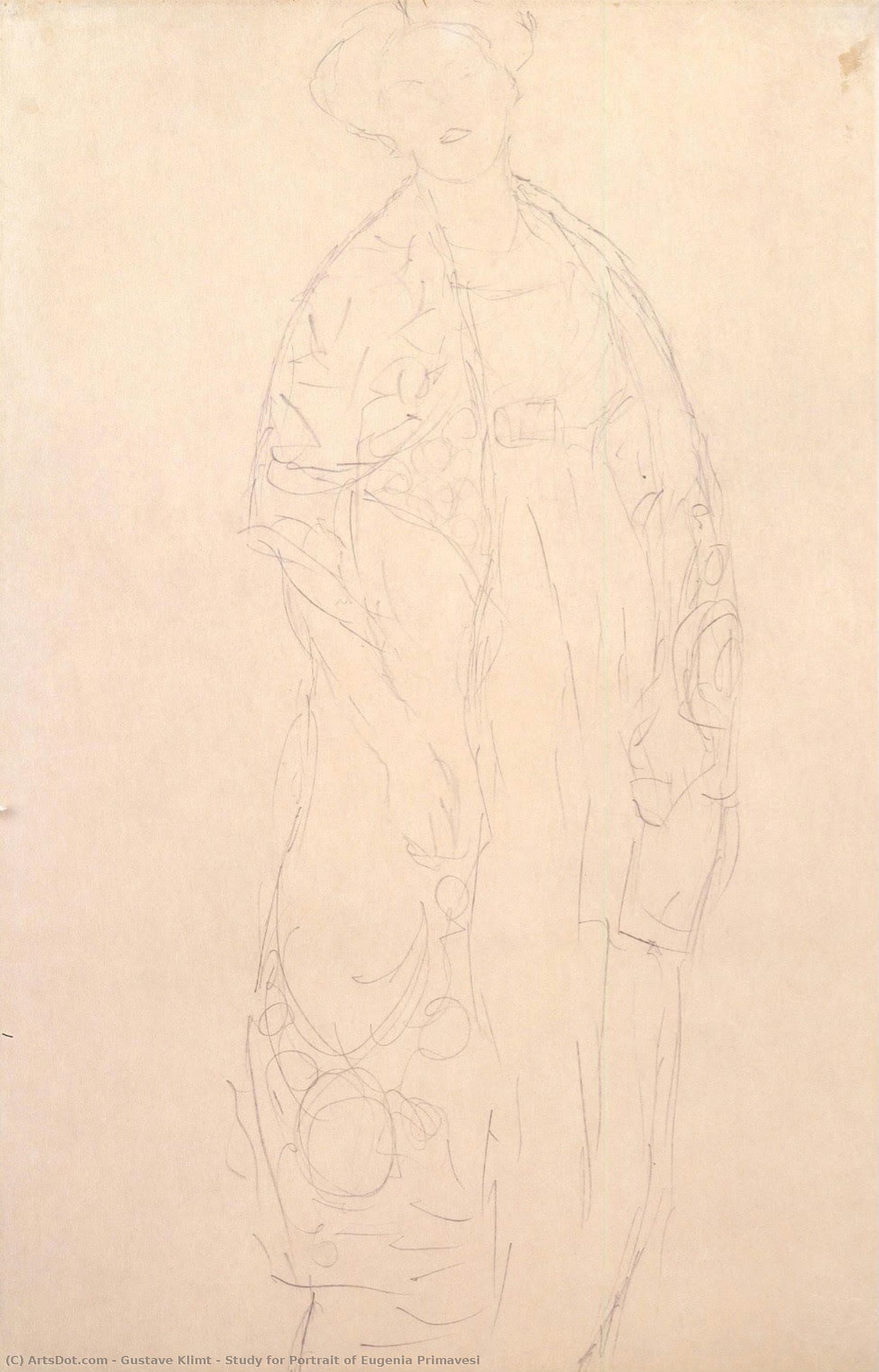
The artwork "Study for Portrait of Eugenia Primavesi," created by Austrian Symbolist painter Gustav Klimt, stands as a testament to the artist's masterful exploration of form and texture—a deceptively simple drawing that belies its profound artistic ambition. Captured in monochrome, this piece offers an intimate glimpse into Klimt’s creative process and foreshadows the opulent grandeur characteristic of his celebrated paintings like “The Kiss.” Measuring 56 x 36 cm, it exemplifies Klimt's dedication to capturing not just likeness but also psychological depth within a constrained visual space.
- Subject Matter: The drawing focuses on a woman’s face—Eugenia Primavesi—a figure rendered with remarkable precision and sensitivity. Klimt wasn’t aiming for a fully realized portrait; rather, he prioritized conveying her essence through subtle gestures and expressive shading.
- Style: Klimt's style aligns squarely within the Symbolist movement, rejecting realism in favor of evocative imagery designed to stimulate emotion and intellect. He eschewed academic conventions, prioritizing personal vision over adherence to established artistic doctrines.
Technique and Material Considerations
Klimt’s technique is characterized by meticulous attention to detail achieved through graphite pencil strokes—a deliberate choice that underscores the importance of texture in conveying mood and atmosphere. The artist skillfully utilizes shading to sculpt the contours of Primavesi's face, creating a palpable sense of volume and depth despite the absence of color. Notably, Klimt employed gold leaf sparingly but strategically – a technique he would later master on monumental canvases—to subtly enhance the drawing’s luminosity and imbue it with an aura of prestige and spiritual contemplation. This foreshadowing of his signature style speaks volumes about Klimt's artistic evolution.
Historical Context: Vienna Secession and Artistic Rebellion
“Study for Portrait of Eugenia Primavesi” emerged from the Viennese Secession, a groundbreaking artistic movement that challenged the conservative aesthetic values of the Austro-Hungarian Empire in 1897. Founded by Klimt, Emil Schiele, Josef Maria Olbrich, and Viktor Münzberger, the Secession rejected academic painting and championed individualism and expressive freedom. They sought to forge a new path for Austrian art, rejecting the rigid formalism of the Akademie der Bildenden Künste (Academy of Fine Arts) and embracing Symbolism’s preoccupation with psychological states and spiritual themes. This rebellious spirit is palpable in Klimt's refusal to compromise on his artistic vision—a conviction that would propel him to become one of Austria’s most influential artists.
Symbolic Resonance: Texture as Embodiment of Inner Life
Beyond its technical prowess, the drawing possesses a symbolic significance rooted in Symbolist principles. The monochrome palette – predominantly black and white – serves to heighten the emotional impact by stripping away distracting visual elements and focusing solely on the face itself. Klimt’s masterful manipulation of texture—the delicate graphite strokes capturing the subtle nuances of skin tone—represents an attempt to embody inner life and psychological complexity. Just as gold leaf illuminated Klimt's larger canvases, the careful shading in this sketch hints at a hidden richness beneath the surface – a reflection of Primavesi’s character and Klimt’s unwavering belief in art’s ability to communicate profound truths.