Discover Gustav Klimt (1862-1918), the Austrian Symbolist master of Art Nouveau! Explore his iconic 'Golden Phase,' sensual portraits, and masterpieces like *The Kiss*. Learn about his life, influences & legacy.
Explore Vienna’s MAK Museum: art, architecture & design from medieval times to today! Discover 300k+ objects online, James Turrell's MAKlite, and pioneering Bitcoin art acquisitions.
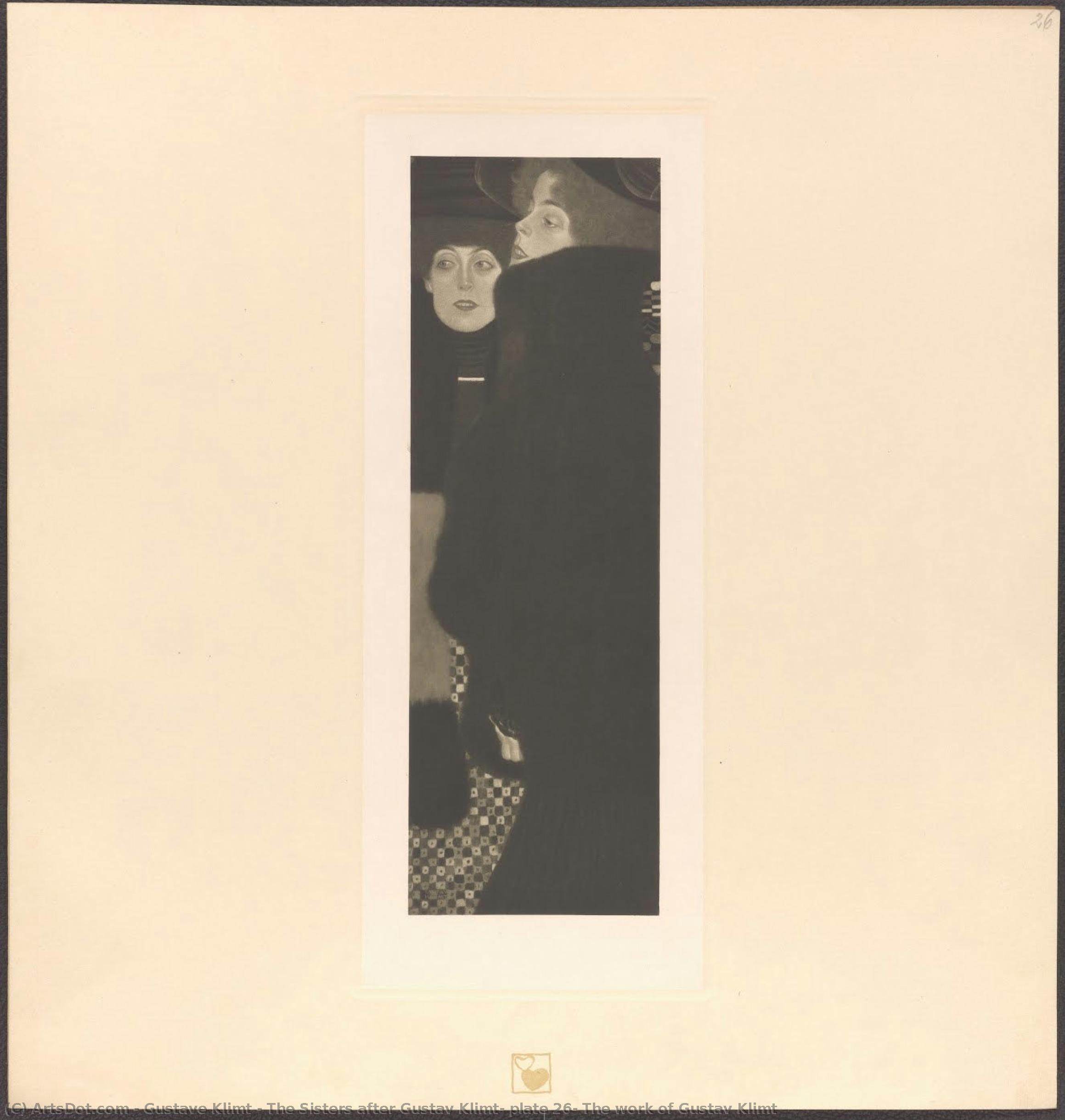
A Delicate Dance of Gold and Shadow: Exploring Klimt’s “The Sisters”
Gustav Klimt's "The Sisters," Plate 26 from his celebrated series, stands as a testament to the artist’s masterful blend of Symbolism and Art Nouveau aesthetics. Captured in stark black and white photography—a deliberate choice that amplifies the textural richness of the original painting—this image invites contemplation on themes of intimacy, femininity, and the subtle interplay between light and darkness. The photograph itself showcases two women engaged in conversation, their postures conveying a quiet connection amidst an elegantly furnished room. Three handbags strategically positioned contribute to the scene’s narrative depth, hinting at a shared experience or perhaps reflecting the aspirations of these figures.
The Artistic Legacy of Ernst Klimt: Influences Shaping Gustav's Vision
Like many artists of his era, Klimt benefited from a familial connection to craftsmanship—his father, Ernst Klimt, was a goldsmith and engraver. This upbringing instilled in Gustav not merely technical proficiency but also an appreciation for opulent materials and meticulous detail – qualities that would become hallmarks of Klimt’s distinctive style. The influence of Ernst's profession is palpable in the pervasive use of gold leaf throughout “The Sisters,” mirroring the father’s trade and elevating the artwork to a realm of luxurious beauty. This technique, perfected by Klimt himself, creates shimmering surfaces that capture and refract light, adding another layer of visual complexity.
Symbolism Rooted in Viennese Artistic Circles
“The Sisters” embodies the core tenets of Symbolist art—a rejection of literal representation in favor of conveying emotion and psychological states through evocative imagery. Klimt’s meticulous attention to detail extends beyond mere craftsmanship; he employs symbolic motifs to enrich the artwork's narrative significance. The positioning of the women, their gaze directed inwards as well as outwards, speaks to the complexities of female identity and the internal dialogues that shape human experience. Furthermore, the handbags serve as visual anchors, grounding the scene in a specific social context—the burgeoning Viennese Art Nouveau movement championed by artists like Schönleber, which embraced decorative ornamentation and sensual forms.
Technique: A Fusion of Fresco Painting and Decorative Ornamentation
Klimt’s artistic process involved adapting fresco painting techniques to create monumental decorative panels – a method he honed during his studies at the Kunstgewerbeschule. However, unlike traditional frescoes, Klimt utilized gold leaf extensively, applying it in thin layers over meticulously crafted backgrounds adorned with intricate patterns inspired by Celtic and Byzantine art. This layering technique—a deliberate departure from academic conventions—allowed for unparalleled luminosity and textural depth, transforming “The Sisters” into more than just a portrait; it became an immersive visual experience.
Emotional Resonance: Capturing the Essence of Female Connection
Ultimately, "The Sisters" transcends its formal elements to convey a profound emotional resonance. Klimt’s masterful depiction captures the quiet intimacy of companionship—the unspoken understanding that passes between two women sharing a moment of contemplation. The photograph's monochrome palette enhances this feeling, stripping away distracting colors and focusing on the subtle nuances of form and texture. Like Klimt’s other works, “The Sisters” invites viewers to consider questions of beauty, vulnerability, and the enduring power of human connection—a legacy that continues to inspire artists and collectors alike.