A Symphony of Intimacy: Exploring Gustav Klimt’s ‘The Women Friends’
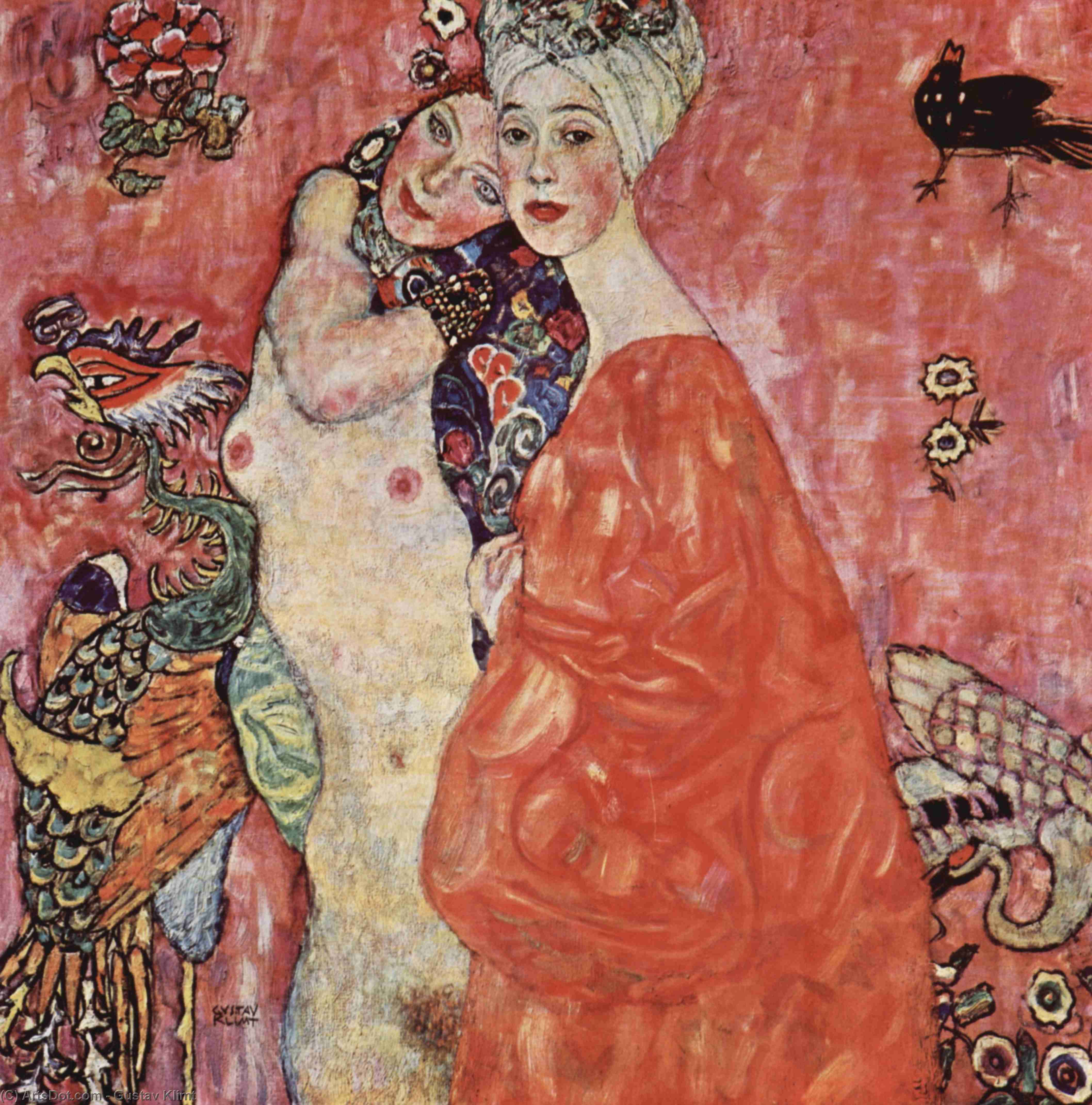
Gustav Klimt's 1917 masterpiece, *The Women Friends*, is a captivating exploration of female companionship and the burgeoning Art Nouveau aesthetic. This oil on canvas transcends mere portraiture; it’s an intimate glimpse into a bond forged through shared experience and mutual affection, rendered with Klimt’s signature blend of realism and symbolic flourish.
Artistic Style & Composition
Painted during a pivotal period in Klimt's career, *The Women Friends* showcases his evolving style. While foregoing the extensive gold leaf often associated with his “Golden Phase,” the painting retains a rich decorative quality through its vibrant color palette and dynamic composition. Two nude women are intimately embraced, their bodies forming a unified shape that dominates the canvas. The striking use of red in their dresses immediately draws the eye, creating a focal point within the swirling patterns and organic forms surrounding them. Klimt masterfully employs flattened perspective and flowing lines – hallmarks of Art Nouveau – to create a dreamlike atmosphere.
Symbolism & Interpretation
Klimt was renowned for imbuing his works with layers of symbolism, and *The Women Friends* is no exception. The birds scattered throughout the composition are often interpreted as symbols of freedom, joy, and perhaps even fleeting moments of happiness. More profoundly, the embrace itself speaks to a powerful connection – a celebration of female solidarity and emotional support in a society that often marginalized women. The painting invites viewers to contemplate the complexities of friendship, intimacy, and the unspoken language shared between close companions.
Historical Context & Artistic Influences
Created in 1917, amidst the turmoil of World War I, *The Women Friends* can be seen as a poignant statement about finding solace and strength in human connection during times of upheaval. Klimt’s artistic journey was profoundly influenced by Japanese art – particularly *ukiyo-e* woodblock prints – which instilled in him an appreciation for bold compositions, flattened space, and decorative patterns. He also drew inspiration from Byzantine mosaics, evident in his use of rich colors and symbolic imagery. As a leading figure in the Vienna Secession movement, Klimt challenged traditional artistic conventions and paved the way for new forms of expression.
Emotional Impact & Lasting Legacy
*The Women Friends* evokes a sense of warmth, tenderness, and quiet contemplation. The painting’s intimate subject matter and harmonious composition create an emotional resonance that transcends time. It's a work that invites viewers to reflect on their own relationships and the importance of human connection. Klimt’s contribution to art history is undeniable; his innovative style and symbolic language continue to inspire artists and captivate audiences worldwide.
Bringing Art History Home
- A Timeless Addition: *The Women Friends* makes a stunning focal point for any interior, adding a touch of sophistication and artistic flair.
- Interior Design Inspiration: The painting’s rich color palette complements a variety of décor styles, from Art Deco to contemporary settings.
- A Conversation Starter: This captivating artwork is sure to spark engaging conversations and inspire contemplation among guests.
This piece stands as a testament to Klimt's genius – his ability to blend beauty, symbolism, and emotional depth into a single, unforgettable image. It’s more than just a painting; it’s an invitation to experience the power of human connection and the enduring legacy of Art Nouveau.