Discover Gustav Klimt (1862-1918), the Austrian Symbolist master of Art Nouveau! Explore his iconic 'Golden Phase,' sensual portraits, and masterpieces like *The Kiss*. Learn about his life, influences & legacy.
Explore art history's treasures at the Albertina Museum in Vienna! Discover stunning prints, drawings & masterpieces spanning centuries within its unique architectural spaces.
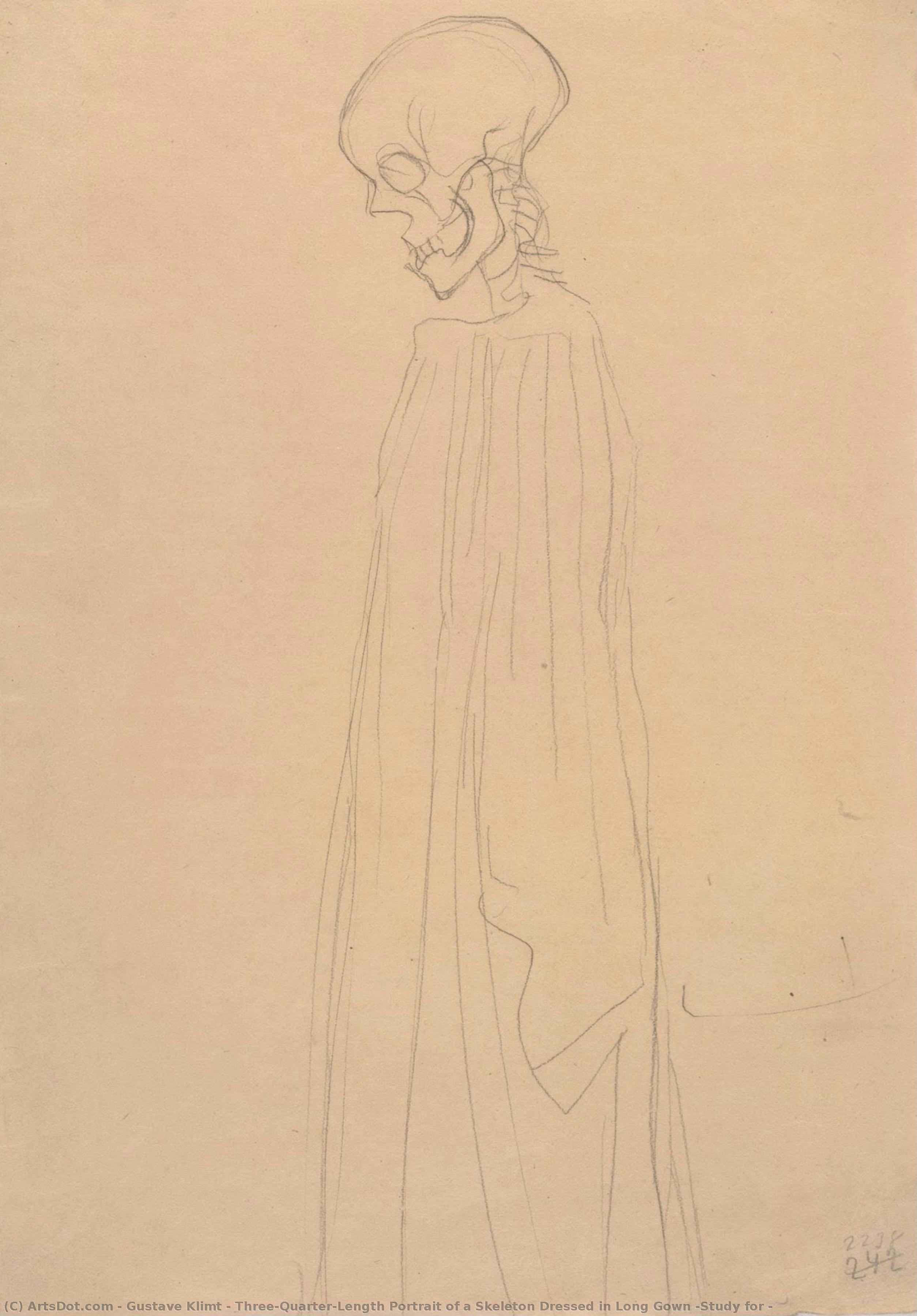
A Study in Mortality and Ornamentation: Gustav Klimt’s “Three-Quarter-Length Portrait of a Skeleton Dressed in Long Gown”
The drawing, titled "Three-Quarter-Length Portrait of a Skeleton Dressed in Long Gown," represents a pivotal moment in Gustav Klimt's artistic evolution—a deceptively serene contemplation on death rendered with the opulent grandeur characteristic of his mature style. Completed in 1902, this preparatory sketch for a larger canvas offers a glimpse into Klimt’s creative process and foreshadows the intricate visual language that would define his iconic oeuvre. It’s not merely an anatomical depiction; it's a carefully constructed symbol laden with references to Byzantine mosaics and Celtic ornamentation, reflecting Klimt’s fascination with ancient cultures and his desire to transcend mere realism.
- Subject Matter: The portrait presents a skeleton clothed in flowing robes—a motif that immediately confronts the viewer with the inevitability of mortality. However, Klimt avoids grimness through masterful use of color and texture, transforming death into an aesthetic experience.
- Style: Klimt’s style is firmly rooted in Art Nouveau, yet he pushes beyond its decorative conventions to achieve a level of psychological depth rarely seen in the movement. The drawing embodies the stylistic hallmarks of Klimt's signature—bold geometric shapes juxtaposed with organic forms, creating a dynamic interplay between structure and fluidity.
Technique: Pencil on Paper – A Delicate Foundation for Bold Expression
Klimt’s technique is remarkably understated considering the ambitious visual ideas he conveys. Executed in pencil on paper, the drawing prioritizes tonal gradation and subtle shading to establish a foundational texture that anticipates the layering of gold leaf—a technique Klimt would famously employ in his monumental paintings like “The Kiss.” The sketchy quality of the lines contributes to an atmosphere of intimacy and immediacy, inviting contemplation about the artist’s intentions and capturing the essence of his vision. It's a deliberate choice that underscores the importance of underlying structure beneath surface ornamentation.
- Material Considerations: The use of graphite pencil allows for nuanced control over tonal values—essential for conveying Klimt’s preoccupation with light and shadow, mirroring the spiritual quest inherent in his artistic endeavors.
- Preparation for Gold Leaf: This sketch served as a crucial blueprint for Klimt's larger canvases, demonstrating how he meticulously planned every element before applying gold leaf—a technique that elevates the artwork to an unparalleled level of visual splendor and symbolic significance.
Historical Context & Symbolism – Byzantine Echoes and Celtic Influence
“Three-Quarter-Length Portrait of a Skeleton Dressed in Long Gown” resides within Klimt’s broader exploration of themes related to spirituality, death, and rebirth. The drawing draws heavily from Byzantine mosaics—particularly those found in Ravenna—where skeletal figures are depicted adorned with shimmering gold leaf, symbolizing divine grace and immortality. Simultaneously, Klimt incorporates Celtic ornamentation—characterized by interwoven spirals and geometric patterns—reflecting his interest in pagan traditions and their connection to the cyclical rhythms of nature. These influences converge to create a powerful visual statement about confronting mortality while embracing beauty and transcendence.
- Religious Significance: The depiction of a skeleton draped in robes speaks to Christian iconography, referencing biblical representations of Christ’s descent into Hades—a poignant reminder of humanity's vulnerability before divine judgment.
- Celtic Symbolism: Spirals and geometric patterns symbolize eternity and interconnectedness—concepts central to Celtic beliefs about the afterlife and mirroring Klimt’s desire to express universal truths through artistic form.
Emotional Impact – Quiet Contemplation Amidst Opulence
Despite its subject matter, “Three-Quarter-Length Portrait of a Skeleton Dressed in Long Gown” possesses an unexpected serenity. Klimt’s masterful blending of tonal values and textural detail evokes a sense of profound contemplation—challenging viewers to confront their own mortality with grace and acceptance. The drawing's understated elegance contrasts sharply with the lavish ornamentation found in Klimt’s finished paintings, highlighting his ability to distill complex ideas into deceptively simple visual forms. It stands as a testament to Klimt’s artistic genius—a poignant meditation on life and death rendered with breathtaking beauty.