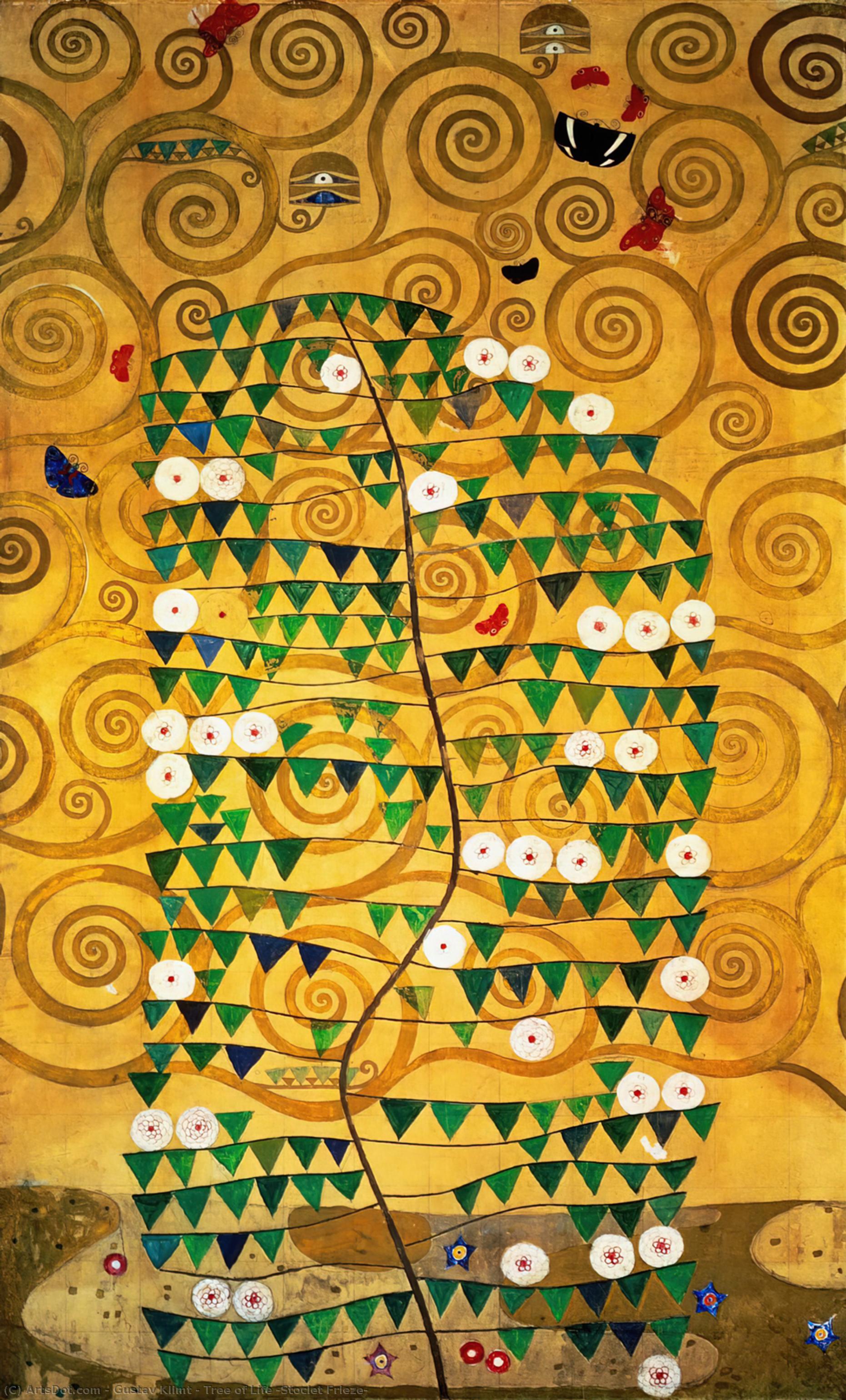
Tree of Life (Stoclet Frieze) by Gustav Klimt: A Symbolist Masterpiece
Gustav Klimt, a renowned Austrian symbolist painter, left an indelible mark on the art world with his captivating and intricate works. One such masterpiece is the Tree of Life (Stoclet Frieze), a painting that exemplifies the essence of Art Nouveau.
The Artistic Vision and Historical Context
The Tree of Life (Stoclet Frieze) is part of a larger decorative project commissioned by Adolphe Stoclet, a Belgian industrialist. Klimt's vision for this piece was to create an artwork that would adorn the dining room of the Stoclet Palace in Brussels. This commission occurred during a pivotal period in art history – the early 20th century – when Art Nouveau flourished and artists like Klimt were pushing boundaries with innovative styles and symbolic imagery. The Stoclet Palace itself, designed by Josef Hoffmann, was a Gesamtkunstwerk (total work of art), where architecture, interior design, and artwork seamlessly integrated to create a unified aesthetic experience. The painting features a majestic tree with sprawling branches and roots, symbolizing the connection between life and death.
Artistic Elements and Technique
The Tree of Life (Stoclet Frieze) is characterized by its flowing lines, organic forms, and decorative elements, all hallmarks of Art Nouveau. Klimt masterfully employed a combination of oil paint and gold leaf to achieve the painting's luminous quality and intricate detail. The tree itself is adorned with vibrant leaves and intricate patterns, creating a visually stunning piece that draws the viewer in. Smaller trees scattered throughout the painting add depth and complexity to the composition. The use of geometric shapes alongside organic forms creates a dynamic tension within the artwork, reflecting the broader artistic trends of the Vienna Secession movement.
Symbolism and Emotional Impact
Beyond its aesthetic beauty, the Tree of Life (Stoclet Frieze) is rich in symbolism. The tree itself represents the cyclical nature of life, death, and rebirth – a central theme in Klimt's work. Its roots delve deep into the earth, symbolizing grounding and connection to ancestral heritage, while its branches reach towards the heavens, representing aspiration and spiritual growth. The gold leaf adds an element of transcendence, suggesting divine presence or enlightenment. The overall effect is one of serene contemplation and profound beauty, evoking a sense of wonder and timelessness in the viewer.
Legacy and Where to Experience Klimt's Art
Gustave Klimt's work had a profound impact on the art world, particularly through his involvement in the Vienna Secession movement. His focus on the female body and his distinct style, often incorporating allegorical and portrait elements, influenced generations of artists. The Tree of Life (Stoclet Frieze) is a testament to Klimt's innovative approach to art. Today, it remains a celebrated piece of art and can be found at the Museum Stupinigi in Turin, Italy, which is part of the UNESCO World Heritage Sites list. For those interested in experiencing Klimt's work firsthand, ArtsDot offers high-quality reproductions of his paintings.