Discover Gustav Klimt (1862-1918), the Austrian Symbolist master of Art Nouveau! Explore his iconic 'Golden Phase,' sensual portraits, and masterpieces like *The Kiss*. Learn about his life, influences & legacy.
Explore Austrian modernism at the Leopold Museum! Discover masterpieces by Klimt & Schiele, delve into art history, and experience a unique collection within Vienna’s vibrant MuseumsQuartier.
A Moment Frozen in Gold Leaf: Exploring Klimt’s “Two Naked Women Embracing”
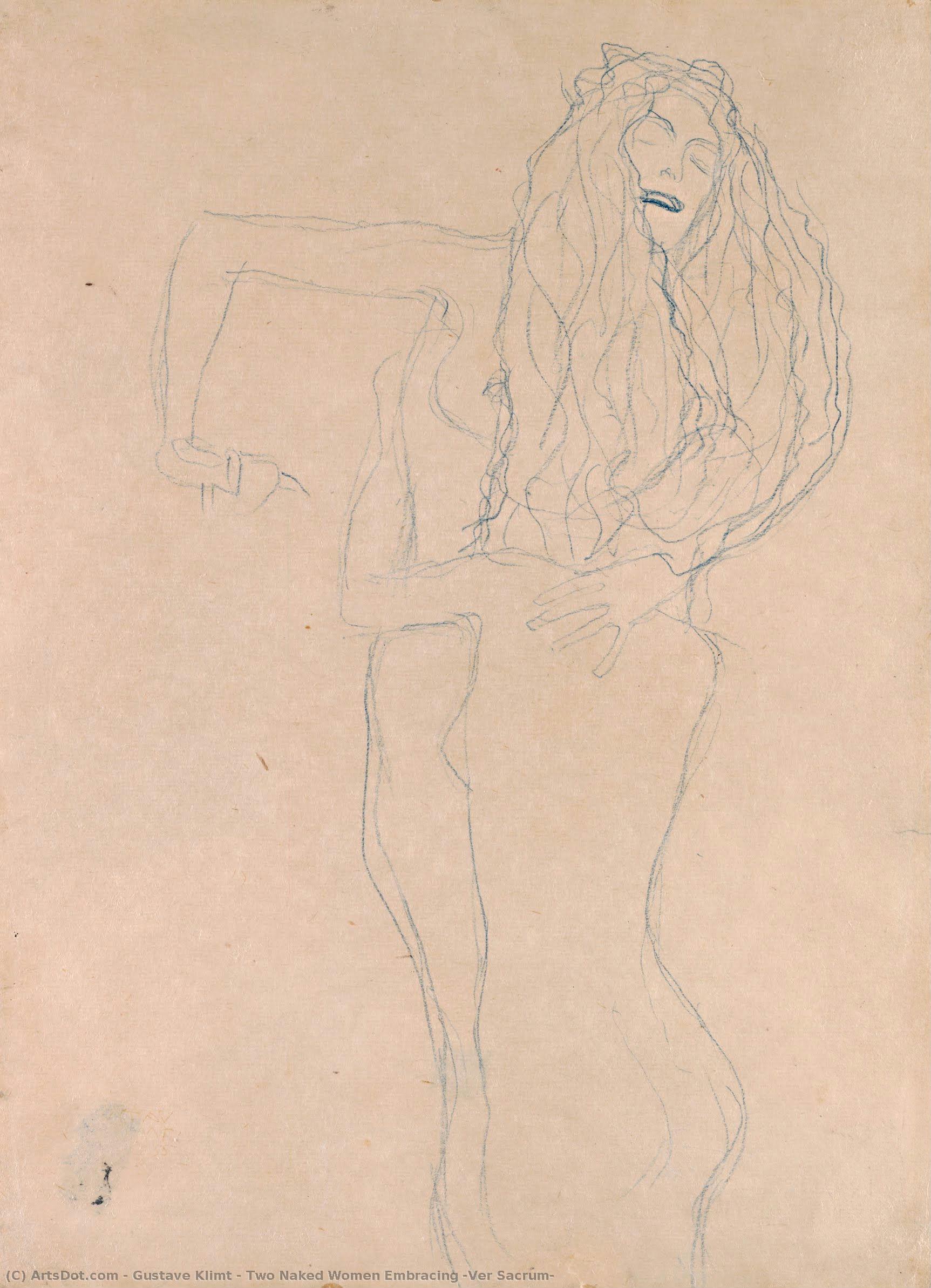
The drawing, titled "Two Naked Women Embracing" (Ver Sacrum), stands as a testament to Gustav Klimt's unparalleled ability to distill profound emotion into exquisitely crafted visual form. Executed in 1903, this preparatory sketch offers a glimpse behind the curtain of Klimt’s monumental masterpiece – arguably his most iconic work – and illuminates the genesis of its mesmerizing aesthetic. It’s not merely an image; it’s a carefully considered meditation on intimacy, vulnerability, and the sacredness of human connection.
The Style of Ornamentation: Klimt's Distinctive Vision
Klimt’s artistic style is instantly recognizable—a fusion of Art Nouveau elegance with Byzantine influences that culminates in what has become synonymous with opulent decorative art. He rejected the prevailing academic realism of his time, prioritizing instead a richly textured surface adorned with gold leaf and intricate geometric patterns alongside organic motifs like flowers and vines. This technique wasn't simply about embellishment; it was integral to Klimt’s conceptual framework. The shimmering gold symbolizes divine grace and spiritual illumination—a deliberate choice reflecting the biblical allusion embedded within the artwork’s title, “Ver Sacrum,” Latin for “Sacred Host.”
Historical Context: Vienna at the Dawn of Modernity
Vienna in 1903 was a city undergoing rapid transformation. The Austro-Hungarian Empire wrestled with internal tensions and anxieties about its future, while artistic innovation flourished amidst intellectual ferment. Klimt’s work emerged from this milieu, responding to the burgeoning interest in psychoanalysis and exploring themes of sexuality and spirituality simultaneously. He sought to capture not just physical beauty but also psychological depth—a daring ambition that challenged conventional notions of art and morality. The sketch itself speaks to a broader cultural preoccupation with symbolism and mythic narratives, mirroring the Zeitgeist of the era.
Symbolism Within the Embrace: Decoding Visual Language
The composition is deceptively simple yet laden with symbolic significance. The two nude women are positioned in an embrace that transcends mere physical contact; it represents a union of souls—a quest for spiritual wholeness and transcendence. Klimt’s meticulous attention to detail—the subtle curves of their bodies, the delicate rendering of hair and skin—underscores the importance of sensory experience in conveying emotion. The geometric patterns surrounding the figures serve as a counterpoint to the organic forms, representing order and stability amidst the chaos of human desire.
Emotional Resonance: A Legacy of Beauty and Mystery
“Two Naked Women Embracing” continues to captivate viewers today precisely because it speaks to universal themes of love, vulnerability, and spiritual yearning. Klimt’s masterful use of gold leaf imbues the image with an aura of otherworldly splendor—a reminder that beauty can exist alongside profound contemplation. It's a piece that invites us to consider not just what we see but also what lies beneath the surface—a testament to Klimt’s enduring legacy as one of the most influential artists of his generation and a beacon of artistic innovation for centuries to come.