Discover Gustav Klimt (1862-1918), the Austrian Symbolist master of Art Nouveau! Explore his iconic 'Golden Phase,' sensual portraits, and masterpieces like *The Kiss*. Learn about his life, influences & legacy.
Explore art history's treasures at the Albertina Museum in Vienna! Discover stunning prints, drawings & masterpieces spanning centuries within its unique architectural spaces.
Two Studies for “The Three Ages of Woman” – A Delicate Exploration of Femininity
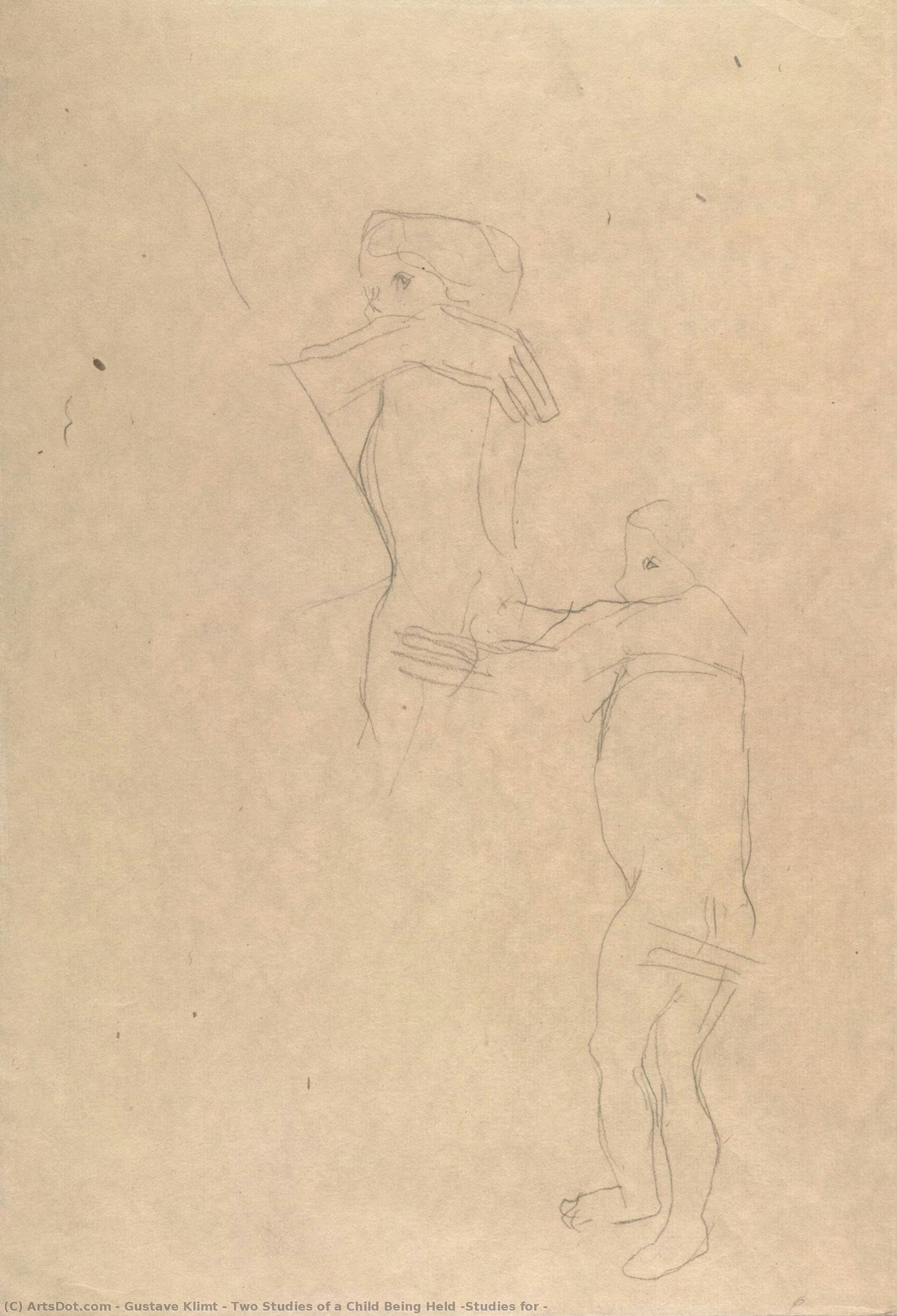
Gustav Klimt’s “Two Studies of a Child Being Held,” created in 1904, stands as a poignant precursor to his monumental masterpiece, *The Kiss*. This deceptively simple drawing offers a profound glimpse into Klimt's artistic vision during the height of his Symbolist period and foreshadows the opulent ornamentation characteristic of his later “Golden Phase.” Examining this piece reveals not just technical prowess but also a deeply considered meditation on themes of motherhood, vulnerability, and the cyclical nature of life.
- Subject Matter: The drawing depicts two figures—a woman cradling a child—a motif frequently revisited by Klimt throughout his oeuvre. It’s a tender portrayal capturing an intimate moment of caregiving and protection.
- Style & Technique: Executed in black chalk on paper, “Two Studies” exemplifies Klimt's meticulous approach to drawing. The artist employs subtle shading and precise lines to convey texture and form with remarkable sensitivity. Unlike the bold colors of his later works, here Klimt favors a restrained palette, prioritizing tonal variation to achieve maximum expressive impact.
- Historical Context: Produced during Klimt’s engagement with Symbolism—a movement that sought to express inner psychological states rather than objective reality—the drawing reflects the broader artistic currents of the time. Symbolist artists rejected academic conventions in favor of evocative imagery and mythological references, aiming to tap into universal human emotions.
- Symbolism: Klimt’s use of geometric shapes – particularly circles and squares – contributes to the symbolic richness of the composition. Circles represent wholeness and femininity, while squares symbolize stability and masculinity. The juxtaposition of these forms underscores the interplay between opposing forces inherent in relationships and life itself.
- Emotional Impact: “Two Studies” transcends mere representation; it communicates a palpable sense of compassion and tenderness. Klimt’s masterful rendering captures the quiet dignity of maternal devotion, inviting viewers to contemplate themes of nurturing, vulnerability, and the enduring beauty of human connection.
The Influence of Decorative Arts on Klimt's Artistic Vision
Klimt’s formative years were deeply influenced by his father’s profession as a gold engraver—a craft that instilled in him an unwavering fascination with metallic surfaces and intricate ornamentation. This passion would become central to his artistic style, propelling him toward the lavish aesthetic of Art Nouveau and ultimately shaping the groundbreaking visual language of *The Kiss*. The meticulous detailing achieved through engraving techniques directly informed Klimt’s approach to painting, encouraging him to incorporate textured surfaces and shimmering gold leaf into his canvases.
- Engraving Tradition: Klimt's early training honed his skills in precision and craftsmanship—skills that would prove invaluable as he transitioned from architectural painting to figurative art.
- Art Nouveau Aesthetic: The Art Nouveau movement championed organic forms, flowing lines, and decorative embellishments—principles that resonated deeply with Klimt’s artistic sensibilities.
- Gold Leaf Technique: Klimt's pioneering use of gold leaf revolutionized painting, elevating it to a realm of opulent beauty and transforming it into a tactile experience for the viewer.
“Two Studies” as Preparation for “The Kiss”: A Comparative Analysis
While seemingly disparate in scale and color palette, “Two Studies of a Child Being Held” and *The Kiss* share fundamental artistic affinities. Both works explore themes of intimacy, mythology, and the transformative power of love—themes that Klimt revisited repeatedly throughout his career. The drawing’s understated elegance serves as a crucial stepping stone toward Klimt's monumental achievement, demonstrating his unwavering commitment to conveying profound emotional truths through carefully crafted visual language.
- Shared Themes: Both pieces delve into the complexities of human relationships and grapple with concepts of duality—male/female, active/passive—reflecting Klimt’s broader philosophical interests.
- Compositional Similarities: The circular framing device employed in “Two Studies” anticipates the enveloping embrace depicted in *The Kiss*, creating a visual metaphor for protection and unity.
- Symbolic Resonance: Recurring motifs—such as spirals and floral patterns—appear in both drawings and paintings, reinforcing Klimt’s artistic vision and underscoring his desire to communicate universal human experiences.
Klimt's Legacy: A Pioneer of Modern Art
Gustav Klimt remains one of the most celebrated artists of the early 20th century—a figure whose innovative style irrevocably altered the course of European art history. “Two Studies of a Child Being Held,” alongside *The Kiss*, exemplifies his masterful ability to synthesize decorative arts and figurative painting, establishing him as a visionary innovator who challenged artistic conventions and captivated audiences worldwide. His enduring influence continues to inspire artists today, cementing his place among the titans of Symbolism and Art Nouveau.
- Influence on Subsequent Artists: Klimt’s groundbreaking techniques—particularly the incorporation of gold leaf—inspired generations of painters who sought to elevate visual art beyond mere representation.
- Cultural Significance: Klimt's work embodies the spirit of a transformative era—a period marked by intellectual ferment and artistic experimentation that irrevocably reshaped Western culture.
- Enduring Appeal: The drawing’s timeless beauty—its delicate rendering of human emotion and its masterful use of tonal variation—continues to resonate with viewers across cultures and generations.