Discover Gustav Klimt (1862-1918), the Austrian Symbolist master of Art Nouveau! Explore his iconic 'Golden Phase,' sensual portraits, and masterpieces like *The Kiss*. Learn about his life, influences & legacy.
Explore Vienna's artistic soul at the Wien Museum! Discover Klimt masterpieces & delve into centuries of history through stunning art collections, archaeological finds & architectural grandeur.
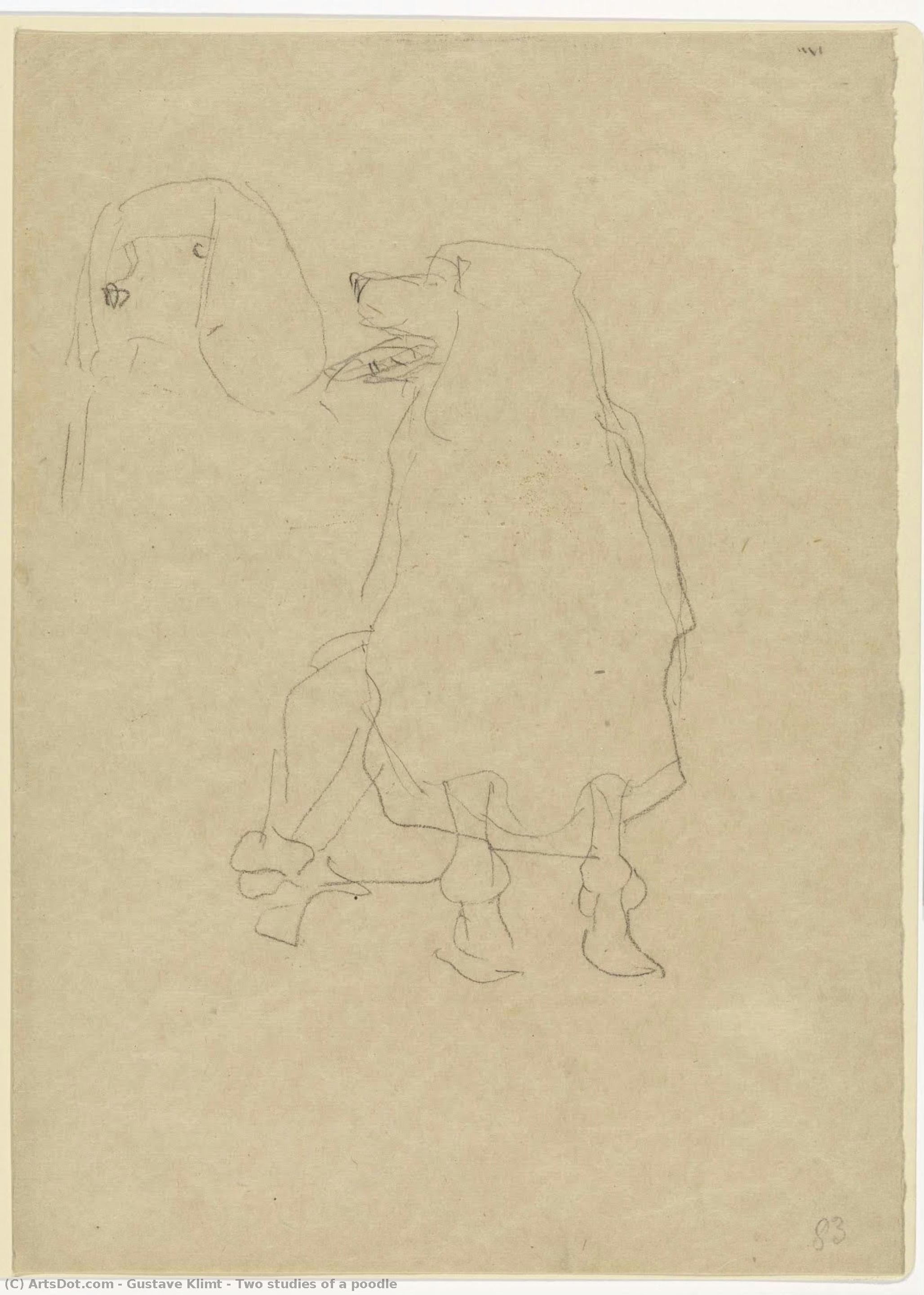
Two Studies of a Poodle – A Window into Klimt’s Early Vision
Gustav Klimt's “Two Studies of a Poodle,” created in 1904, isn’t merely a sketch; it’s a distilled essence of Klimt’s artistic sensibilities at the cusp of his celebrated ‘Golden Phase.’ Examining this unassuming drawing reveals layers of fascination with form, texture, and the quiet contemplation characteristic of Symbolist art—a movement that sought to express inner emotions and spiritual truths through visual imagery.
- Subject Matter: The artwork centers on two dogs – likely poodles – positioned in an interior setting. Klimt’s meticulous observation of animal anatomy is evident, capturing the subtle curves and musculature with confident pencil strokes. Surrounding figures—human forms and a bird—suggest a domestic scene imbued with understated dignity.
- Style & Technique: “Two Studies” exemplifies Klimt's early drawing style – characterized by rapid execution and an unwavering focus on conveying fundamental shapes. Unlike the opulent ornamentation of his later masterpieces, this piece prioritizes simplicity and directness, reflecting a desire to capture the immediacy of perception.
- Material & Medium: Executed on paper with charcoal pencil, the drawing utilizes a monochromatic palette dominated by shades of brown and grey—a deliberate choice that underscores Klimt’s preference for tonal harmony. The paper's texture contributes to the artwork's overall mood, hinting at the artist’s tactile engagement with his subject.
- Composition & Perspective: Minimal perspective lends a flatness to the image, emphasizing the figures and creating an intimate atmosphere. Klimt skillfully employs overlapping forms and subtle variations in line weight to suggest depth without resorting to conventional techniques—a hallmark of Symbolist aesthetics.
Decoding Symbolism Within Line
The drawing’s expressive power resides primarily in its lines – thin, flowing strokes that delineate shapes with remarkable precision. These aren't bold declarations; they are hesitant explorations, conveying a sense of spontaneity and capturing the fleeting quality of observation. Klimt’s use of line isn’t merely descriptive; it embodies Symbolist ideals—suggesting emotion and inner thought through visual form.
Historical Context: Created during Klimt's formative years, “Two Studies” anticipates his groundbreaking exploration of decorative art and psychological symbolism. It reflects the broader artistic currents of the Viennese Secession, a movement that rejected academic conventions in favor of experimentation and personal vision.
Texture & Tone – A Palette of Quietude
The artwork’s muted tonal palette—primarily browns and greys—creates an atmosphere of contemplative stillness. Klimt skillfully manipulates charcoal to achieve subtle gradations of tone, enhancing the drawing's textural richness. The paper grain adds another layer of visual interest, grounding the image in a tangible reality while simultaneously inviting contemplation.
Emotional Resonance – Companionship and Observation
"Two Studies of a Poodle" transcends mere representation; it communicates an underlying feeling—perhaps one of quiet affection or serene observation. Klimt’s masterful draughtsmanship captures not just the appearance of the animals but also their essence, inviting viewers to engage in a dialogue with the artwork's emotional core. It stands as a testament to Klimt’s ability to distill complex ideas into deceptively simple forms—a skill that would define his enduring legacy.