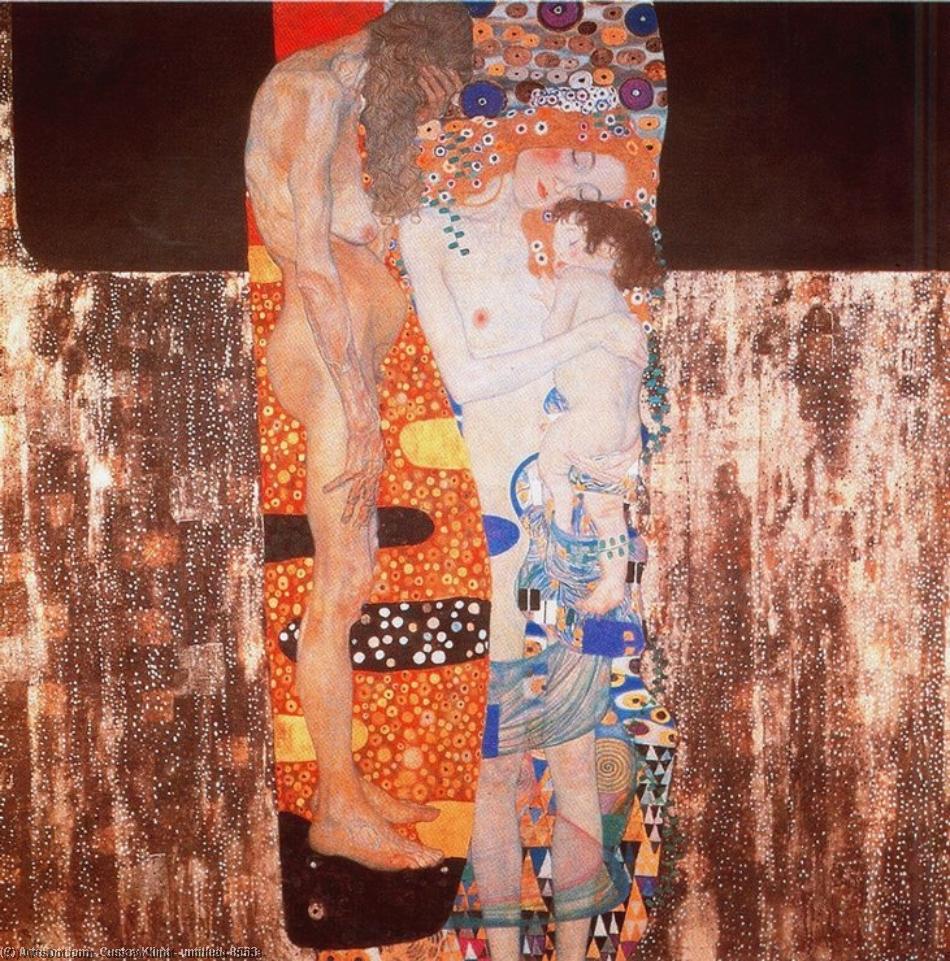
A Dance of Intimacy and Floral Abundance
Gustav Klimt’s untitled work (8563) is a captivating exploration of the human form intertwined with the lush beauty of nature, a hallmark of his distinctive style. The painting presents three nude figures engaged in an intimate embrace, their bodies flowing together in a composition that feels both sensual and serene. It's a piece brimming with the energy of life and connection, rendered with Klimt’s signature decorative flair. While lacking specific documentation regarding its precise creation date or original context, this work resonates deeply within the broader trajectory of Klimt’s artistic development, particularly his exploration of eroticism and the female form.
Echoes of Vienna Secession & Symbolist Sensibility
To understand this painting, one must consider the vibrant artistic climate of fin-de-siècle Vienna. Klimt was a leading figure in the Vienna Secession movement, a group of artists who rebelled against the conservative academic traditions of the time. They sought to create a Gesamtkunstwerk – a “total work of art” – that integrated painting, sculpture, and decorative arts. This ambition is clearly visible in the intricate detailing and ornamental quality of this untitled piece. The influence of Symbolism is also paramount; Klimt wasn’t merely interested in depicting physical reality but rather in evoking emotions, ideas, and psychological states through suggestive imagery. The intertwining figures aren't simply nude bodies, they are vessels of feeling, their closeness hinting at themes of love, desire, and the complexities of human relationships.
Technique & The Language of Ornament
Klimt’s technique in this work is masterful. He employs a rich palette of colors, blending them seamlessly to create a luminous effect. The figures are not rendered with strict anatomical precision but rather with flowing lines and graceful curves that emphasize their sensuality. Scattered throughout the composition are delicate floral motifs – another characteristic element of Klimt’s style. These flowers aren't merely decorative additions; they symbolize fertility, growth, and the ephemeral nature of beauty. The artist’s use of gold tones, though perhaps less prominent than in his more famous “Golden Phase” works like *The Kiss*, still lends a sense of opulence and otherworldliness to the scene. The overall effect is one of harmonious balance between form and ornamentation, creating a visually stunning and emotionally resonant experience.
A Legacy of Sensuality & Modernity
Though its specific narrative remains open to interpretation, Klimt’s untitled work invites viewers to contemplate the beauty of the human body, the power of intimacy, and the enduring allure of nature. It stands as a testament to his artistic genius and his ability to capture the spirit of an era defined by both innovation and introspection. For those seeking to bring a touch of Viennese Secession elegance into their homes or collections, a high-quality reproduction of this painting offers not just aesthetic pleasure but also a connection to a pivotal moment in art history – a moment where tradition was challenged, sensuality celebrated, and the boundaries of artistic expression were boldly redefined.