A Glimpse into Rural Austria: Decoding Klimt’s ‘Upper Austrian Farmhouse’
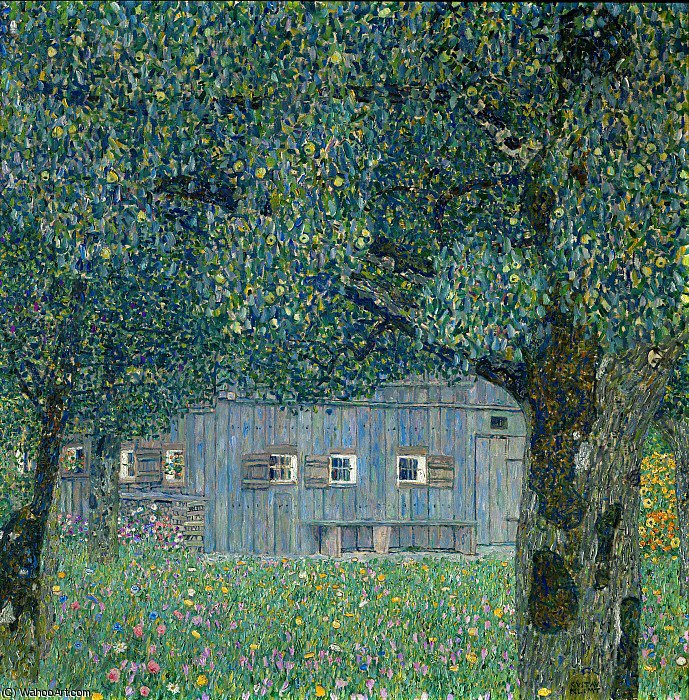
Gustave Klimt's *Upper Austrian Farmhouse* is more than just a depiction of countryside life; it’s an evocative exploration of nature, memory, and the burgeoning artistic sensibilities of early 20th-century Vienna. Painted during a period where Klimt was transitioning between traditional landscape work and his signature gilded style, this piece offers a fascinating insight into the artist's development and his connection to the Austrian land. The painting presents a humble farmhouse – a simple wooden structure – almost swallowed by an intensely verdant landscape. It’s a scene brimming with detail, rendered with Klimt’s characteristic attention to texture and pattern.
Art Nouveau & Symbolism: A Fusion of Styles
While not as overtly decorative as his later “Golden Phase” works like *The Kiss*, *Upper Austrian Farmhouse* demonstrably embodies the principles of
Art Nouveau. The emphasis on organic forms – the swirling branches, dense foliage, and undulating lines – creates a sense of harmonious movement. However, it’s Klimt's infusion of Symbolism that elevates this work beyond mere representation. The painting isn’t simply *about* a farmhouse; it evokes a feeling, a mood—a quiet contemplation of rural existence and perhaps a longing for simpler times. The dense vegetation can be interpreted as both protective and isolating, hinting at the complex relationship between humanity and nature.
Technique & Materials: A Masterclass in Oil Painting
Klimt’s masterful use of oil paint is immediately apparent. The artwork showcases a rich impasto technique – thick layers of paint applied with visible brushstrokes – creating a tactile quality that draws the viewer into the scene. This textural approach isn't merely aesthetic; it enhances the sense of depth and immerses us in the lushness of the landscape. The color palette, while dominated by greens and blues, is subtly nuanced, with hints of ochre and brown adding warmth and grounding the composition. The artist’s ability to capture light filtering through the trees contributes to a diffused, dreamlike atmosphere.
Historical Context: Vienna Secession & Rural Identity
Painted around the turn of the century, *Upper Austrian Farmhouse* reflects the broader artistic climate in Vienna. Klimt was a founding member of the
Vienna Secession, a group of artists who rebelled against the conservative academic traditions of the time. They sought to create a new art for a new era – one that embraced modernity while also drawing inspiration from nature and symbolism. Interestingly, this painting can be seen as a counterpoint to the increasingly urbanized world Klimt inhabited. It’s a nostalgic nod to Austria's rural heritage, perhaps reflecting a desire to reconnect with simpler values in a rapidly changing society.
Symbolism & Emotional Resonance
The symbolism within *Upper Austrian Farmhouse* is subtle yet profound. The farmhouse itself can be interpreted as representing shelter, stability, and the enduring spirit of rural life. The overgrown landscape suggests nature’s power to reclaim what is man-made, hinting at themes of transience and the cyclical nature of time. The bench in the foreground invites contemplation – a space for quiet reflection amidst the beauty of the natural world. Ultimately, the painting evokes a sense of melancholic serenity, inviting viewers to lose themselves in its tranquil atmosphere.
For Collectors & Interior Designers
- A Versatile Aesthetic: The painting’s muted color palette and organic forms make it surprisingly versatile for interior design, complementing a range of styles from traditional to contemporary.
- Investment Potential: As a work by one of the most important artists of the 20th century, *Upper Austrian Farmhouse* represents a significant cultural and financial investment.
- A Conversation Starter: This artwork is sure to spark conversation and inspire contemplation in any setting. Its subtle symbolism and emotional depth offer endless opportunities for interpretation.
Whether you are an avid art collector, an interior designer seeking a statement piece, or simply someone who appreciates the beauty of Klimt’s work, *Upper Austrian Farmhouse* offers a captivating glimpse into a bygone era – a testament to the enduring power of nature and the human spirit.