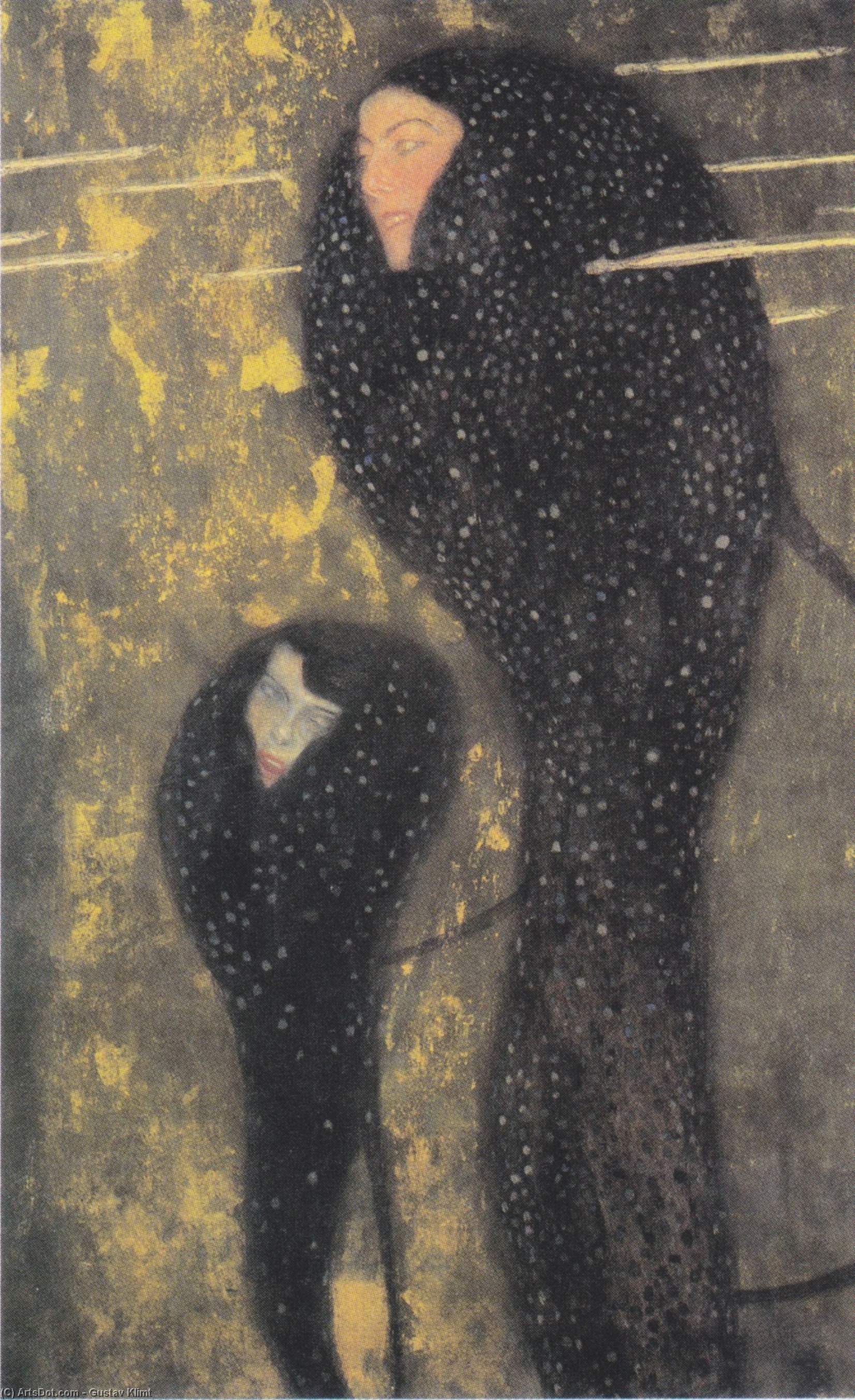
Water Nymphs (Silverfish)
Gustav Klimt, a renowned Austrian symbolist painter, left an indelible mark on the art world with his captivating and often enigmatic works. Among his notable creations is the painting
Water Nymphs (Silverfish), which embodies the essence of symbolism and mystique.
The Painting's Context
Created in 1899,
Water Nymphs (Silverfish) measures 82 x 52 cm and is executed in oil on canvas. This piece is a quintessential representation of Klimt's style during the late 19th century, characterized by its dreamlike quality and symbolic elements.
Visual Analysis
The painting features two women in the foreground, each lost in their own world. One woman gazes off-camera, while the other stares into the distance, creating a sense of detachment and mystery. The background is dominated by a sky with clouds, suggesting an outdoor setting. Scattered throughout the painting are smaller figures, possibly representing other individuals or elements within the scene.
Symbolism and Interpretation
Klimt's use of symbolism in
Water Nymphs (Silverfish) is a hallmark of his artistic approach. The women depicted can be seen as water nymphs, mythical creatures associated with water and nature. The silverfish, though not explicitly shown, may symbolize the elusive and mysterious aspects of life.
Artistic Style
This painting exemplifies Klimt's unique blend of symbolism and Art Nouveau elements. His use of bold lines, geometric patterns, and a limited color palette creates a sense of elegance and sophistication.
Relevance in Modern Times
Despite being created over a century ago,
Water Nymphs (Silverfish) remains relevant today due to its timeless themes and the enduring appeal of Klimt's style. The painting continues to inspire artists and captivate art enthusiasts worldwide.
Conclusion
Gustav Klimt's
Water Nymphs (Silverfish) is a masterpiece that encapsulates the essence of symbolism and mystique. Its dreamlike quality, combined with its symbolic elements, makes it a captivating piece that continues to intrigue art lovers. For those interested in exploring more of Klimt's works,
Water Nymphs (Silverfish) and
Beech Grove I are notable pieces available on ArtsDot. Additionally, the Metropolitan Museum of Art in New York houses Klimt's
Portrait of Serena Lederer, another significant work by the artist. To delve deeper into the world of feathers and their cultural significance, refer to
The Art of Feathers: A Journey Through History and Culture on ArtsDot. For a comprehensive understanding of Gustav Klimt's life and works, visit
Gustave Klimt on ArtsDot.
Photo Description: The painting is a black and white artwork featuring two women in the foreground. One woman appears to be looking at something off-camera while the other one seems to be staring into the distance. The background features a sky with some clouds, giving the impression of an outdoor setting. In addition to the main subjects, there are several smaller figures scattered throughout the painting, possibly representing other people or elements in the scene. These figures appear to be positioned at various distances from the viewer and are distributed across different areas of the image.
Size: 82 x 52 cm
Date: 1899